

Photos: Alexander Leisser, CC BY-SA 4.0 · Yair Haklai, CC BY-SA 4.0 · gailhampshire from Cradley, Malvern, U.K, CC BY 2.0 · Johannes K Becker, CC BY-SA 3.0 · Jon Lean from Bristol, United Kingdom, CC BY-SA 2.0 · Elena Tatiana Chis, CC BY-SA 4.0
About
This seven-day private trip begins in Ouarzazate, the desert gateway on the south side of the High Atlas. It loops clockwise through Morocco's south: down the Draa Valley palm groves to Zagora, east along the rim of the Sahara to the Erg Chebbi dunes at Merzouga, then back west through the Todra and Dades gorges and along the Road of a Thousand Kasbahs to Ait Ben Haddou, before crossing the Atlas to Marrakech. It suits travellers who are already in Ouarzazate, flying in to Ouarzazate airport, or arriving by bus from Marrakech or Agadir. The whole south is covered without doubling back on the same road. The pace is relaxed. You get two nights at the dunes, so one day is spent entirely in the Sahara rather than in the car. You also sleep in Ait Ben Haddou, so you see the ksar in the evening light after the day visitors have gone. Along the way you visit the Koranic library and green potters of Tamegroute, the rock engravings near Tazzarine, the trilobite fossil workshops of Alnif, and the Gnawa musicians of Khamlia. You walk in the Todra Gorge and drive the hairpins above the Dades. AT A GLANCE • Duration: 7 days, 6 nights • Start: Ouarzazate (airport, bus station or hotel) – Finish: Marrakech (hotel, riad or airport) • Type: private tour with your own driver; local guide in Ait Ben Haddou • Total distance: about 1,100 km; most days 3–5 hours on the road, with Day 3 (Zagora–Merzouga, about 300 km) the longest • Nights: Ouarzazate, Zagora, Erg Chebbi camp, Merzouga (camp or dune-side hotel), Dades valley, Ait Ben Haddou • Meals: dinner on Days 1–6 and breakfast on Days 2–7 • Activity level: easy WHAT YOU SEE • Ouarzazate: the Taourirt Kasbah and the Atlas film studios. • The Tizi n'Tinififft pass, Agdz and the kasbah of Tamnougalt. • The Draa Valley palm groves, Zagora and the library of Tamegroute. • The pre-Saharan road through Tazzarine and Alnif. • The Erg Chebbi dunes at sunset and sunrise, Khamlia and a nomad family. • The Todra Gorge and the Dades valley with its "monkey fingers" and Tisdrine hairpins. • The Valley of Roses and the kasbah of Amridil in Skoura. • Ait Ben Haddou at sunset and the Tichka pass. WHY THIS ROUTE WORKS Most desert trips start in Marrakech and either rush to Merzouga in a single long day or go only as far as Zagora. Starting in Ouarzazate saves the first long Atlas crossing. Driving the loop clockwise means the Draa and the Sahara come first, while you are fresh, and the gentler gorge and kasbah days come at the end. The second night at Merzouga means the dunes are not just a camel ride and a sunrise. WHO WILL ENJOY IT Travellers arriving in Ouarzazate by air or bus, anyone who has already seen Marrakech and wants to concentrate on the south, couples and families who want two nights in the desert, and photographers who want the ksar and the dunes in the best light. WHO MIGHT PREFER ANOTHER TOUR If you start in Marrakech, take the 7-day Marrakech desert tour with two Sahara nights and Zagora, which drives the same loop in the opposite direction. If you only have four days and are travelling between Fes and Marrakech, see the 4-day desert tour from Fes to Marrakech. PRACTICAL INFORMATION Desert days are hot from May to September and nights are cold from November to March, so pack layers, a warm top for the camp, a hat and sunscreen. Leave your main luggage in the vehicle on the dune nights and take a small overnight bag. Lunches, drinks and entrance fees (usually 20–100 dirhams) are not included. Ouarzazate airport has a handful of flights a week. Buses from Marrakech take about 4–5 hours, so a late-morning start on Day 1 is fine.
from €618 per person
Select date and travelers
Duration
7 days
Starts in
Ouarzazate
Ends in
Ouarzazate
Private tourOnly your group, with your own driver and vehicle. Your booking is confirmed straight away.
Free cancellationFull refund if canceled up to 24 hours before the start of the experience (local time)
Reserve now and pay laterReserve your spot while maintaining flexibility.
Lowest price guaranteedFound a lower price online? We'll refund the difference.
Included
Everything included in your package
Standard
Private tour
- Pick-up and drop-off at your hotel or riad
- Private air-conditioned vehicle for the whole trip
- Professional English or French-speaking driver
- Comfortable hotels or riads with private bathroom
- Daily breakfast and dinner
- Bottled water during the trip
LuxuryUpgrade
Private tour
- Pick-up and drop-off at your hotel or riad
- Private premium vehicle for the whole trip
- Professional English or French-speaking driver
- Charming riads, boutique hotels and luxury desert camp
- Daily breakfast and dinner
- Bottled water and snacks during the trip
- Flexible departure times
Itinerary: 7 days, day by day
Highlights
- Atlas Film Studios
- Draa Valley
- Khamlia
- Nomad family
- Dades gorge
- Ait Ben Haddou
- Tizi n'Tichka
- Ouarzazate
| Day | Route | Overnight | On the road |
|---|---|---|---|
| 1 | Ouarzazate | Ouarzazate | — |
| 2 | Ouarzazate - Draa Valley - Zagora | Zagora | 160 km · 2.5 h |
| 3 | Zagora - Merzouga | Merzouga | 250 km · 3.5 h |
| 4 | A day in the Sahara | Merzouga | — |
| 5 | Merzouga - Todra Gorge - Dades Valley | Dades Valley | 250 km · 3.5 h |
| 6 | Dades Valley - Ait Ben Haddou | Ait Ben Haddou | 160 km · 2.5 h |
| 7 | Ait Ben Haddou - Marrakech | — | 130 km · 2 h |
Day 1: Ouarzazate
What to expect: arrival in Ouarzazate, the Taourirt Kasbah and the film studios that gave the town its nickname. Your driver meets you at Ouarzazate airport, the bus station or your hotel. Ouarzazate sits on a high plateau between the High Atlas and the Anti-Atlas. It began as a crossroads of caravan routes and grew into a garrison town in the 1920s. Since the 1950s it has hosted film crews shooting desert epics and biblical dramas. Start at the Atlas Film Studios on the edge of town, where plaster temples, a mock Tibetan monastery and sets for ancient Egypt and Jerusalem stand among the stones; a studio guide explains which films used them. After lunch, visit the Taourirt Kasbah in the centre, a large earthen residence of the Glaoui family, who controlled the southern passes in the early twentieth century. Its lower courtyards are plain, but the upper reception rooms keep their painted cedar ceilings and carved plaster. In the evening, walk around the square in front of the kasbah, where craft cooperatives sell carpets and silver jewellery from the surrounding villages. SCHEDULE (times are estimates) Arrival – Meet your driver in Ouarzazate. 10:00 – Atlas Film Studios (about 1 hour). 12:30 – Lunch (not included). 14:00 – Taourirt Kasbah (about 1 hour). 16:00 – Hotel check-in and free time. GOOD TO KNOW • If you arrive by bus in the afternoon, the two visits can be swapped or moved to Day 7. • The Cinema Museum opposite the kasbah is a quick, cheap alternative to the big studios. INCLUDED: transfer, driver, hotel with dinner and breakfast. NOT INCLUDED: entrance fees, lunch, tips. Overnight: hotel in Ouarzazate. Meals: dinner.
Atlas Film Studios
Duration: About 1 hour
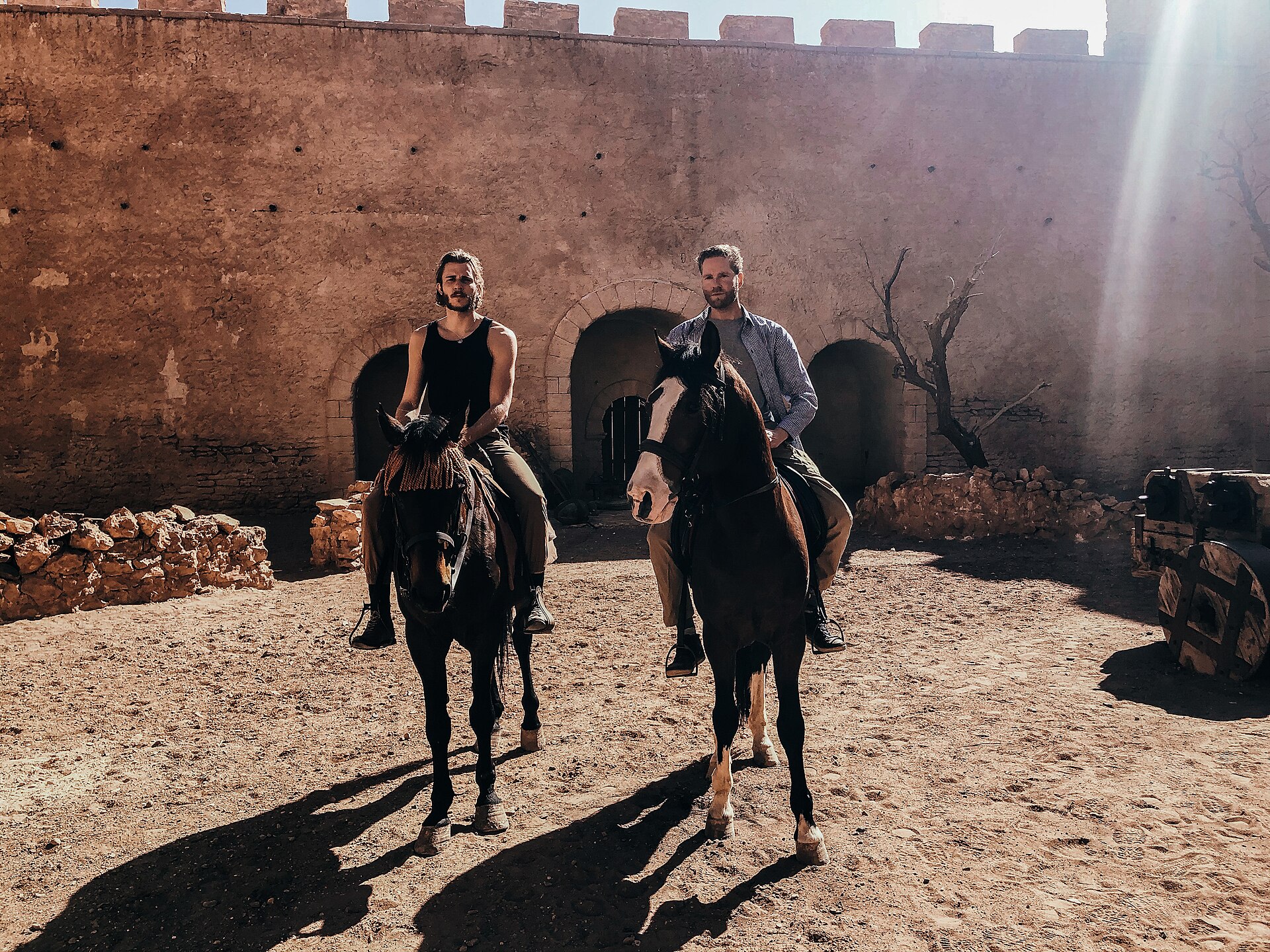
Film sets in the desert. Practical: fee.
Day 2: Draa valley to Zagora
About 160 km · 2.5 h on the road
What to expect: south over the Tizi n'Tinififft pass into the Draa Valley, Morocco's longest oasis, to Agdz, Tamnougalt and Zagora, with an afternoon at Tamegroute. The road leaves Ouarzazate across a stony plateau and climbs the Tizi n'Tinififft pass (about 1,660 m) in the Anti-Atlas. The rock here is folded into bands of black, ochre and purple. From the top you drop towards Agdz, an old caravan stop under the flat-topped Jebel Kissane, where the Draa River emerges and the palm groves begin. These groves run south for roughly 200 km, a ribbon of date palms, olive trees and small fields between earthen villages. At Tamnougalt you walk through the old kasbah of the local caïds, a warren of covered passages and courtyards above the river. Continue down the valley to Zagora, best known for the faded sign reading "Tombouctou 52 jours", the number of days a camel caravan took to reach Timbuktu. In the late afternoon, drive 20 km further to Tamegroute. Its zaouia keeps a library of old Korans and manuscripts on astronomy and medicine, some on gazelle-skin parchment. Nearby, potters fire the town's typical green-glazed ceramics in wood-fired kilns. SCHEDULE (times are estimates) 09:00 – Depart Ouarzazate; Tizi n'Tinififft pass. 10:30 – Agdz and the start of the palm groves. 11:30 – Kasbah of Tamnougalt (about 1 hour). 13:00 – Lunch in the valley (not included). 15:30 – Zagora. 16:30 – Tamegroute: library and pottery cooperative. 18:30 – Hotel in Zagora. GOOD TO KNOW • About 170 km to Zagora plus the Tamegroute detour; the drive is short and gentle. • The library is a working religious foundation; dress modestly, and a small donation is customary. • Dates are harvested in October; that is the best time to buy them in the valley. INCLUDED: driver, hotel with dinner and breakfast. NOT INCLUDED: entrance fees and donations, lunch, tips. Overnight: hotel or kasbah in Zagora. Meals: breakfast, dinner.
Draa Valley
Duration: Drive
Palm groves and kasbahs. Practical: dates in autumn.
Day 3: Zagora to Merzouga
About 250 km · 3.5 h on the road
What to expect: the long pre-Saharan road east from Zagora to Merzouga via Tazzarine and Alnif, then a sunset camel trek into the Erg Chebbi dunes and a night in camp. This is the longest drive of the trip, about 300 km, and one of the least visited roads in the south. It runs between the Jebel Saghro and the Sahara through a landscape of black hamada, acacia and small oases. Near Tazzarine a short track leads to the Ait Ouazik rock engravings, where prehistoric herders carved giraffes, antelopes and cattle into the rocks thousands of years ago. They come from a time when this desert was savannah. At Alnif, families have quarried and prepared trilobites and other fossils for generations; a workshop visit shows how the rock is cleaned and polished. Past Rissani, the dunes of the Erg Chebbi appear on the horizon, a sea of orange sand about 22 km long and up to around 150 m high. At Merzouga you leave your main luggage in the vehicle and ride a camel for about 90 minutes into the dunes. Climb a ridge to watch the sunset before reaching camp for dinner, drumming around the fire and a sky full of stars. SCHEDULE (times are estimates) 08:30 – Depart Zagora. 11:00 – Tazzarine and the Ait Ouazik rock engravings (optional). 13:00 – Alnif fossil workshop; lunch (not included). 16:00 – Arrival in Merzouga. 17:00 – Camel trek into the dunes (about 1.5 hours). 19:00 – Camp; dinner. GOOD TO KNOW • The driver stops every hour or two; the road is good tarmac. • Pack a small bag for the camp: warm layer, torch, toothbrush, charger. Camps with private bathrooms are available on request. INCLUDED: driver, camel trek, camp with dinner and breakfast. NOT INCLUDED: lunch, drinks, tips. Overnight: desert camp in the Erg Chebbi. Meals: breakfast, dinner.
Day 4: A day in the Sahara
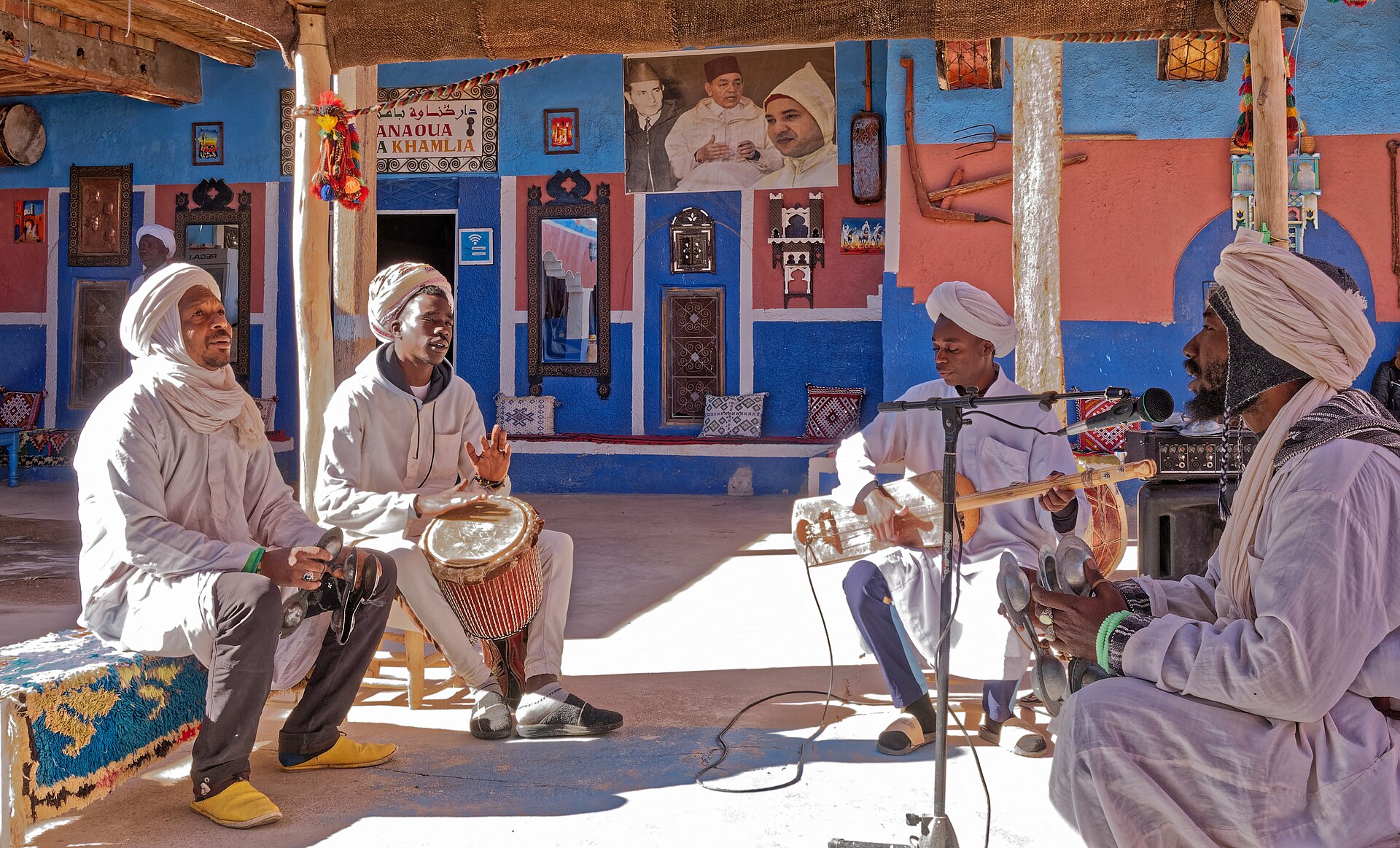
What to expect: a full day in the Sahara: sunrise on the dunes, a 4x4 tour to a nomad family, the Gnawa village of Khamlia and the desert's fossil beds, then free time and sunset. Wake before dawn and climb the dune behind the camp to watch the sun rise over the Erg Chebbi, with the Algerian border hills on the horizon. After breakfast your driver collects you in a 4x4 for a loop around the dunes. You visit a nomad family who still raise goats and camels in the hamada and will usually offer tea in their tent. Then you go to Khamlia, whose families descend from people brought across the Sahara from West Africa. Their Gnawa music, with iron castanets and drums, is played in a simple house for visitors. Depending on the season, the loop can include the seasonal lake of Dayet Srji, where flamingos sometimes stop after rain, and an old mining area where fossils lie on the surface. The afternoon is free: rest in the shade, try sandboarding, or walk to a high dune for the last light. SCHEDULE (times are estimates) 06:00 – Sunrise on the dunes. 08:00 – Breakfast. 09:30 – 4x4 tour: nomad family, Khamlia, fossils (about 3–4 hours). 13:00 – Lunch (not included). 15:00 – Free time; sandboarding or quad biking (optional). 18:00 – Sunset on the dunes. GOOD TO KNOW • Tonight you can stay in the camp again or move to a hotel at the edge of the dunes with a pool; tell us when booking. • Quad biking is paid locally; choose operators who keep away from the camps and the nomad areas. INCLUDED: driver and 4x4 tour, camp or dune-side hotel with dinner and breakfast. NOT INCLUDED: lunch, optional activities, drinks, tips. Overnight: desert camp or dune-side hotel in Merzouga. Meals: breakfast, dinner.
Khamlia
Duration: About 45 minutes
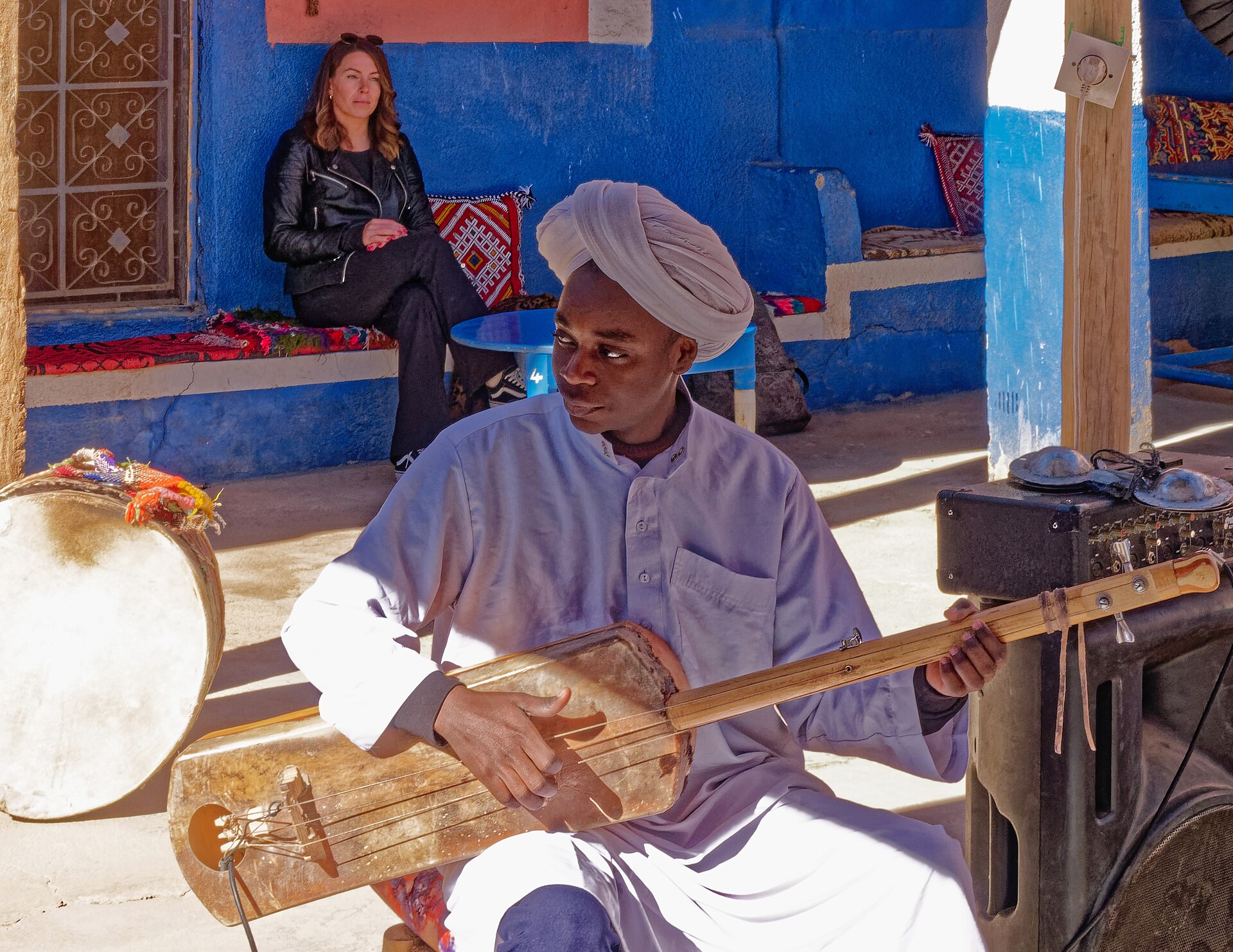
A village of Gnawa musicians. Practical: contribution expected.
Nomad family
Duration: About 45 minutes
Tea in a tent of woven goat hair. Practical: ask before photos.
Day 5: Todra Gorge to the Dades valley
About 250 km · 3.5 h on the road
What to expect: west from the dunes through Erfoud to the Todra Gorge for a walk between its cliffs, then on to the Dades valley and its hairpin road. After breakfast the road heads west through Erfoud, where workshops cut and polish fossil-rich black marble, and past lines of khettara wells. These underground channels brought water to the oases for centuries. From Tinejdad the palm groves lead to Tinghir, a large oasis town spread along a green valley under red hills. Just north of town the Todra Gorge narrows to a slot about 10 m wide between limestone walls around 300 m high. Walk along the stream through the narrowest section, where climbers are often on the walls. In the afternoon continue to Boumalne and turn up the Dades valley. You pass the rounded red rock formations called "monkey fingers" and the kasbahs of Ait Youl, then climb to the famous Tisdrine hairpins for the view down the road. Your hotel sits by the river in the valley. SCHEDULE (times are estimates) 08:30 – Depart Merzouga. 09:30 – Erfoud (short stop). 11:30 – Todra Gorge walk (about 1 hour). 13:00 – Lunch in Tinghir (not included). 15:30 – Dades valley, "monkey fingers" and the Tisdrine hairpins. 17:00 – Hotel in the Dades valley; dinner. GOOD TO KNOW • About 280 km, with plenty of stops. • The Dades valley is cool at night; have a warm layer. • A longer walk through the Todra palm grove and villages with a local guide can be added. INCLUDED: vehicle and driver, hotel with dinner and breakfast. NOT INCLUDED: lunch, drinks, tips. Overnight: hotel in the Dades valley. Meals: breakfast, dinner.
Dades gorge
Duration: About 45 minutes
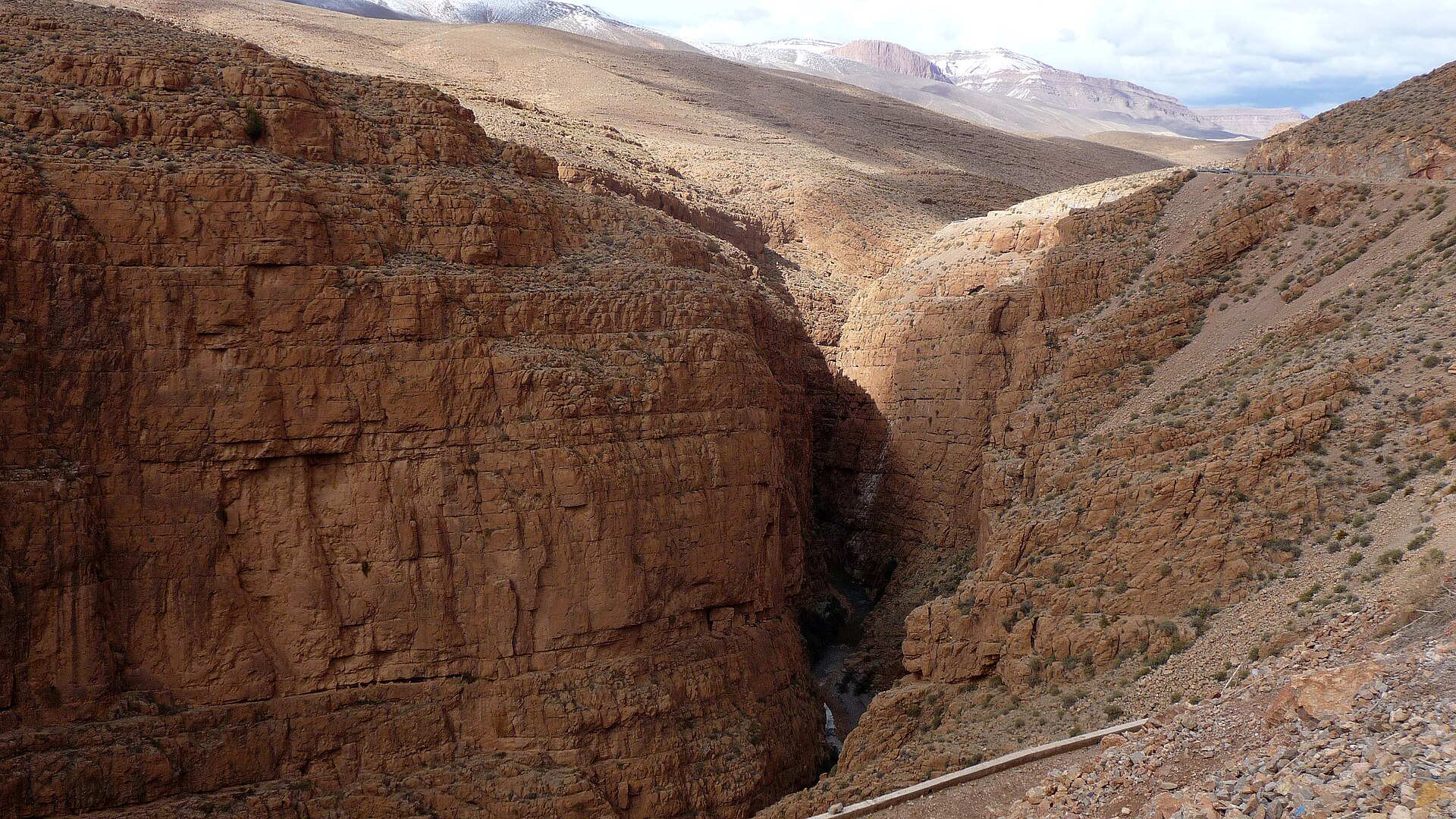
A famous hairpin road. Practical: café at the top.
Day 6: Valley of Roses to Ait Ben Haddou
About 160 km · 2.5 h on the road
What to expect: west along the Road of a Thousand Kasbahs through the Valley of Roses and Skoura, then a night in Ait Ben Haddou with a guided walk to the top of the ksar at sunset. From Boumalne the road follows the valley west to Kelaat M'Gouna, centre of the Valley of Roses. Damask roses are grown here in hedges between the fields, harvested in late April and May and distilled into rose water, and a festival is held in May. Shops sell rose water, creams and soaps all year. At Skoura, a palm oasis dotted with kasbahs, you visit the Kasbah Amridil, a seventeenth-century fortified house that once appeared on the 50-dirham note. A family member often shows visitors the old olive press, kitchen and tower rooms. After passing through Ouarzazate, you turn north to Ait Ben Haddou in the mid-afternoon. In the late afternoon, once the day visitors have left, a local guide leads you across the river. You climb through the lanes of this UNESCO World Heritage ksar, listed in 1987, to the ruined granary at the top. From there you watch the sun set over the Ounila valley. SCHEDULE (times are estimates) 09:00 – Depart the Dades valley. 10:00 – Valley of Roses, Kelaat M'Gouna. 12:00 – Skoura and the Kasbah Amridil (about 1 hour). 13:30 – Lunch (not included). 15:30 – Arrival in Ait Ben Haddou. 17:00 – Guided walk to the top of the ksar for sunset. 19:30 – Dinner at the hotel. GOOD TO KNOW • About 190 km, broken into short stages. • Wear shoes with grip for the stepped lanes of the ksar. INCLUDED: vehicle and driver, local guide in Ait Ben Haddou, hotel with dinner and breakfast. NOT INCLUDED: entrance fees, lunch, drinks, tips. Overnight: hotel or kasbah guesthouse in Ait Ben Haddou. Meals: breakfast, dinner.
Ait Ben Haddou
Duration: About 1.5 hours
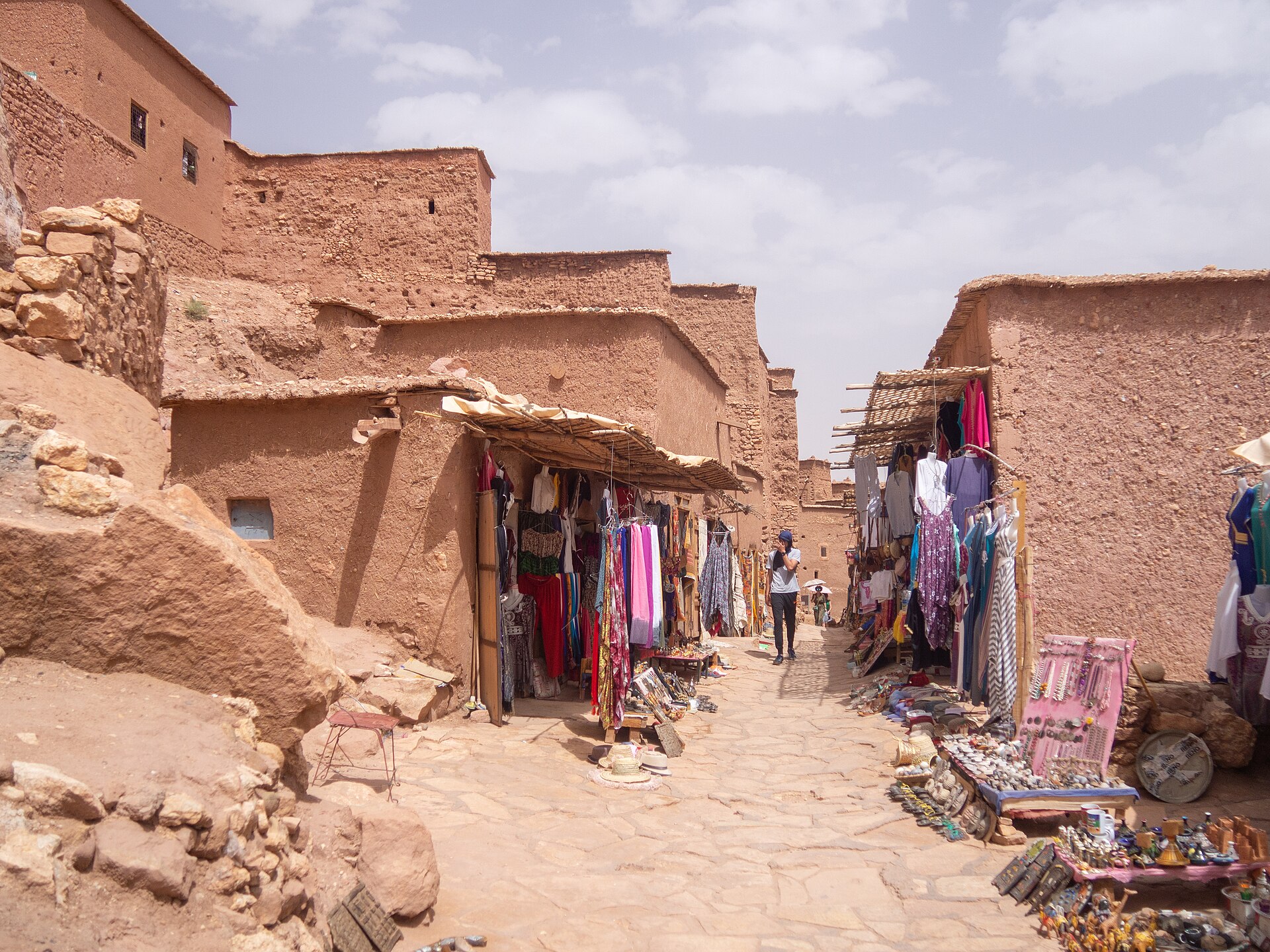
UNESCO ksar. Practical: sunset from the granary.
Day 7: Over the Atlas to Marrakech
About 130 km · 2 h on the road
What to expect: over the High Atlas on the Tizi n'Tichka pass to Marrakech, with an optional detour to the Glaoui kasbah of Telouet. After breakfast you can take the quieter road up the Ounila valley. It passes cliff-side villages and terraced fields to Telouet, where the half-ruined kasbah of the Glaoui family still has richly tiled and carved reception rooms. The road then rejoins the main highway near the Tizi n'Tichka. At about 2,260 m, it is the highest major road pass in Morocco, with views across the Atlas ridges. On the northern side the road winds down through Berber villages, walnut trees and juniper forests into the Haouz plain. You reach Marrakech in the early afternoon, and your driver takes you to your hotel or riad (on foot with a porter for the last part inside the medina), to the airport or to the station. SCHEDULE (times are estimates) 09:00 – Depart Ait Ben Haddou. 10:00 – Telouet kasbah via the Ounila valley (optional, about 1 hour). 12:00 – Tizi n'Tichka pass and viewpoints. 13:00 – Lunch in the mountains (not included). 15:00 – Arrival in Marrakech. GOOD TO KNOW • About 190 km direct, or about 4 hours; the Telouet detour adds about an hour and a half. • For an evening flight from Marrakech, the timing works comfortably; for a morning flight, skip Telouet. • The pass road has many bends; take something for motion sickness if needed. INCLUDED: vehicle and driver, drop-off in Marrakech. NOT INCLUDED: entrance fees, lunch, drinks, tips. Overnight: none (end of tour). Meals: breakfast.
Tizi n'Tichka
Duration: About 15 minutes
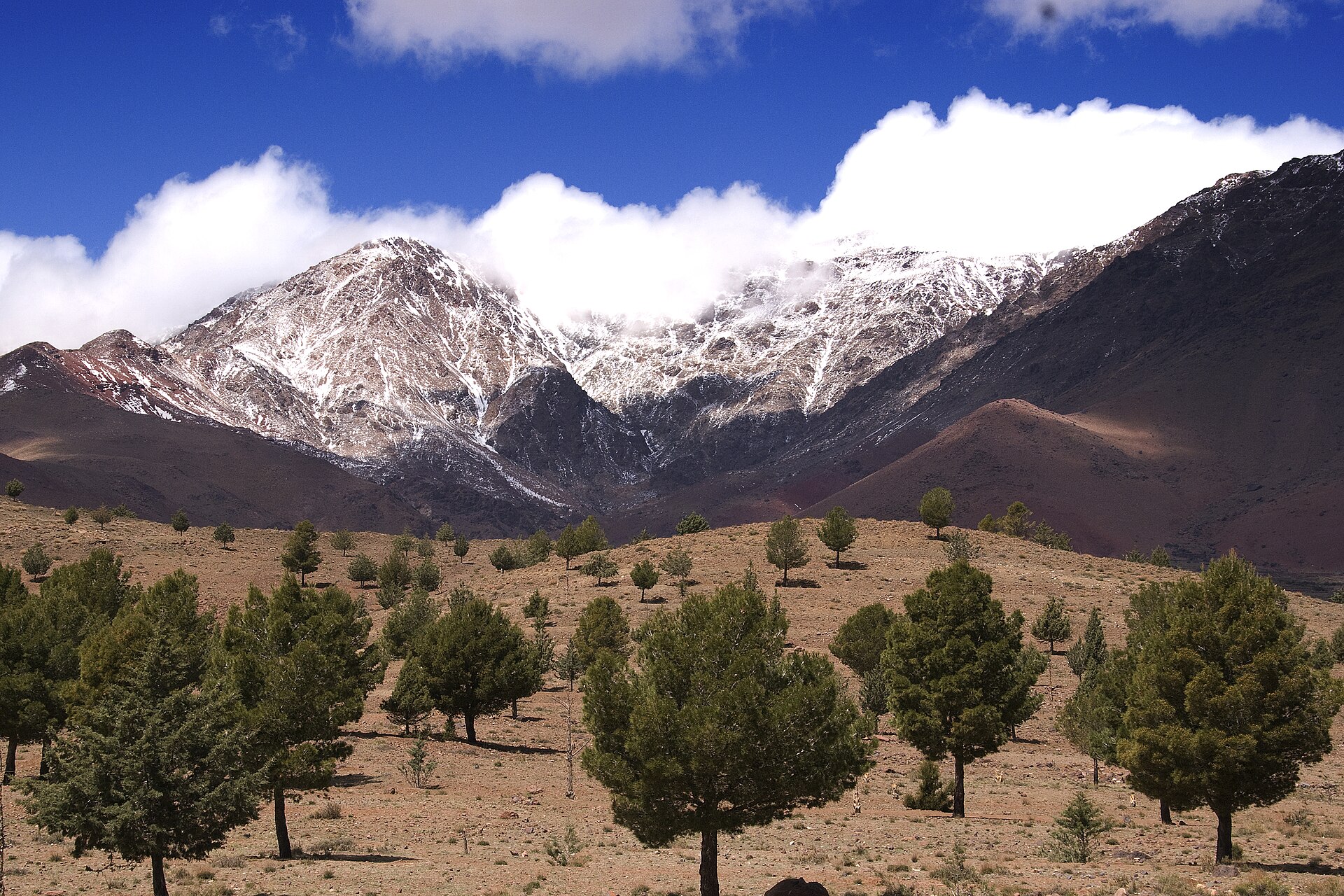
Pass at 2,260 m. Practical: windy.
Plan your trip
Best time to go
- March to May: the best season, warm days and green valleys.
- September to November: pleasant days and clear, starry desert nights.
- December to February: sunny days, but desert and mountain nights are cold (bring warm layers).
- June to August: very hot in the Sahara (often above 40 °C); early starts help.
Getting there
Make it yours
This is a private tour: we can add a night, change hotels or adjust the route to suit you.
Practical info
- Money: the Moroccan dirham (MAD). Cards work in cities and hotels; bring cash for villages, tips and souks.
- Plugs: type C and E (European), 220 V.
- Phone: a local SIM (Maroc Telecom, Orange or inwi) is cheap at the airport and works along the whole route.
- Visa: many nationalities (EU, UK, US, Canada, Australia) need none for up to 90 days. Check the rules for your passport before you go.
What to bring
- Comfortable shoes for the medinas and the dunes
- Warm layers for desert nights
- A scarf or hat, sunglasses and sunscreen
- Some cash in dirhams for tips and small purchases
- Clothes covering shoulders and knees for villages and religious sites
- Your passport (hotels ask for it at check-in)
Good to know
Cancellation policy
Full refund if you cancel at least 24 hours before the start. Cancellations less than 24 hours before are not refunded. If bad weather stops the tour, you get a new date or a full refund.
Accessibility
Not wheelchair accessible. Child seats or chairs available.
Frequently Asked Questions
Where does the tour start and finish?
It starts in Ouarzazate, with pick-up at the airport, the bus station or your hotel, and finishes in Marrakech on Day 7 at your hotel or riad, the airport or the train station.
How do I get to Ouarzazate?
Ouarzazate airport has a few flights a week from Casablanca and some European cities, and comfortable CTM and Supratours buses run from Marrakech (about 4–5 hours) and Agadir. We can also arrange a private transfer from Marrakech the day before.
Is the tour private?
Yes. The vehicle and driver are for you and your party only, so you can change stops and timings each day.
How many nights are in the desert?
Two nights at the Erg Chebbi dunes in Merzouga. The first is always in a camp; for the second you can stay in the camp again or move to a dune-side hotel with a pool. You also sleep in Zagora, on the edge of the desert.
Which meals are included?
Dinner on Days 1 to 6 and breakfast on Days 2 to 7 – every night's half board is covered. Lunches and drinks are not included; the driver stops at good local restaurants, where lunch usually costs 80–150 dirhams.
What is the desert camp like?
Berber-style tents among the dunes with proper beds, blankets, dinner and breakfast. Standard camps have shared bathrooms; camps with a private bathroom in each tent are available on request.
Do I have to ride a camel?
No. The ride takes about 90 minutes each way, but a 4x4 can take you to the camp instead.
How long are the drives?
Most days are 3–5 hours of driving with stops. Day 3, Zagora to Merzouga (about 300 km), is the longest; Day 4 has almost no driving.
Is there a guide?
Your driver explains the places along the way and speaks English. A local guide leads the walk in Ait Ben Haddou. Local guides for Tamnougalt, the Todra palm grove or Telouet can be added.
Are entrance fees included?
No. They are paid on the spot and are modest: the film studios, kasbahs and library each cost about 20–100 dirhams.
Is it suitable for children and older travellers?
Yes. The pace is easy, the desert day breaks up the driving, and walks are short and on easy ground except for the steps in Ait Ben Haddou. Child seats are available on request.
When is the best time to go?
March to May and late September to November are the most comfortable. Winter is clear but cold at night in the desert, and the Tichka pass can see snow; June to August is very hot in the south.
Can I do the loop in the other direction or start in Marrakech?
Yes. The same route can run anticlockwise, and if you are starting in Marrakech, our 7-day Marrakech desert tour covers the same regions from there.
How do I pay for this tour?
You can reserve with €20 now and pay the rest on the first day of the tour, or pay everything online when you book.
What is the cancellation policy?
Cancel at least 24 hours before the start for a full refund. If bad weather stops the tour, you get a new date or a full refund.
How far in advance should I book?
Spring (March to May) and autumn (September to November) are the busiest seasons, so book early for those months. You can reserve with €20 and still cancel for free up to 24 hours before.
Similar experiences
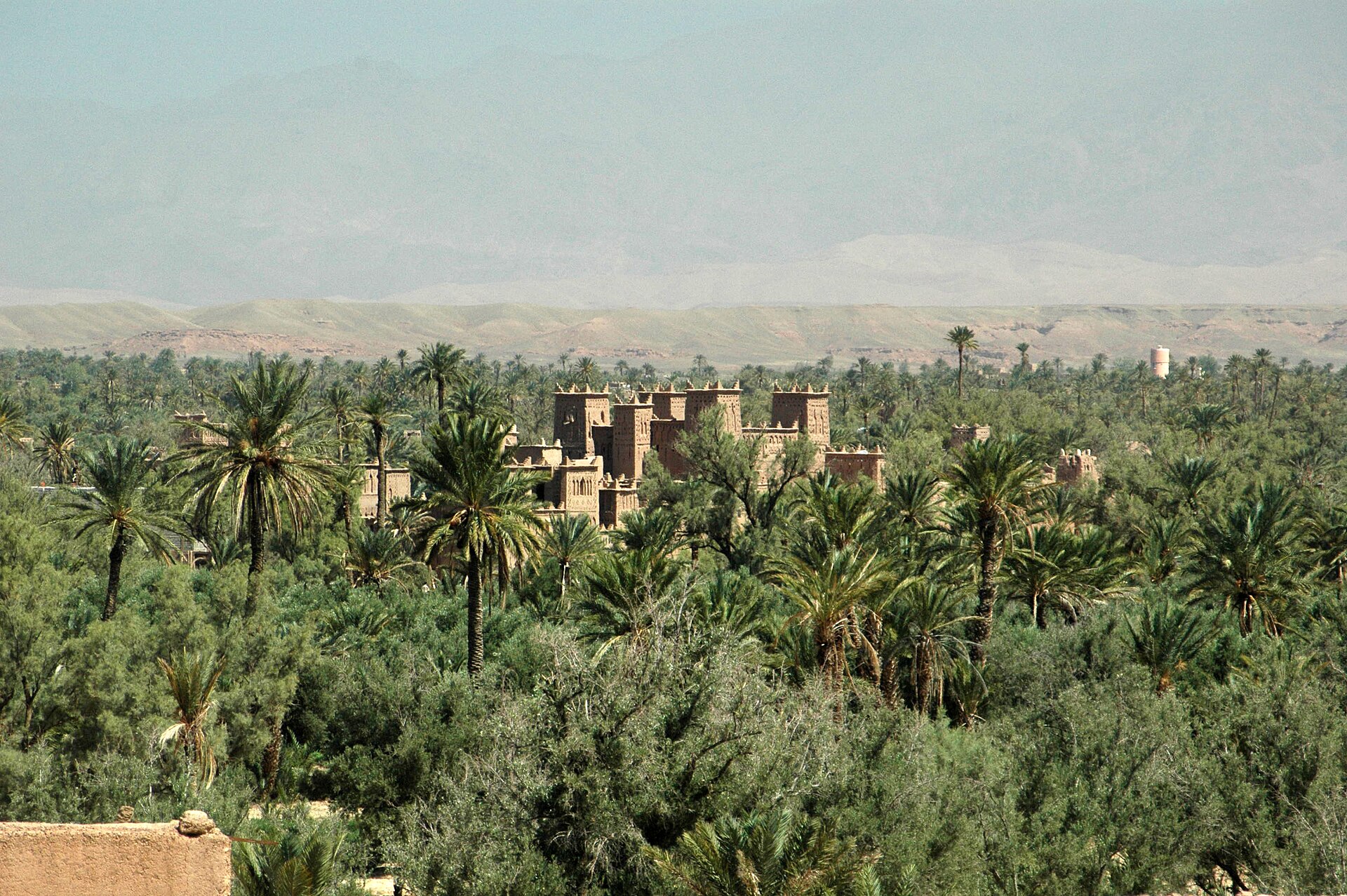 PopularOuarzazate
Ouarzazate Desert Tour to Fes: 3 Days via the Dades, Todra and Merzouga
from €276 per person
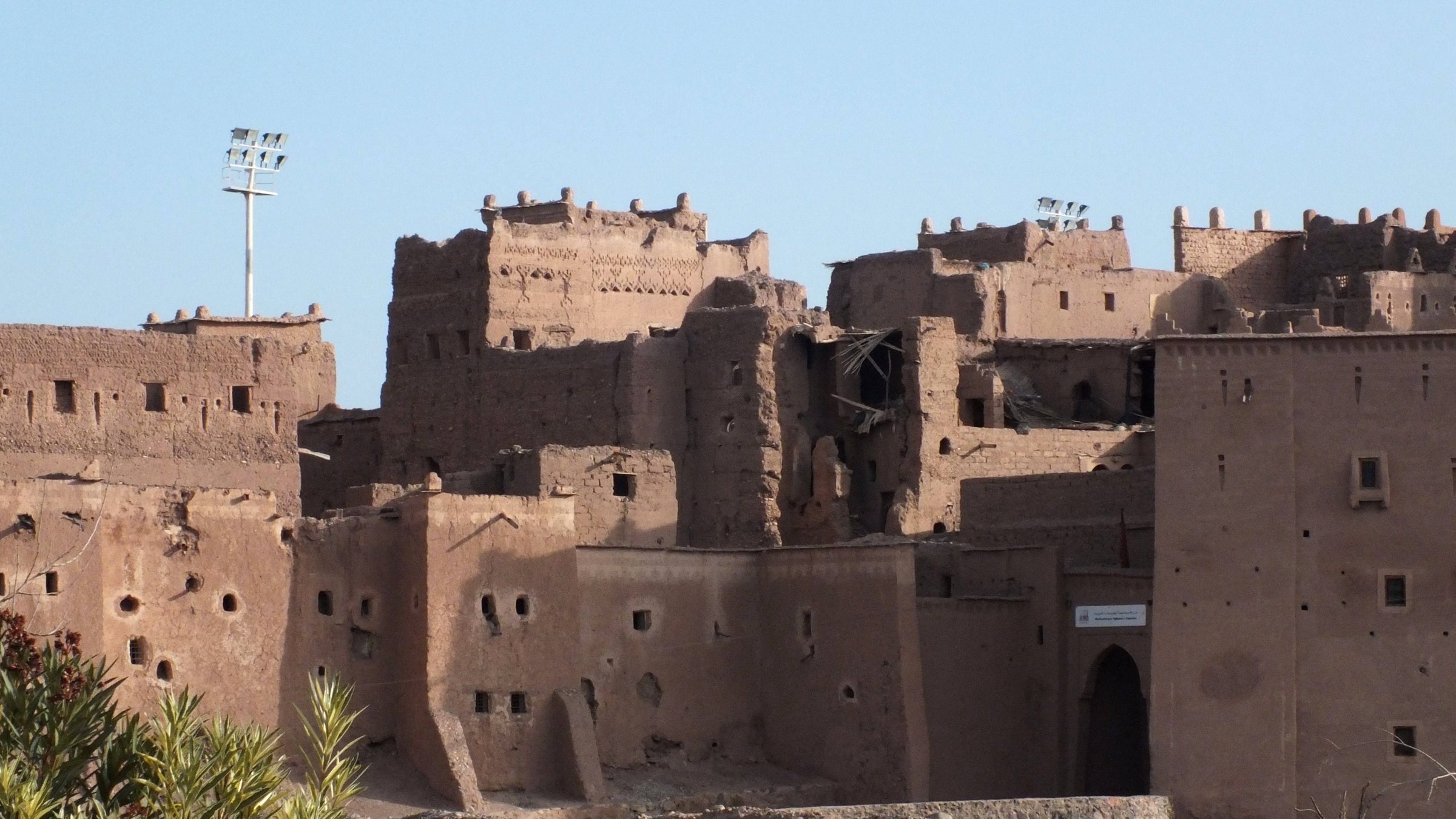 Ouarzazate
4 Day Ouarzazate to Merzouga Desert Tour: A Sahara Loop via Dades and Zagora
from €327 per person
 PopularMarrakech
Morocco Itinerary 10 Days: The Grand Loop from Marrakech
from €908 per person
 PopularMarrakech
5 Days Tour from Marrakech to Fes: Ait Ben Haddou, Dades and Two Nights in Merzouga
from €424 per person