

Photos: Schorle, CC BY-SA 4.0 · Michael Day, CC BY 2.0 · Elena Tatiana Chis, CC BY-SA 4.0 · Johannes K Becker, CC BY-SA 3.0 · Sergey Pesterev, CC BY-SA 4.0
About
A complete circle of Morocco from Marrakech, ideal if your flights are in and out of Marrakech. AT A GLANCE • Duration: 10 days, 9 nights • Start and finish: Marrakech • Type: private tour with driver WHO MIGHT PREFER ANOTHER TOUR For a one-way version to Tangier, the Morocco itinerary 9 days. PRACTICAL INFORMATION Pack for all climates.
from €908 per person
Select date and travelers
Duration
10 days
Starts in
Marrakech
Ends in
Marrakech
Private tourOnly your group, with your own driver and vehicle. Your booking is confirmed straight away.
Free cancellationFull refund if canceled up to 24 hours before the start of the experience (local time)
Reserve now and pay laterReserve your spot while maintaining flexibility.
Lowest price guaranteedFound a lower price online? We'll refund the difference.
Included
Everything included in your package
Standard
Private tour
- Pick-up and drop-off at your hotel or riad
- Private air-conditioned vehicle for the whole trip
- Professional English or French-speaking driver
- Comfortable hotels or riads with private bathroom
- Daily breakfast and dinner
- Bottled water during the trip
LuxuryUpgrade
Private tour
- Pick-up and drop-off at your hotel or riad
- Private premium vehicle for the whole trip
- Professional English or French-speaking driver
- Charming riads, boutique hotels and luxury desert camp
- Daily breakfast and dinner
- Bottled water and snacks during the trip
- Flexible departure times
Itinerary: 10 days, day by day
Highlights
- Ben Youssef madrasa
- Ait Ben Haddou
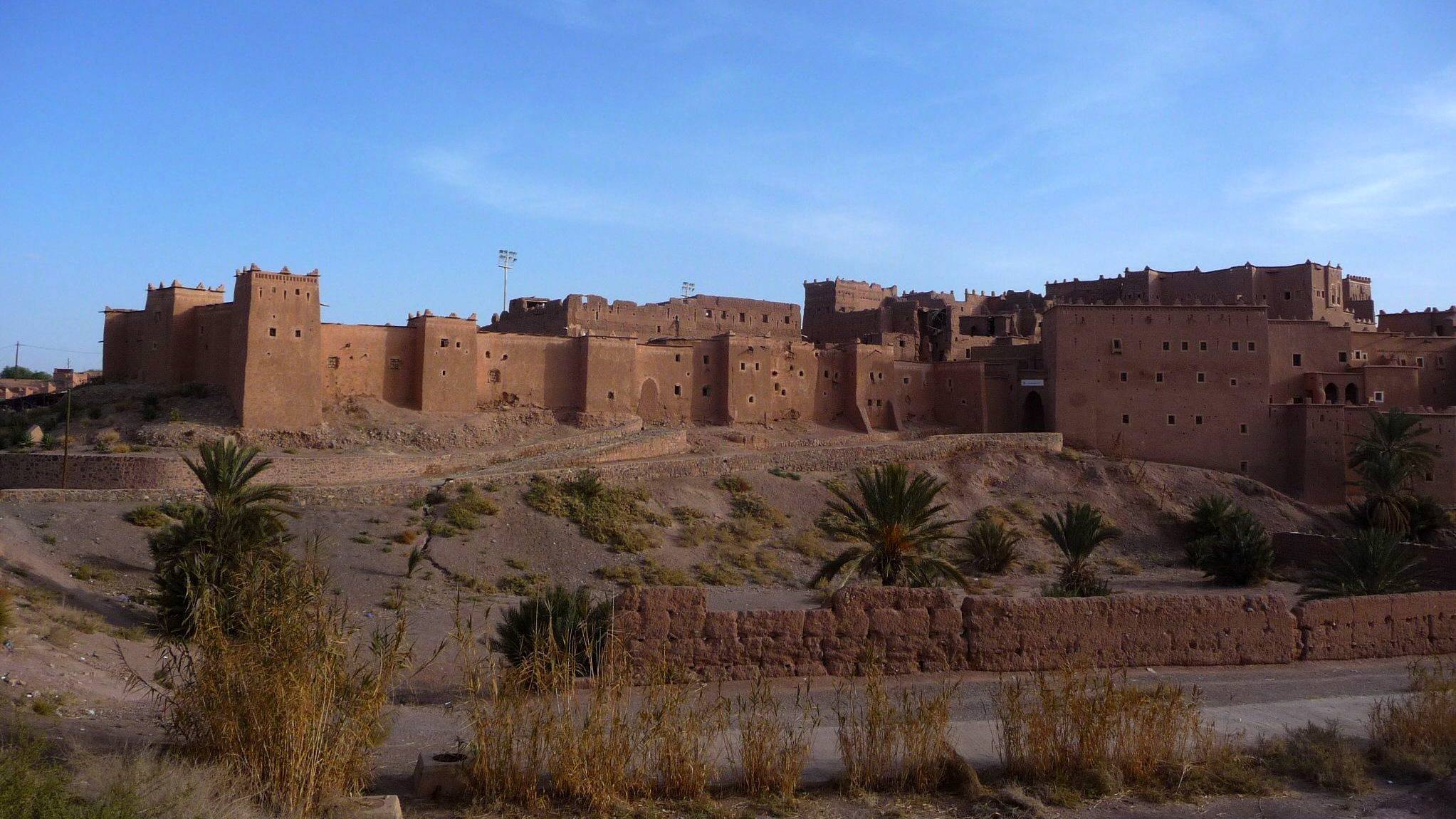
- Taourirt Kasbah
- Valley of Roses
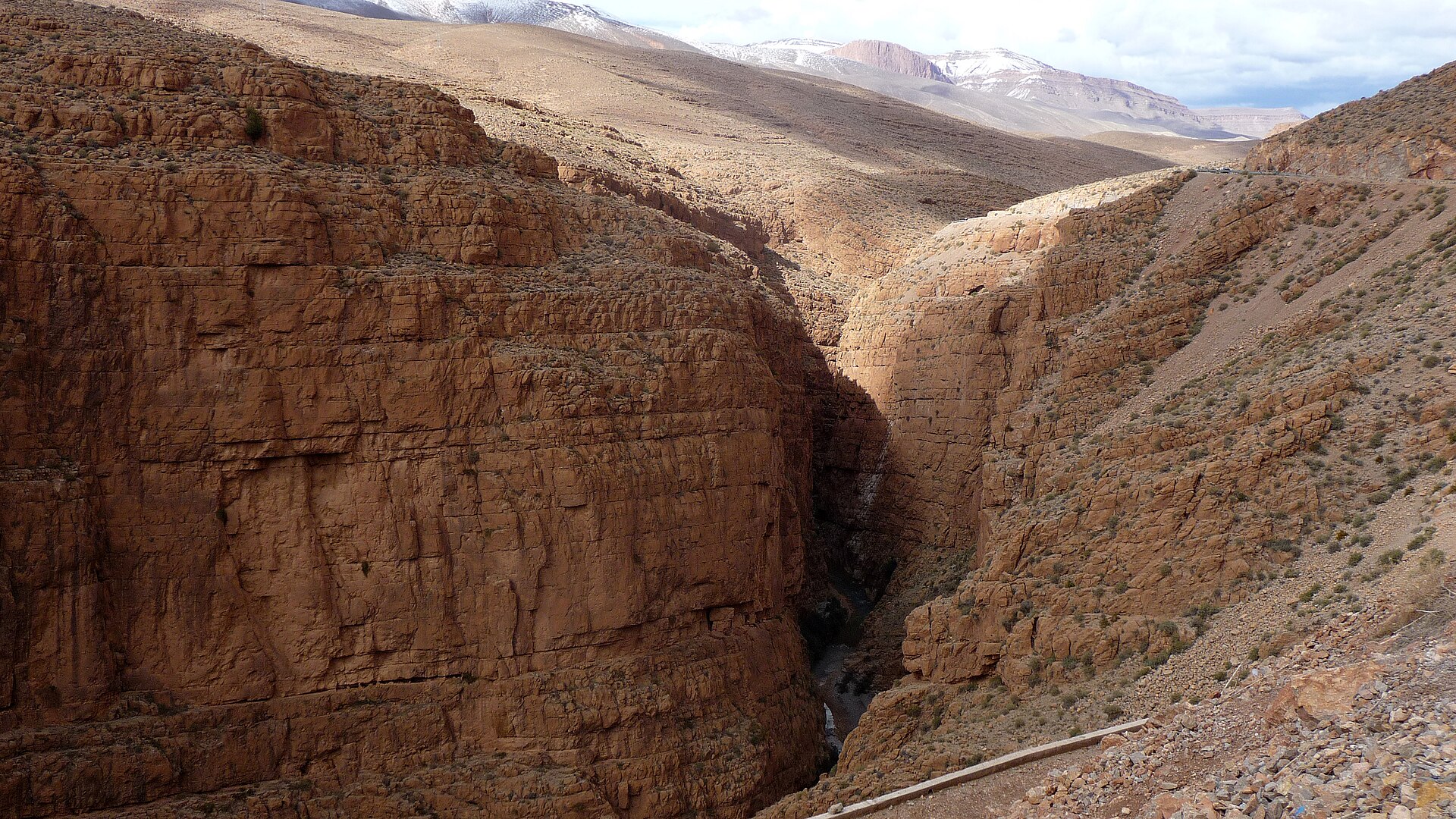
- Todra Gorge
- Erg Chebbi camp
- Khamlia
- Nomad family
| Day | Route | Overnight | On the road |
|---|---|---|---|
| 1 | Marrakech | Marrakech | — |
| 2 | Marrakech - Ait Ben Haddou | Ait Ben Haddou | 130 km · 2 h |
| 3 | Ait Ben Haddou - Dades Valley | Dades Valley | 160 km · 2.5 h |
| 4 | Dades Valley - Todra Gorge - Merzouga | Merzouga | 250 km · 3.5 h |
| 5 | A day in the Sahara | Merzouga | — |
| 6 | Merzouga - Fes | Fes | 440 km · 6.5 h |
| 7 | Guided day in Fes | Fes | — |
| 8 | Fes - Chefchaouen | Chefchaouen | 170 km · 2.5 h |
| 9 | Chefchaouen - Rabat | Rabat | 250 km · 3.5 h |
| 10 | Rabat - Marrakech | — | 370 km · 5.5 h |
Day 1: Marrakech
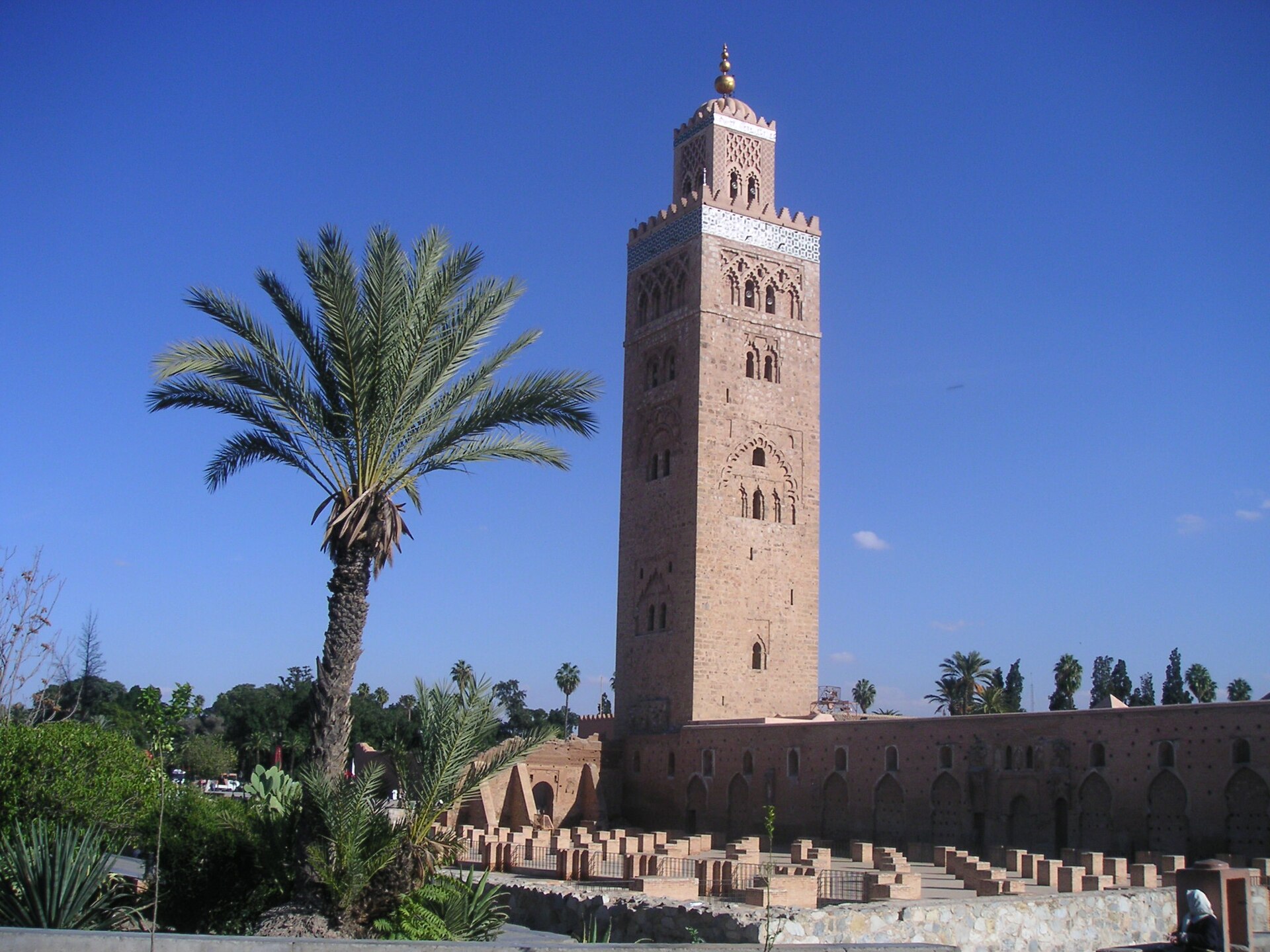
Your Morocco journey begins in the Red City, with a full day in the medina alongside a licensed local guide. Start at the Koutoubia, the 12th-century minaret that still sets the skyline of Marrakech, then cross into the Bahia Palace, a 19th-century residence of carved cedar ceilings, painted doors and quiet orange-tree courtyards. Late morning, step into the Ben Youssef madrasa, the Koranic school rebuilt in the 16th century around a marble courtyard and a pool that mirrors its stucco walls. From there your guide leads you through the dyers' and spice souks, where skeins of wool hang to dry above the lanes and cumin, saffron and ras el hanout are sold by weight. Stop for lunch wherever you like. In the afternoon, slow down in the Majorelle Garden, the cobalt-blue villa and cactus garden restored by Yves Saint Laurent. In the evening, Jemaa el-Fna fills with food stalls, musicians and storytellers, a ten-minute walk from most riads. TIPS FOR TODAY • Wear comfortable shoes: the medina is all on foot, with uneven paving. • In the souks, haggling is expected; start at about half the first price and keep it friendly. • Majorelle sells timed tickets online; booking a day ahead avoids the queue. SCHEDULE (times are estimates) 09:00 – Koutoubia 09:45 – Bahia Palace 11:00 – Ben Youssef madrasa 12:00 – Dyers' and spice souks 13:30 – Lunch (not included) 15:00 – Majorelle Garden INCLUDED: licensed guide and driver, riad night with breakfast. NOT INCLUDED: entrance fees, lunch, tips. Overnight: Marrakech (riad) Meals: breakfast
Ben Youssef madrasa
Duration: About 45 minutes
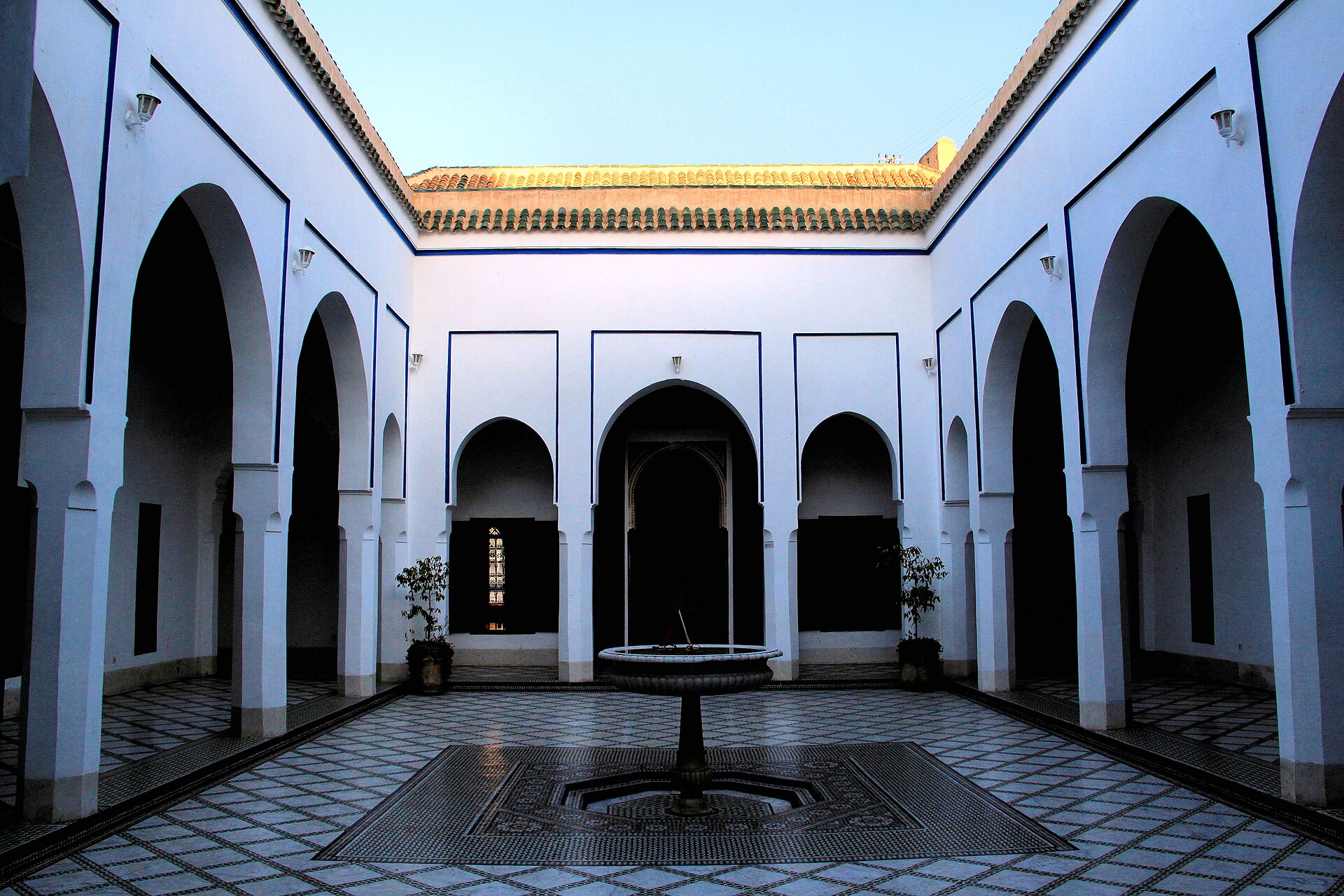
A Koranic school rebuilt in the 16th century, with a marble courtyard. Practical: entrance fee.
Day 2: Marrakech to Ait Ben Haddou
About 130 km · 2 h on the road
Leave Marrakech behind and climb into the High Atlas on the Tizi n'Tichka road, the highest paved pass in Morocco at about 2,260 m. The road winds past walnut trees, terraced fields and Berber villages built from the red earth of the slopes, with photo stops where the views open over the valleys and, in winter and spring, snow on the peaks. On the southern side of the mountains the landscape turns dry and mineral, and by early afternoon you reach Ait Ben Haddou, the fortified village (ksar) listed by UNESCO. Its earthen houses and towers climb a hillside above the river and have appeared in films such as Gladiator and in Game of Thrones. After lunch, a local guide walks you through the lanes and up to the old granary at the top, the best viewpoint over the ksar and the valley. Stay for sunset, when the walls turn deep orange, then settle into your hotel for dinner. This is a deliberately short driving day, so you see the ksar in its best light instead of in passing. TIPS FOR TODAY • Bring a warm layer: the Tizi n'Tichka pass can be cold even in spring. • If you get car-sick, take something before the pass; the road has many bends. • The climb to the granary is short but steep; sturdy shoes help. SCHEDULE (times are estimates) 09:00 – Pick-up 11:30 – Tizi n'Tichka 14:00 – Ait Ben Haddou; lunch (not included) 16:30 – Guided walk and sunset INCLUDED: vehicle and driver, local guide, hotel with dinner and breakfast. NOT INCLUDED: lunch, drinks, tips. Overnight: Ait Ben Haddou (hotel) Meals: breakfast and dinner
Ait Ben Haddou
Duration: About 2 hours
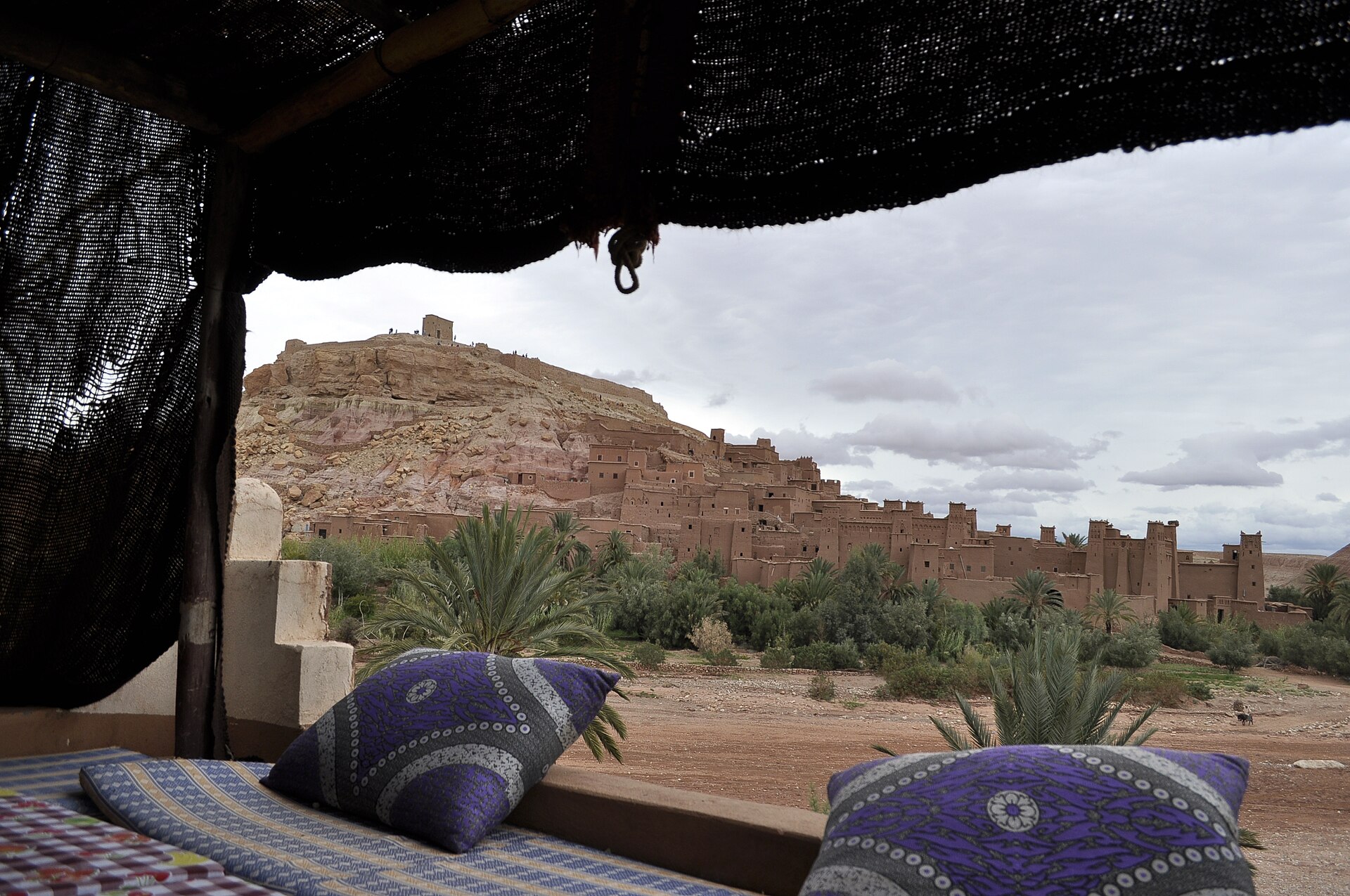
A UNESCO ksar used in many films. Practical: the granary at the top has the best view.
Day 3: Kasbahs to the Dades valley
About 160 km · 2.5 h on the road
Today follows the Road of a Thousand Kasbahs. In Ouarzazate, visit the Taourirt Kasbah, the earthen palace of the Glaoui family, with its maze of rooms, painted ceilings and rooftop views over the town and the mountains. Continue east to the Skoura palm grove, an oasis of date palms, olive trees and old kasbahs fed by traditional irrigation channels. After lunch, the road reaches Kelaat M'Gouna and the Valley of Roses, where hedges of Damask roses line the fields; in May the harvest fills the valley with scent, and rose water and rose oil from the local distilleries make simple, light souvenirs. In the late afternoon you enter the Dades Valley, where the river cuts through red and ochre rock and the famous rock formations rise above the road. Your hotel sits in the valley, a quiet place for dinner and an early night before the desert. TIPS FOR TODAY • Carry some small change for entrance fees and the Taourirt Kasbah. • If you travel in May, ask your driver about the Rose Festival in Kelaat M'Gouna. • Dades nights are cool outside summer; keep a jumper handy for dinner. SCHEDULE (times are estimates) 09:00 – Ouarzazate: Taourirt Kasbah 11:00 – Skoura 13:00 – Lunch (not included) 15:00 – Kelaat M'Gouna 17:00 – Dades Valley INCLUDED: vehicle and driver, hotel with dinner and breakfast. NOT INCLUDED: entrance fees, lunch, tips. Overnight: Dades Valley (hotel) Meals: breakfast and dinner
Taourirt Kasbah
Duration: About 45 minutes
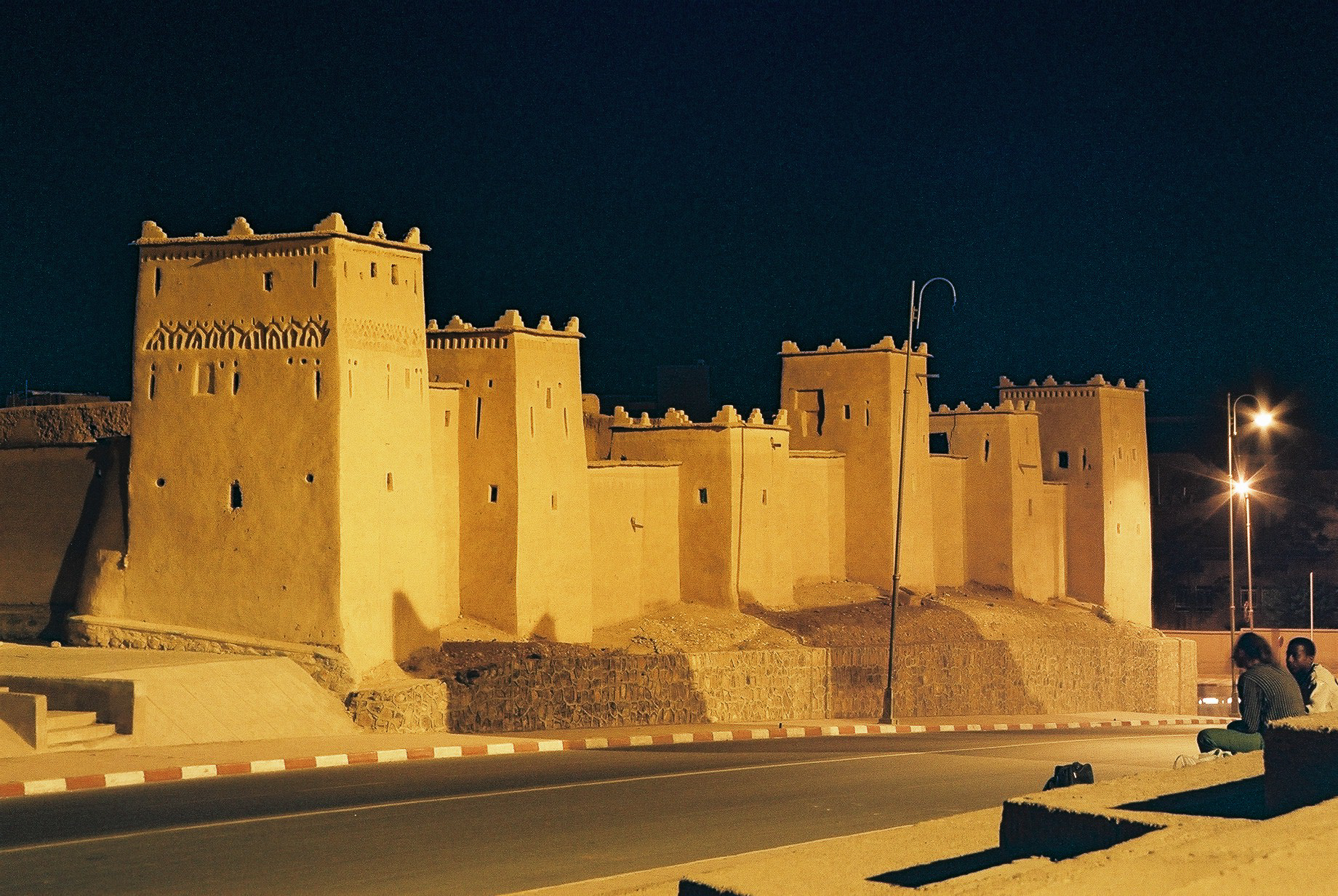
The Glaoui family's earthen palace in Ouarzazate. Practical: entrance fee.
Valley of Roses
Duration: About 20 minutes
Rose hedges and distilleries, in bloom in May. Practical: rose water is a good souvenir.
Day 4: Todra Gorge to Merzouga
About 250 km · 3.5 h on the road
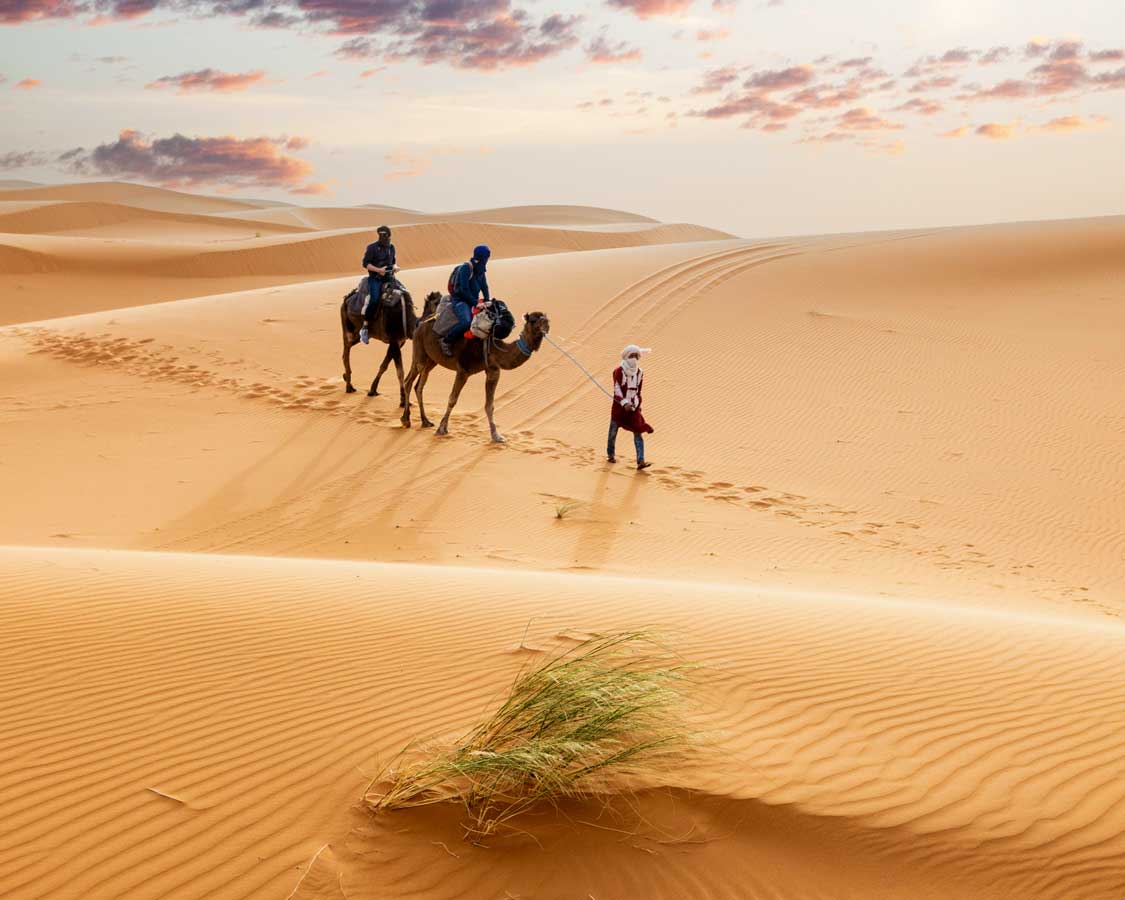
Start the morning in the Todra Gorge, where the canyon walls rise about 300 m on either side of a clear river. The walk along the riverbed is flat and easy, and in the narrowest part the cliffs almost close over your head; climbers are often on the rock faces. Continue east through the oases of the Tafilalet and stop for lunch on the way. In Erfoud, the gateway to the desert, the landscape flattens into hamada (stony desert) and then, on the horizon, the dunes of Erg Chebbi appear, rising up to about 150 m and changing colour through the day. In the late afternoon, swap the car for a camel. Your caravan walks into the dunes as the light softens, timed to reach the top of a dune for sunset. At the camp, dinner is served under the stars, often followed by Berber drums around the fire. Bring only a small bag for the night; your main luggage stays in the vehicle. TIPS FOR TODAY • Pack a small overnight bag for the camp; the rest stays safely in the vehicle. • Wear a scarf or hat on the camel ride and bring sunglasses against the wind and sand. • Desert nights are cold from November to March; the camp has blankets, but a fleece is welcome. SCHEDULE (times are estimates) 08:30 – Depart 10:00 – Todra Gorge (about 1 hour) 12:30 – Lunch (not included) 14:30 – Erfoud 16:30 – Camel trek into the dunes 18:30 – Desert camp INCLUDED: vehicle and driver, camel trek, desert camp with dinner and breakfast. NOT INCLUDED: lunch, drinks, tips. Overnight: Erg Chebbi desert camp Meals: breakfast and dinner
Todra Gorge
Duration: About 1 hour
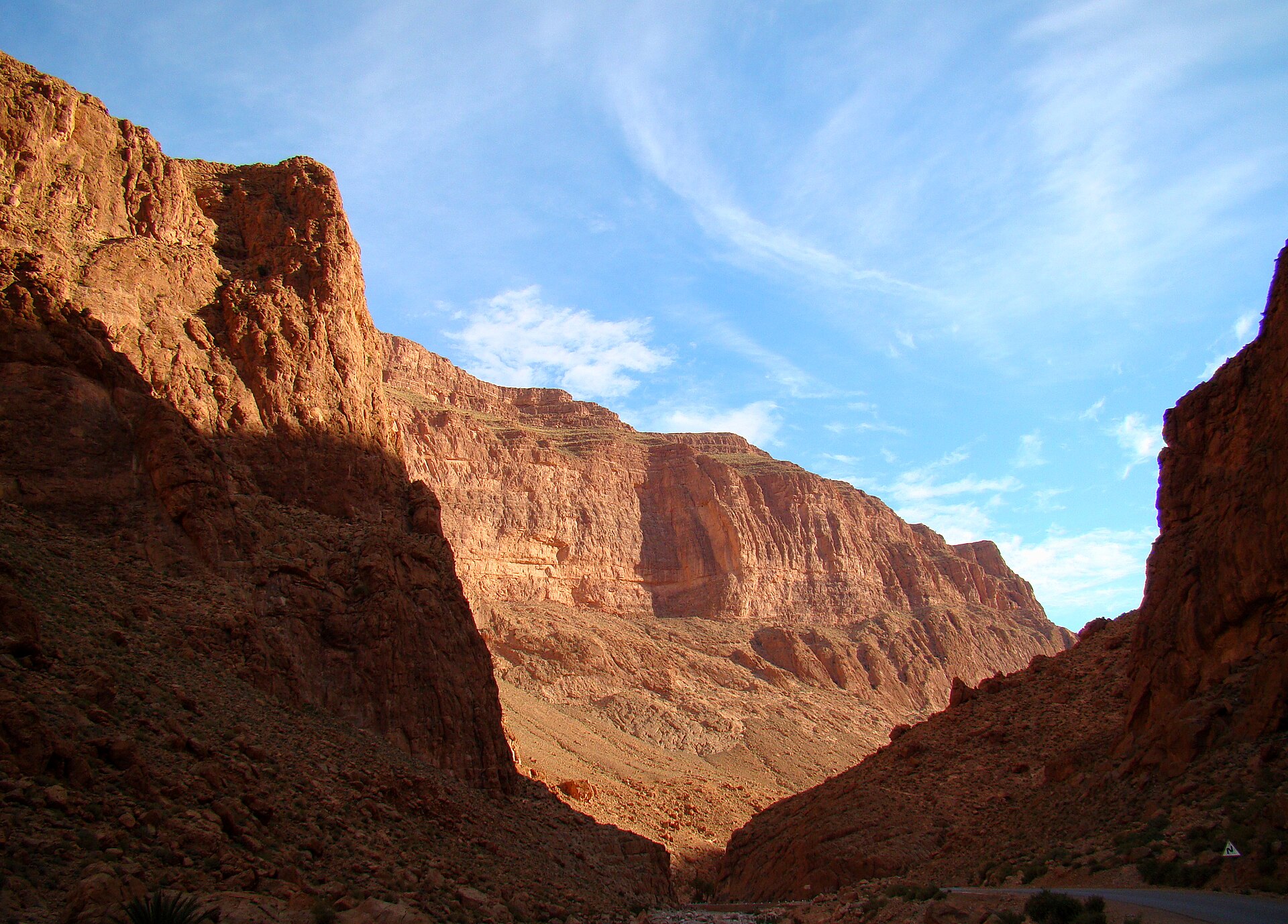
A canyon with walls about 300 m high. Practical: flat walk along the river.
Erg Chebbi camp
Duration: Overnight
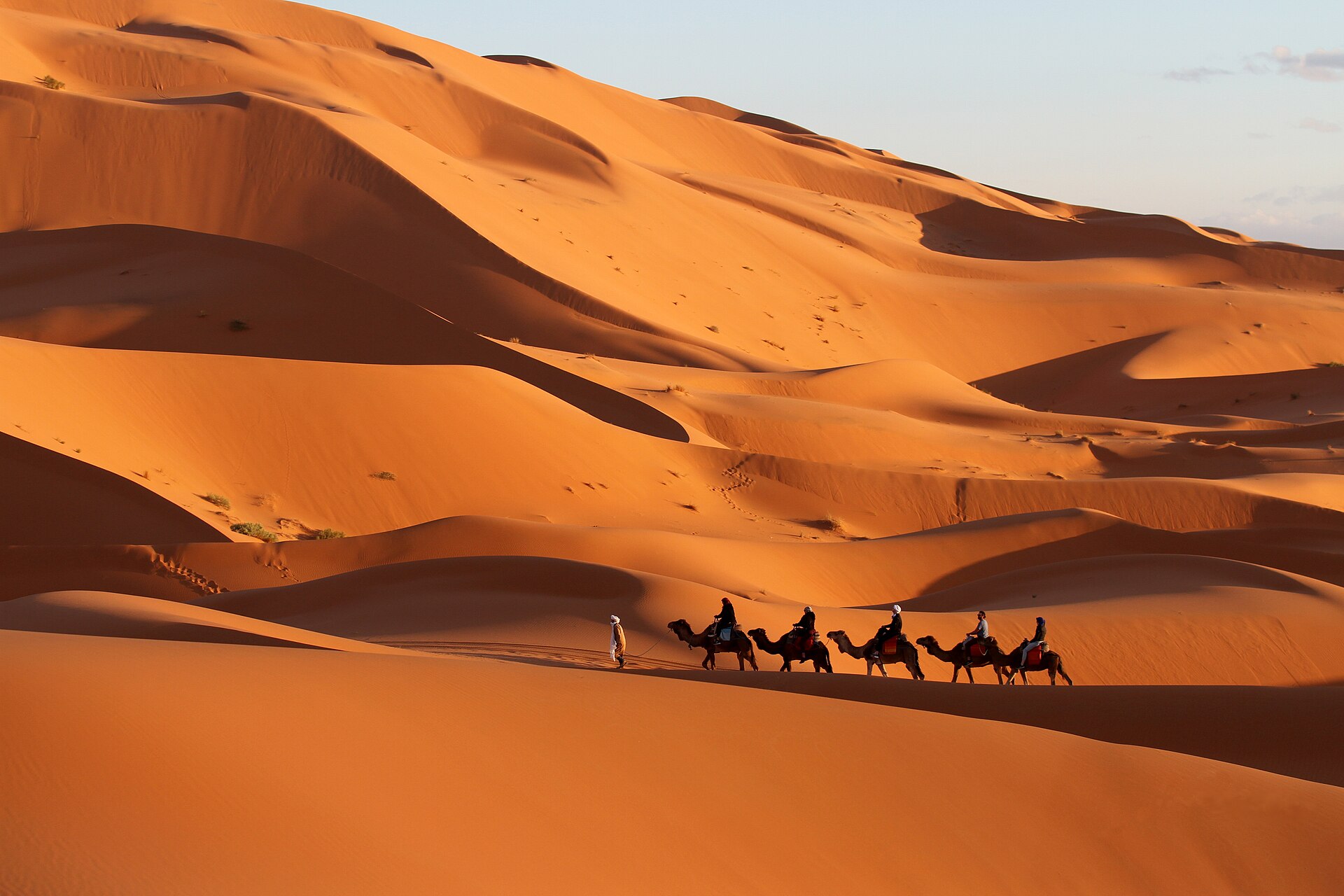
Tents among the dunes, dinner and drums. Practical: small bag only.
Day 5: A day in the Sahara
A full day in the desert, without having to rush back. Wake early to watch the sunrise from the dunes, when the sand turns from grey to gold, then return to camp for breakfast. Mid-morning, a 4x4 tour takes you around the Erg Chebbi. Share tea with a nomad family in a tent of woven goat hair and learn how they live with their herds at the edge of the dunes. Continue to Khamlia, a village of Gnawa musicians descended from West African traders, where the music, rhythmic and hypnotic, is played on drums, iron castanets and the guembri. On the way, stop where fossils, some of them hundreds of millions of years old, are cut and polished. The afternoon is yours: rest in the shade, try sandboarding, or simply sit in the silence of the desert. Climb a dune again for sunset before dinner. TIPS FOR TODAY • Ask your driver for the sunrise time the day before; the dunes are worth the early start. • Bring cash for the Gnawa musicians in Khamlia and for fossils, if you'd like to buy some. • Drink plenty of water and wear sunscreen, even when the air feels cool. SCHEDULE (times are estimates) 06:00 – Sunrise 08:00 – Breakfast 09:30 – 4x4 tour: nomad family, Khamlia, fossils 13:00 – Lunch (not included) 18:00 – Sunset on the dunes INCLUDED: driver and 4x4 tour, accommodation with dinner and breakfast. NOT INCLUDED: lunch, drinks, tips. Overnight: Merzouga Meals: breakfast and dinner
Khamlia
Duration: About 45 minutes
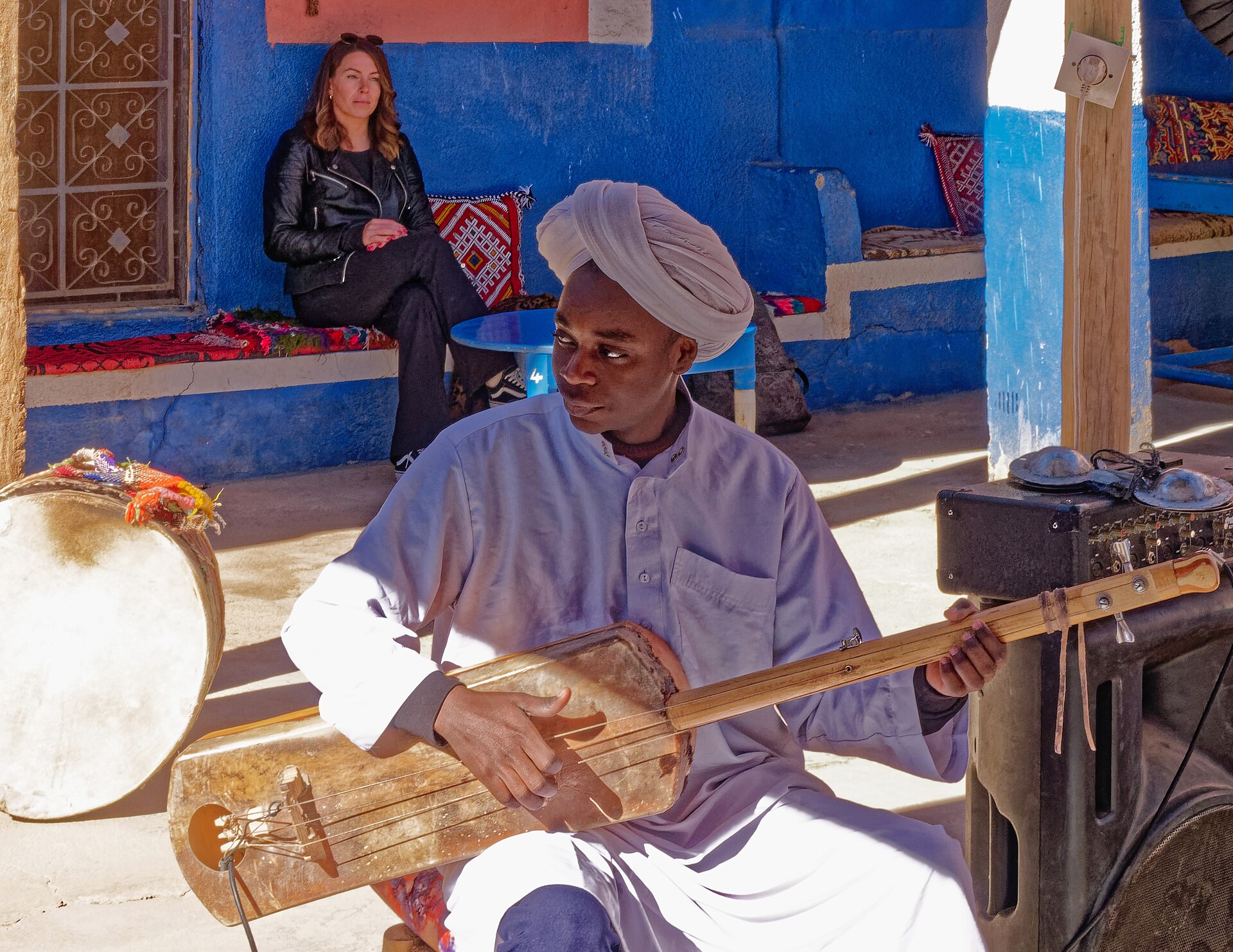
A village of Gnawa musicians. Practical: contribution expected.
Nomad family
Duration: About 45 minutes
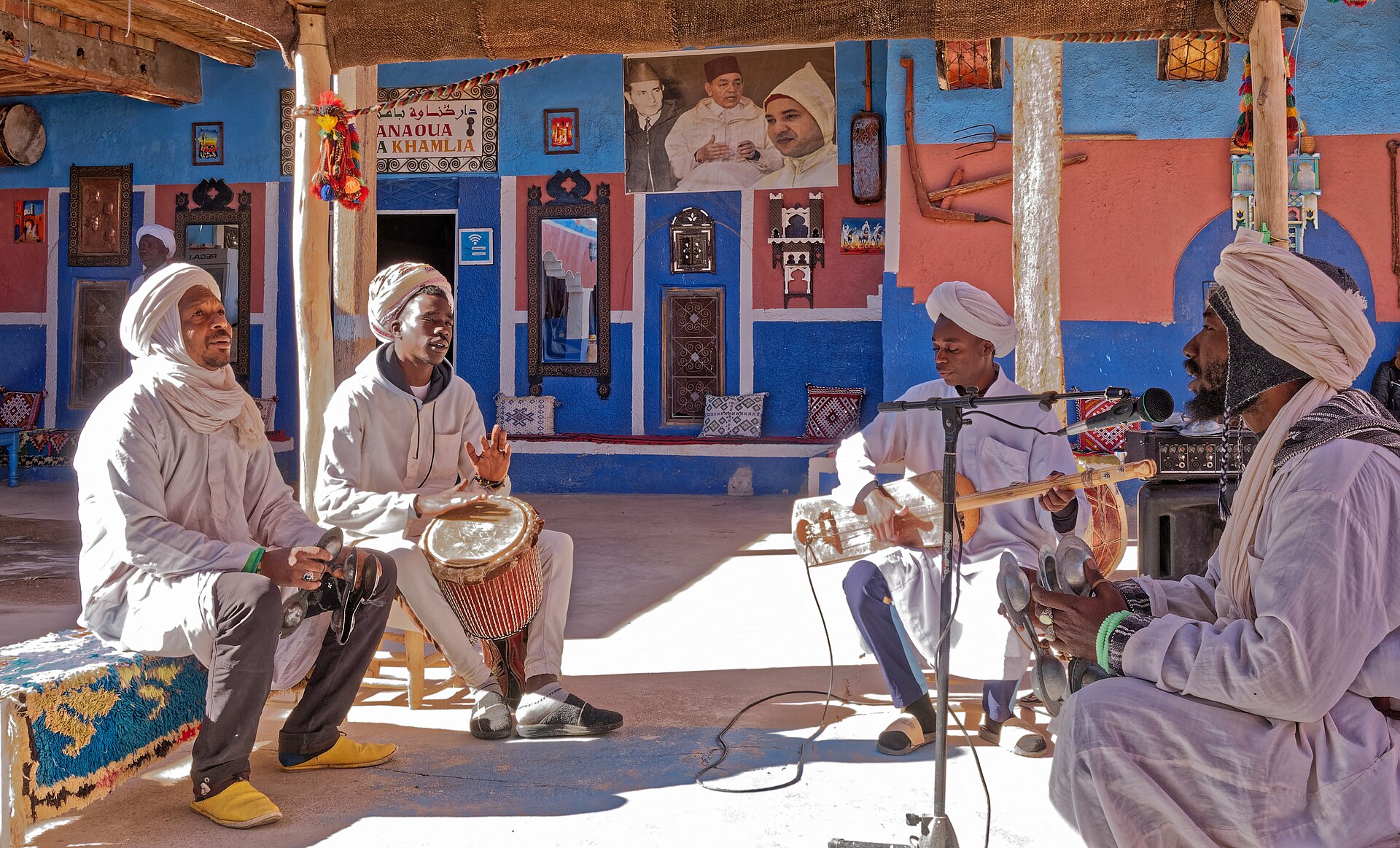
Tea in a tent of woven goat hair. Practical: ask before photos.
Day 6: Merzouga to Fes
About 440 km · 6.5 h on the road
One last sunrise over the dunes, then the longest drive of the trip, north across the country, broken up by stops. The road follows the Ziz Valley, a ribbon of date palms deep in a red canyon, with viewpoints over the oasis; dates from the valley are sold along the road. After lunch in Midelt, at the foot of the snow-capped Ayachi, the road climbs into the Middle Atlas. In the cedar forest near Azrou, Barbary macaques often come close to the road, and the old cedars are among the largest in North Africa. Stop briefly in Ifrane, a town built in the 1930s in an Alpine style, with chalets and clean streets that feel far from the Sahara you left in the morning. You arrive in Fes in the early evening and check in to your riad inside or near the old city. TIPS FOR TODAY • This is the longest drive: keep water, snacks and a charger in the car. • Don't feed the Barbary macaques; just watch them from a short distance. • Midelt is a good lunch stop; try the local apples in season. SCHEDULE (times are estimates) 06:00 – Sunrise 08:00 – Depart 10:00 – Ziz Valley 13:00 – Lunch in Midelt (not included) 15:00 – Cedar forest and macaques 15:45 – Ifrane 17:30 – Fes INCLUDED: vehicle and driver, riad with breakfast. NOT INCLUDED: lunch, drinks, tips. Overnight: Fes (riad) Meals: breakfast
Ziz Valley
Duration: About 15 minutes
A palm grove in a red canyon. Practical: dates for sale.
Ifrane
Duration: About 20 minutes
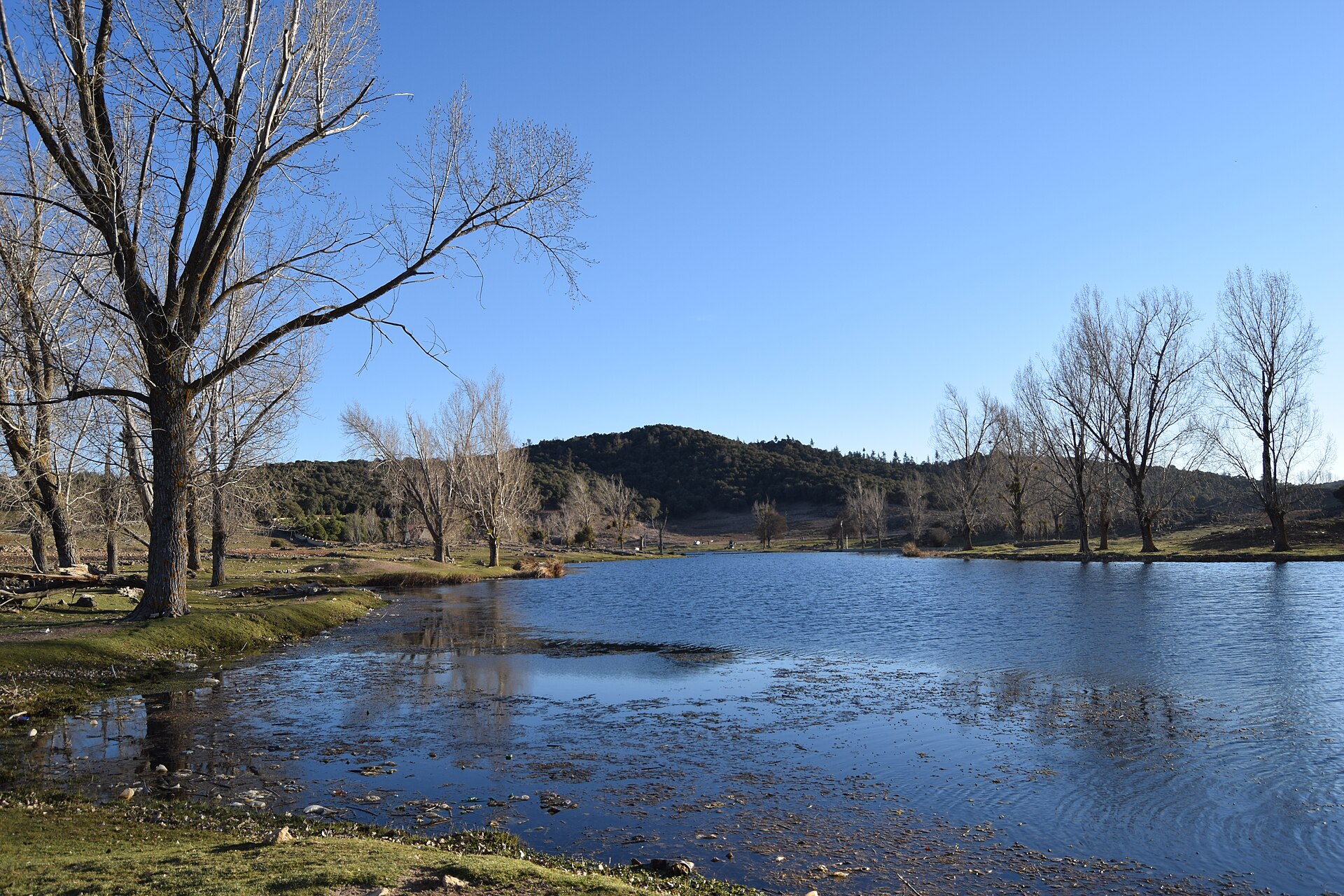
An alpine-style town of the 1930s. Practical: cool.
Day 7: Guided day in Fes
Fes el-Bali, founded in the 9th century, is the largest living medieval city in the world, a car-free maze of more than 9,000 lanes. A licensed guide makes the difference here, both for finding your way and for understanding what you see. Begin at the gates of the Royal Palace and in the Mellah, the old Jewish quarter, then enter the medina through Bab Boujloud, the blue gate. Visit the Bou Inania madrasa, a 14th-century school of carved cedar, stucco and zellige tilework. The guide then leads you through the souks, organised by trade: coppersmiths, weavers, slipper makers and spice sellers. After lunch (try pastilla, the sweet and savoury pie, or bissara soup), see the Qarawiyyin, founded in 859 and considered one of the oldest universities in the world, and the Attarine madrasa. End at the Chouara tannery, where hides are dyed in stone vats as they have been for centuries; you watch from a terrace above, with a sprig of mint for the smell. TIPS FOR TODAY • Stay with your guide in the medina; the lanes are easy to get lost in. • Non-Muslims can't enter the Qarawiyyin mosque; your guide shows you the best views of it. • At the tannery, take the mint leaves you are offered; the smell is strong. SCHEDULE (times are estimates) 09:00 – Royal Palace gates and the Mellah 10:00 – Bab Boujloud and Bou Inania 11:30 – Souks 13:00 – Lunch (not included) 14:30 – Qarawiyyin and Attarine 15:30 – Tannery INCLUDED: licensed guide, riad with breakfast. NOT INCLUDED: entrance fees, lunch, tips. Overnight: Fes (riad) Meals: breakfast
Bou Inania madrasa
Duration: About 30 minutes
A 14th-century school of carved cedar and zellige. Practical: entrance fee.
Chouara tannery
Duration: About 30 minutes
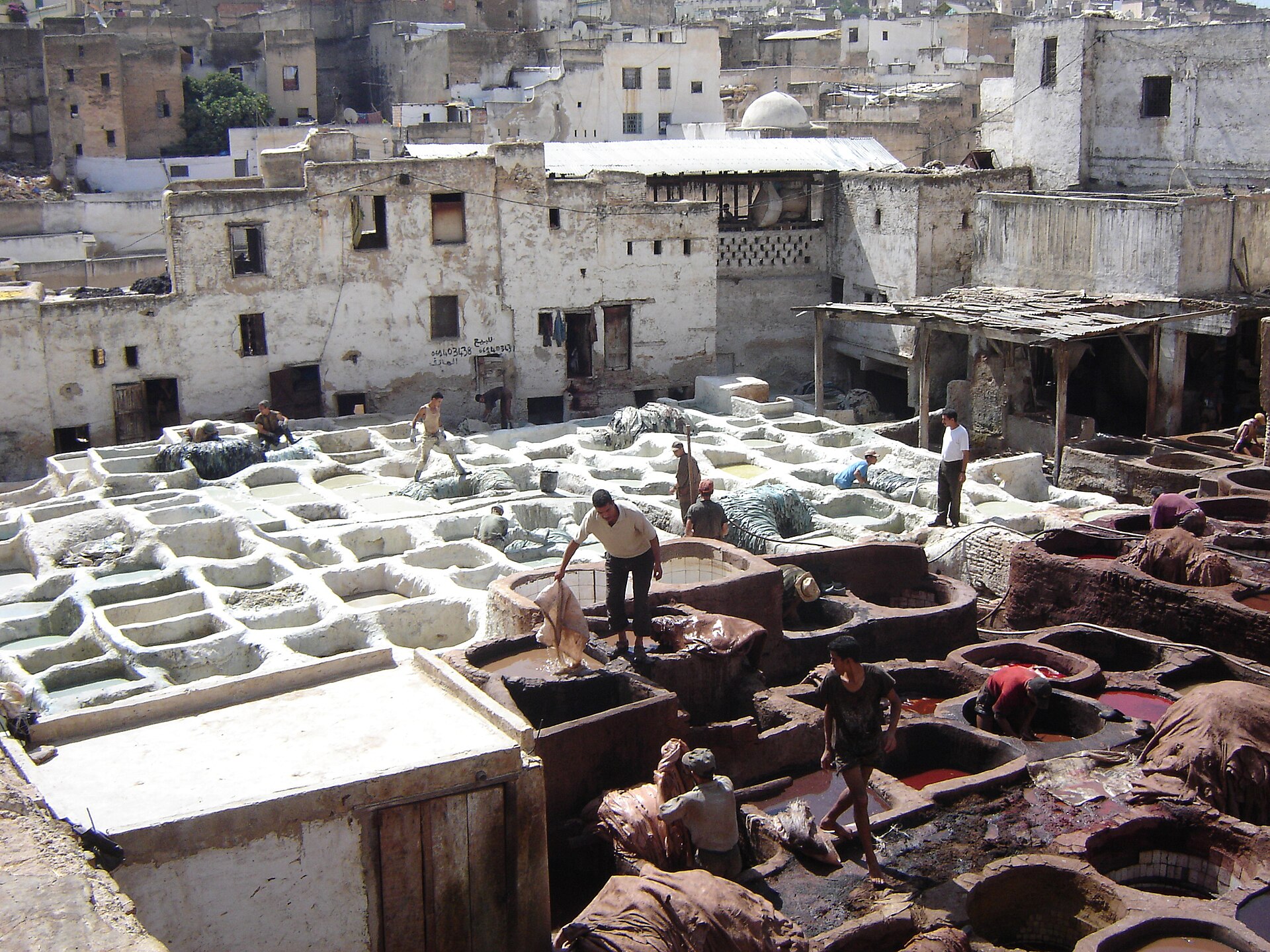
Centuries-old dye pits seen from a terrace. Practical: strong smell.
Day 8: Fes to Chefchaouen
About 170 km · 2.5 h on the road
Drive north out of Fes through rolling hills of olive groves and wheat fields into the Rif mountains. By lunchtime you reach Chefchaouen, the blue city, founded in 1471 on a slope below two peaks. In the afternoon, wander the medina at your own pace: lanes and staircases washed in every shade of blue, small squares, potted plants on the doorsteps and the Outa el-Hammam square below the red-walled kasbah. Chefchaouen is calm and easy to explore on foot, though there are many stairs. Towards sunset, walk up to the Spanish Mosque on the hill opposite the town (about 30 minutes on a path). From there the whole medina spreads out below you as the lights come on, one of the most beautiful views of the trip. TIPS FOR TODAY • Chefchaouen has many stairs; light shoes with grip are ideal. • Go up to the Spanish Mosque about an hour before sunset and bring a torch for the way down. • Ask before photographing people; doorways and lanes make the best pictures anyway. SCHEDULE (times are estimates) 09:00 – Depart Fes 12:30 – Chefchaouen; lunch (not included) 15:00 – Blue medina 17:30 – Spanish Mosque INCLUDED: vehicle and driver, riad with breakfast. NOT INCLUDED: lunch, drinks, tips. Overnight: Chefchaouen (riad) Meals: breakfast
Chefchaouen
Duration: Afternoon
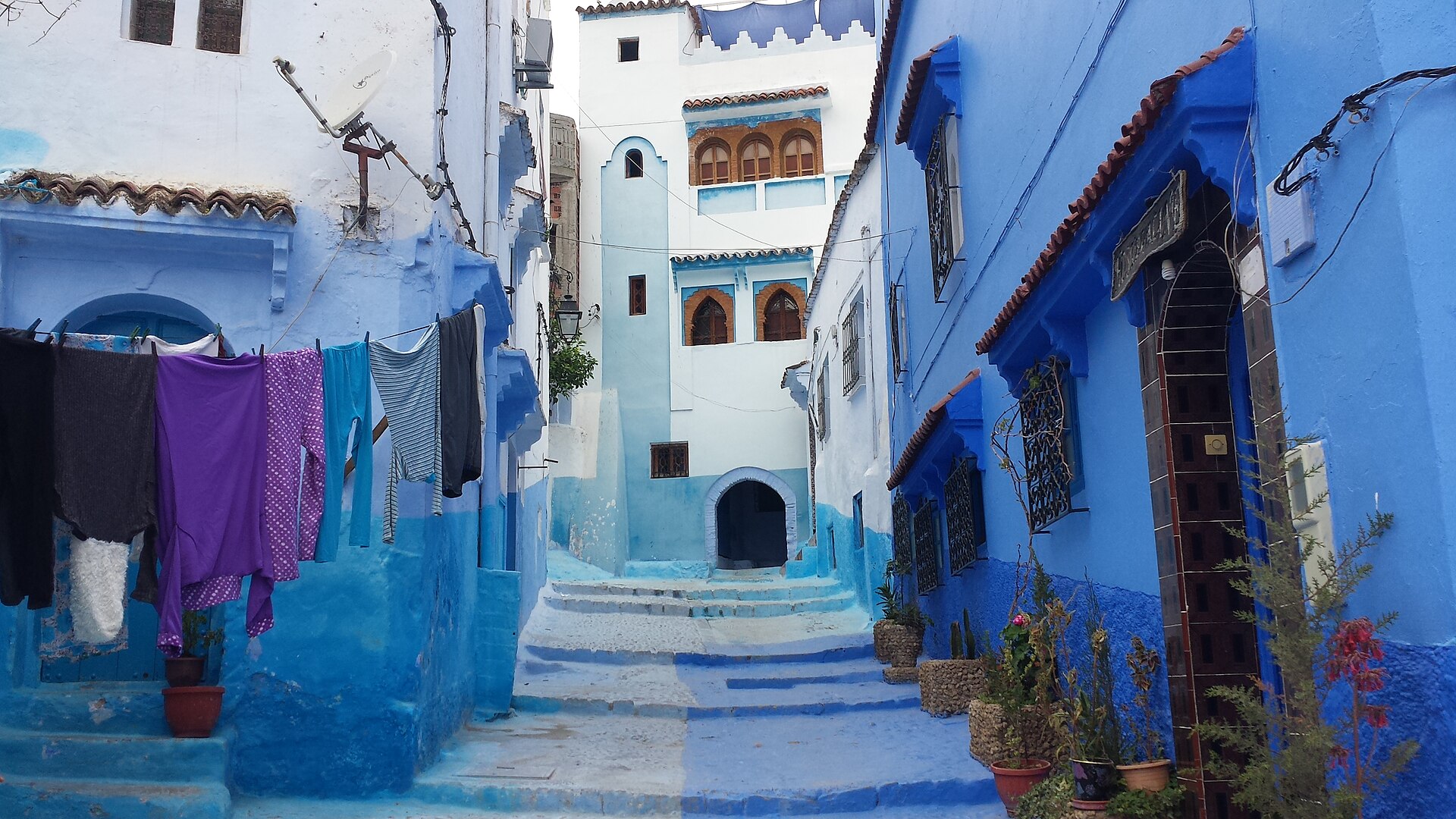
A blue mountain town founded in 1471. Practical: many stairs.
Day 9: Chefchaouen to Rabat
About 250 km · 3.5 h on the road
Leave the Rif and head south-west towards the Atlantic and Rabat, Morocco's capital, a green and relaxed city that feels very different from the medinas of the past days. In the afternoon, see the Hassan Tower, the unfinished 12th-century minaret standing among the stumps of its columns, and the Mausoleum of Mohammed V beside it. Then walk up to the Kasbah of the Udayas, a fortress above the mouth of the Bou Regreg river, with blue-and-white lanes, a quiet Andalusian garden and views over the ocean and the old town of Salé. The evening is free to stroll along the river or the beach before dinner. TIPS FOR TODAY • Rabat is relaxed and safe to explore on foot in the evening. • Dress modestly for the Mausoleum of Mohammed V; the guards in traditional uniform make a great photo. • The Kasbah of the Udayas has a small café with mint tea and views over the river. SCHEDULE (times are estimates) 09:00 – Depart 13:00 – Rabat; lunch (not included) 15:00 – Hassan Tower and Udayas INCLUDED: vehicle and driver, hotel with breakfast. NOT INCLUDED: lunch, drinks, tips. Overnight: Rabat (hotel) Meals: breakfast
Kasbah of the Udayas
Duration: About 1 hour
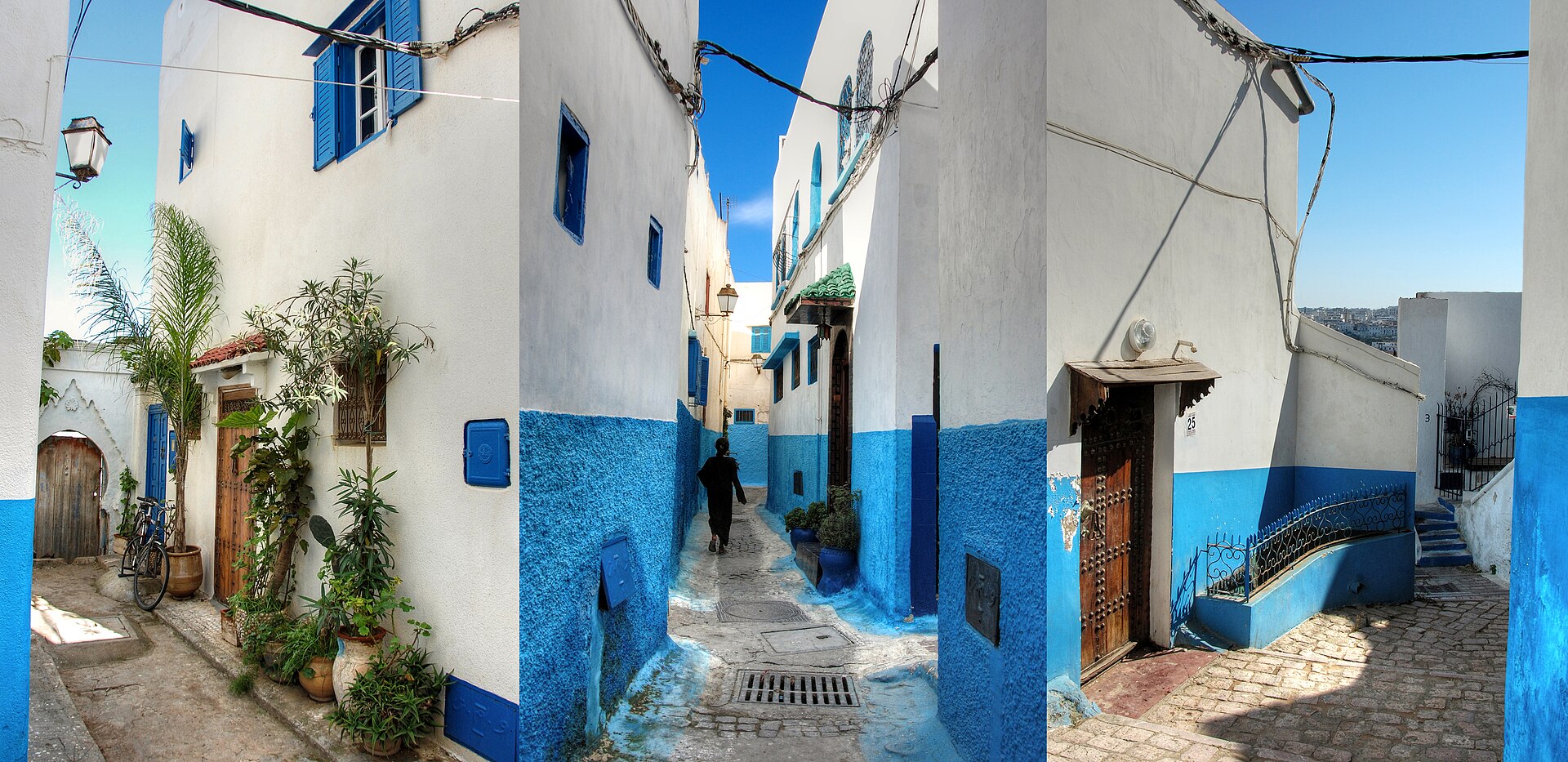
Blue-and-white lanes above the river mouth. Practical: free.
Day 10: Rabat to Marrakech
About 370 km · 5.5 h on the road
The last morning of the loop: drive south from Rabat to Marrakech, about 3.5 hours on the motorway past Casablanca. You arrive in Marrakech around lunchtime, with time for a last walk in the medina, some shopping in the souks or a hammam before your flight or your next stay. Your driver drops you at your hotel, riad or Marrakech Menara airport (about 15 minutes from the city centre). TIPS FOR TODAY • If you fly the same day, plan a flight from mid-afternoon onwards to keep a comfortable margin. • Keep some dirhams for last-minute souvenirs, then change the rest back before security. • Tell your driver your flight time on the first day, so the last day can be planned around it. SCHEDULE (times are estimates) 09:00 – Depart 13:00 – Marrakech INCLUDED: vehicle and driver. NOT INCLUDED: lunch, tips. Overnight: not included (end of the tour) Meals: breakfast at your Rabat hotel
Plan your trip
Best time to go
- March to May: the best season, warm days and green valleys.
- September to November: pleasant days and clear, starry desert nights.
- December to February: sunny days, but desert and mountain nights are cold (bring warm layers).
- June to August: very hot in the Sahara (often above 40 °C); early starts help.
Getting there
Make it yours
This is a private tour: we can add a night, change hotels or adjust the route to suit you.
Practical info
- Money: the Moroccan dirham (MAD). Cards work in cities and hotels; bring cash for villages, tips and souks.
- Plugs: type C and E (European), 220 V.
- Phone: a local SIM (Maroc Telecom, Orange or inwi) is cheap at the airport and works along the whole route.
- Visa: many nationalities (EU, UK, US, Canada, Australia) need none for up to 90 days. Check the rules for your passport before you go.
What to bring
- Comfortable shoes for the medinas and the dunes
- Warm layers for desert nights
- A scarf or hat, sunglasses and sunscreen
- Some cash in dirhams for tips and small purchases
- Clothes covering shoulders and knees for villages and religious sites
- Your passport (hotels ask for it at check-in)
Good to know
Cancellation policy
Full refund if you cancel at least 24 hours before the start. Cancellations less than 24 hours before are not refunded. If bad weather stops the tour, you get a new date or a full refund.
Accessibility
Not wheelchair accessible. Child seats or chairs available.
Frequently Asked Questions
Does this 10-day tour start and end in Marrakech?
Yes. The Grand Loop starts and finishes in Marrakech, so it suits travellers whose flights arrive and leave from Marrakech Menara airport (RAK). Day 1 is a guided day in Marrakech, then the route crosses the High Atlas to Ait Ben Haddou, follows the kasbahs and gorges to the Sahara, heads north to Fes, Chefchaouen and Rabat, and returns to Marrakech on day 10, around lunchtime.
Is this a private tour or a group tour?
It is a private tour: only you and the people you book with, with your own driver and vehicle for the whole trip. There are no other travellers in the car, so you can stop for photos, change the pace and adjust the day with your driver. Departures are on the date you choose; the tour doesn't need a minimum number of people to run.
How many nights do I spend in the Sahara, and where?
Two nights in the Merzouga area, by the Erg Chebbi dunes. On day 4 you ride a camel into the dunes at sunset and sleep in a desert camp; day 5 is a full day in the desert, with sunrise on the dunes, a 4x4 tour to a nomad family, the Gnawa village of Khamlia and fossil workshops, and a second night in Merzouga. Two nights mean you see the desert without rushing in and out.
How long are the drives each day?
Most days have 2 to 4 hours on the road, split by stops at viewpoints, kasbahs, gorges and towns. The longest day is day 6, from Merzouga to Fes (about 7 hours with stops in the Ziz Valley, Midelt, the cedar forest and Ifrane). Day 10, from Rabat back to Marrakech, is about 3.5 hours on the motorway. Days 1, 5 and 7 have no long drive at all. The day-by-day table on this page shows the approximate distance and time for every day.
What kind of hotels and riads are included?
You choose between two levels when you book. Hotels included: comfortable hotels or riads with a private bathroom. Luxury hotels: charming riads, boutique hotels and a luxury desert camp. In Marrakech, Fes and Chefchaouen you stay in riads (traditional houses built around a courtyard) where possible; in Ait Ben Haddou, the Dades Valley and Rabat in hotels; and one night in a desert camp among the dunes.
Which meals are included?
Breakfast is included every morning. Dinner is included on the nights at Ait Ben Haddou, in the Dades Valley and in the desert, where there are few restaurants nearby. Lunches and drinks are not included, so you can stop wherever you like; your driver knows good local places along the way. Each day of the itinerary lists exactly what is included that day.
Who is my driver, and are there guides?
A professional English- or French-speaking driver stays with you for the whole trip and knows the roads, the stops and the best times to visit them. On top of that, licensed local guides lead the full days in the Marrakech medina (day 1) and in Fes el-Bali (day 7), and a local guide walks you through the ksar of Ait Ben Haddou (day 2). Elsewhere, your driver points out the sights and helps you organise your time.
Are entrance fees included?
No. Entrance fees to monuments, museums and gardens (for example the Bahia Palace, the Ben Youssef madrasa, the Majorelle Garden, the Taourirt Kasbah and the Bou Inania madrasa) are paid on the spot. They are usually small; bring some dirhams in cash. Tips for guides and drivers are not included either and are up to you.
Is this tour suitable for children or older travellers?
Yes, because it is private: the pace, the stops and the length of walks are set around your group. The medinas involve walking on uneven ground and Chefchaouen has many stairs, and the camel ride into the dunes takes one to two hours. Tell us the ages of your group and anything we should know when you book, and we'll plan the days accordingly (for example more breaks on the long driving day).
What is the best time of year for this 10-day itinerary?
Spring (March to May) and autumn (September to November) are the best seasons: warm days, green valleys and comfortable desert nights. In May, the Valley of Roses celebrates the rose harvest. Winter (December to February) brings sunny days but cold nights in the mountains and the desert, so pack warm layers. Summer (June to August) is very hot in the Sahara, often above 40 °C; early starts make it manageable.
Can I change the itinerary, add a night or start on another date?
Yes. As a private tour, it can be adapted: add a night in Marrakech, Fes or the desert, spend longer in Chefchaouen, upgrade the hotels, or swap Rabat for another stop. You choose your own start date. Use the chat or the contact page before or after booking and we'll adjust the plan and the price with you.
Where does the tour pick me up, and can I be dropped at the airport?
Pick-up and drop-off are at your hotel or riad in Marrakech. Marrakech Menara airport is about 15 minutes from the city centre, so on day 10 your driver can take you straight to the airport if your flight is that afternoon; tell us your flight times when you book so the last day is planned around them.
What luggage should I bring?
A normal suitcase or backpack per person is fine; it travels in the vehicle for the whole trip. For the night in the desert camp, bring a small overnight bag (toiletries, a warm layer, a change of clothes), as the camels carry only light bags and your main luggage stays safely in the car. Comfortable walking shoes, a scarf or hat, sunscreen and a fleece for cool evenings are the essentials.
How do I pay for this tour?
You can reserve with €20 now and pay the rest on the first day of the tour, or pay everything online when you book.
What is the cancellation policy?
Cancel at least 24 hours before the start for a full refund. If bad weather stops the tour, you get a new date or a full refund.
How far in advance should I book?
Spring (March to May) and autumn (September to November) are the busiest seasons, so book early for those months. You can reserve with €20 and still cancel for free up to 24 hours before.
Similar experiences
 PopularMarrakech
3-Day Marrakech to Merzouga Desert Tour with Sahara Camp
5.0(5)
from €276 per person
 PopularMarrakech
5 Days Tour from Marrakech to Fes: Ait Ben Haddou, Dades and Two Nights in Merzouga
from €424 per person
 Marrakech
4 Days Morocco Tour: Marrakech, the High Atlas and Essaouira
from €327 per person
 Marrakech
 to Chefchaouen Desert Tour: 5 Days from the Red City to the Blue City
from €424 per person