

About
This is the route most travellers dream of when they think of Morocco: leave Marrakech, cross the High Atlas, follow the road of a thousand kasbahs to the edge of the Sahara, sleep among the dunes of Erg Chebbi, then drive north through cedar forests to Fes. Instead of returning to your starting point, you finish in a new city, which saves you a long day of driving back. What makes this version different is the third day. Instead of rushing out of the desert the morning after your camel trek, you stay a full day around Merzouga – time for the Gnawa musicians of Khamlia, the nomad families, the fossil beds and a second desert sunset. AT A GLANCE • Duration: 4 days, 3 nights • Start: Marrakech (hotel or riad pick-up) – Finish: Fes (drop-off at your accommodation) • Total distance: about 1,100 km • Nights: 1 Dades Valley guesthouse, 1 Sahara desert camp, 1 desert camp or Merzouga hotel (your choice) • Type: private tour with driver in a 4x4 or minivan • Activity level: easy to moderate (long drives, camel ride, short walks) WHY THIS ITINERARY WORKS The long drives are broken into stops every hour or two, the hardest leg (Merzouga to Fes) comes at the end, and the full day in Merzouga means you actually experience the desert rather than just sleep in it. WHO WILL ENJOY IT First-time visitors who want both great cities and the Sahara, couples, families with children over six, and photographers. WHO MIGHT PREFER ANOTHER TOUR If you need to return to Marrakech, take the 4-day Marrakech to Merzouga tour. With only three days, our 3-day Marrakech to Fes desert tour covers the same road with one desert night. PRACTICAL INFORMATION Pack layers: the Tichka pass and the desert at night can be cold, even in spring. Bring a small bag for the camp night; your main luggage stays in the vehicle. Cash for lunches, tips and optional activities is useful because cards are rarely accepted outside the cities.
from €327 per person
Select date and travelers
Duration
4 days
Starts in
Marrakech
Ends in
Fes
Private tourOnly your group, with your own driver and vehicle. Your booking is confirmed straight away.
Free cancellationFull refund if canceled up to 24 hours before the start of the experience (local time)
Reserve now and pay laterReserve your spot while maintaining flexibility.
Lowest price guaranteedFound a lower price online? We'll refund the difference.
Included
Everything included in your package
Standard
Private tour
- Comfortable Hotels or Riads
- Private Airport Transfers
- Private Transport Between Locations
- Daily Breakfast & Dinner
- Bottled Water During Travel
- Standard Room with Private Bathroom
LuxuryUpgrade
Private tour
- High-end Hotels or Riads
- Private Airport Transfers
- Personal Driver & Comfortable Transport
- Daily Breakfast & Dinner
- Bottled Water During Travel
- Private Room with En-suite Bathroom
- Luggage Assistance
- VIP Airport Meet & Greet
- Flexible Departure Times
- Complimentary Snacks During Travel
Itinerary: 4 days, day by day
Highlights
- Tizi n'Tichka pass
- Ait Ben Haddou
- Taourirt Kasbah, Ouarzazate
- Kelaat M'Gouna, Valley of the Roses
- Dades Valley
- Todra Gorge
- Erfoud fossil workshop
- Erg Chebbi camel trek
| Day | Route | Overnight | On the road |
|---|---|---|---|
| 1 | Marrakech - Ait Ben Haddou - Dades Valley | Dades Valley | 300 km · 4.5 h |
| 2 | Dades Valley - Todra Gorge - Erfoud - Merzouga | Merzouga | 270 km · 4 h |
| 3 | Merzouga - Merzouga | Merzouga | — |
| 4 | Merzouga - Ziz Valley - Midelt - Ifrane - Fes | — | 450 km · 6.5 h |
Day 1: Marrakech – Ait Ben Haddou – Dades Valley
About 300 km · 4.5 h on the road
The first day is the most scenic. You climb into the High Atlas, cross the Tizi n'Tichka pass, walk through Ait Ben Haddou and drive the Valley of the Roses to the Dades Valley, where you sleep in a guesthouse under the cliffs. SCHEDULE (times are estimates and adapt to traffic and season) 07:30 – Pick-up at your hotel or riad in Marrakech. 09:00 – Coffee stop in the Atlas foothills near Taddert (about 20 min). 10:00 – Tizi n'Tichka pass, 2,260 m: photo stop (about 15 min). 11:30 – Ait Ben Haddou: guided walk through the ksar (about 1.5 hours). 13:00 – Lunch near Ait Ben Haddou (about 1 hour, not included). 14:30 – Ouarzazate: outside view of the Taourirt Kasbah (about 20 min). 15:30 – Skoura palm grove and kasbahs from the road. 16:30 – Kelaat M'Gouna, Valley of the Roses: short stop. 18:00 – Arrive at your guesthouse in the Dades Valley; dinner and overnight. GOOD TO KNOW • The Tichka road has many hairpin bends. If you get car-sick, sit in front and take medication before leaving. • Ait Ben Haddou is free to enter, but some houses charge a small fee to visit their rooms or roof. • Rose products are sold everywhere in Kelaat M'Gouna; the harvest is in late April and May. INCLUDED: private vehicle and driver, fuel, guesthouse night with dinner and breakfast. NOT INCLUDED: lunch, local guide at Ait Ben Haddou (optional), drinks, tips. IF THE WEATHER TURNS: snow occasionally closes the Tichka pass in winter for a few hours. Your driver checks conditions early and waits or adjusts the timing if needed. WHAT YOU'LL TASTE Lunch near Ait Ben Haddou is usually a tagine or a set menu with salad and fruit. Dinner at the guesthouse is home cooking: harira soup, a chicken or vegetable tagine, couscous on some nights, and mint tea. PHOTO SPOTS • The view from the top of Ait Ben Haddou's granary over the river and the plain. • The hairpin road below the Tichka pass. • Kasbahs among the palm trees of Skoura. • The Dades cliffs at golden hour from your guesthouse terrace. ACCESSIBILITY Ait Ben Haddou is on a hill with steep, uneven steps; you can enjoy the view from the river bank if climbing is hard. The rest of the day is mostly in the vehicle with short, easy stops. WHAT YOU TAKE AWAY: the change from the green Atlas to the red south, and your first sight of the kasbah country.
Tizi n'Tichka pass
Duration: About 15 minutes
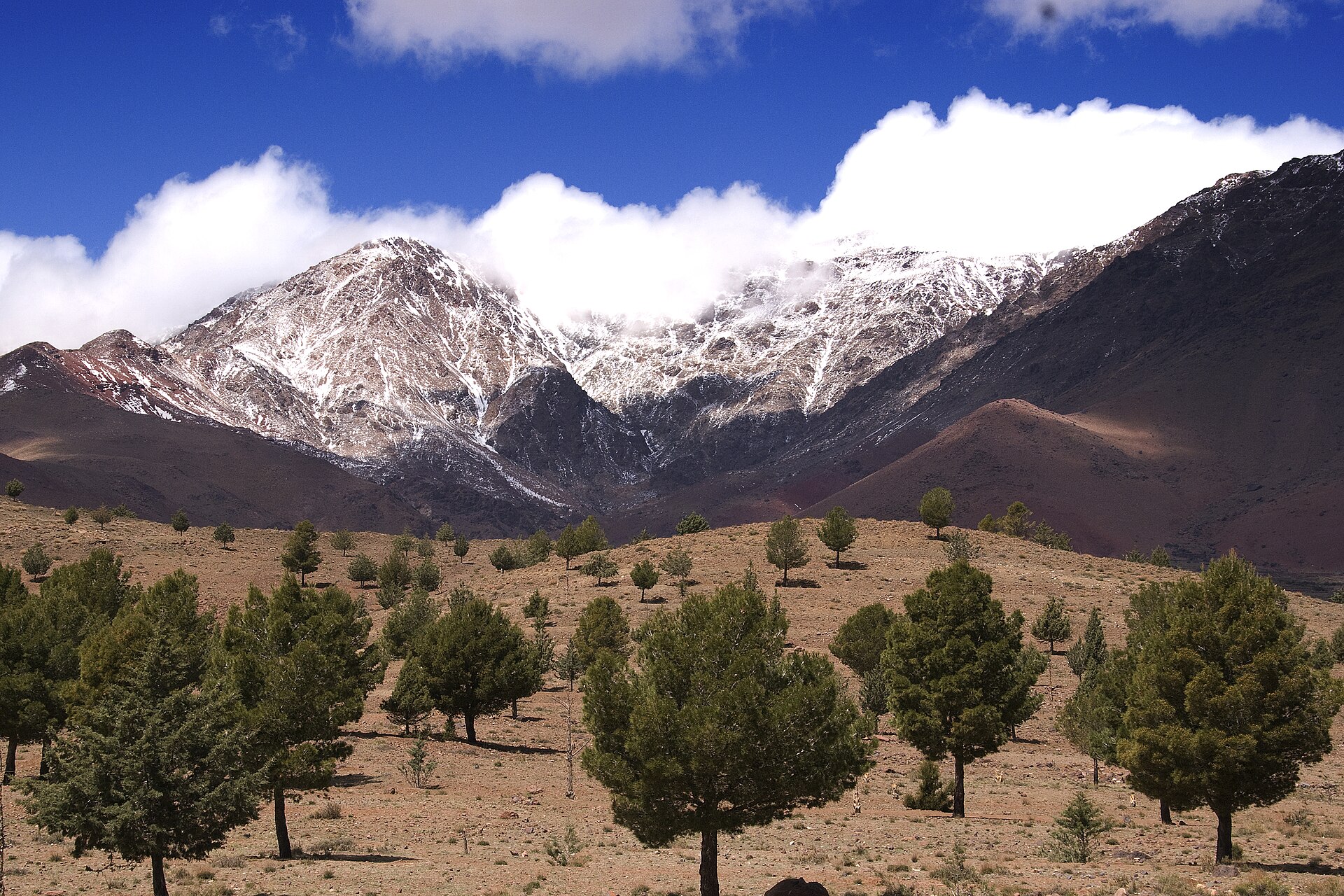
At 2,260 metres, this is the highest major road pass in Morocco and the gateway between Marrakech and the Saharan south. The road was built by the French in the 1930s along an old caravan route. On the climb you pass Berber villages of earth houses, terraces of walnut and almond trees and fossil and mineral stalls. Practical: it can be windy and cold at the top; take a jacket out of your bag before you leave Marrakech.
Ait Ben Haddou
Duration: About 1.5 hours
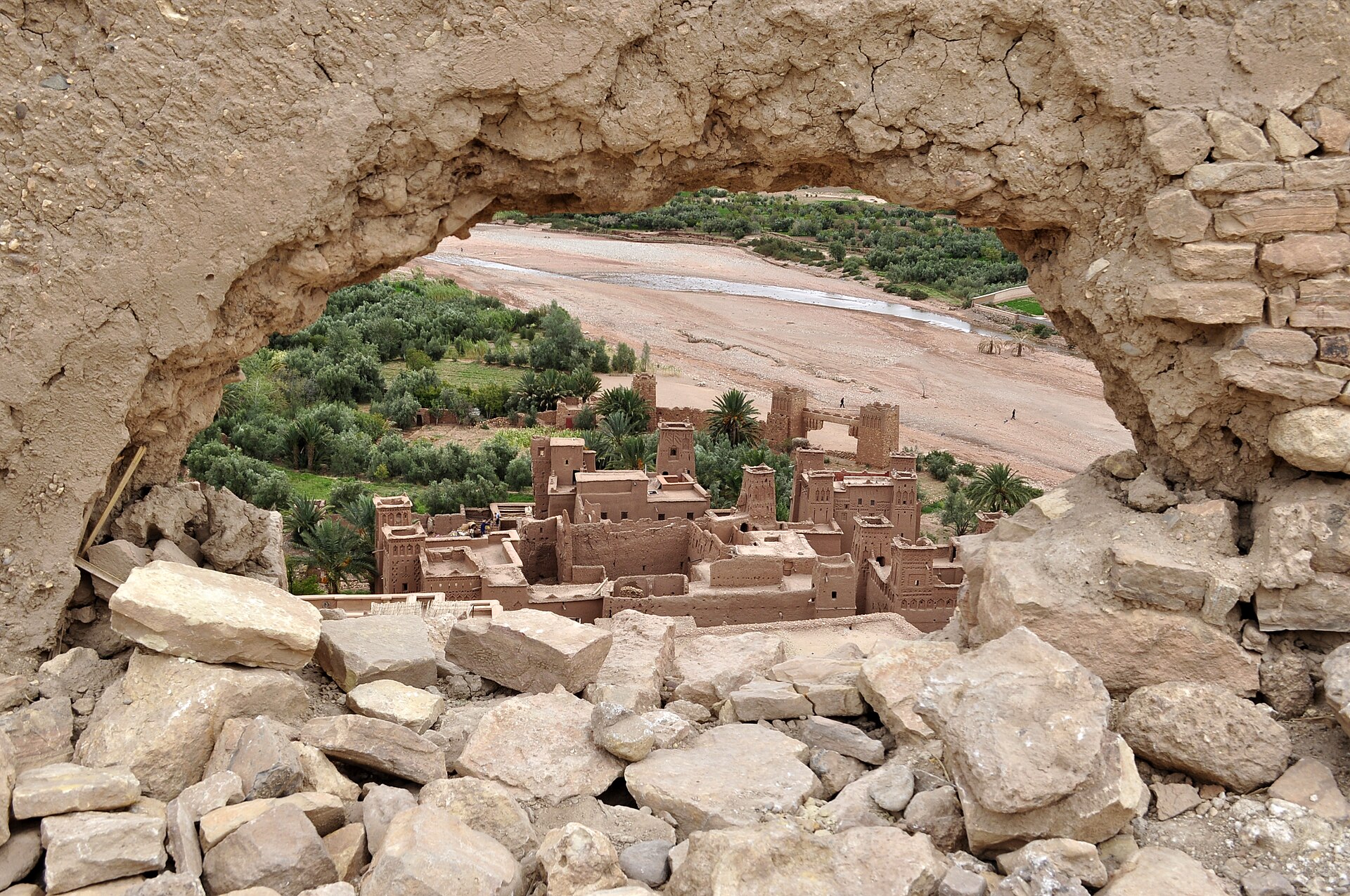
A fortified village (ksar) of earth buildings climbing a hill above the Ounila river, on the old caravan route between the Sahara and Marrakech. It was listed by UNESCO in 1987 and has been used in many films and series, including Lawrence of Arabia, Gladiator and Game of Thrones. You cross the river, walk the lanes between the houses and climb to the ruined granary at the top for the view. A few families still live inside. Practical: wear shoes with grip; the climb takes 20–30 minutes.
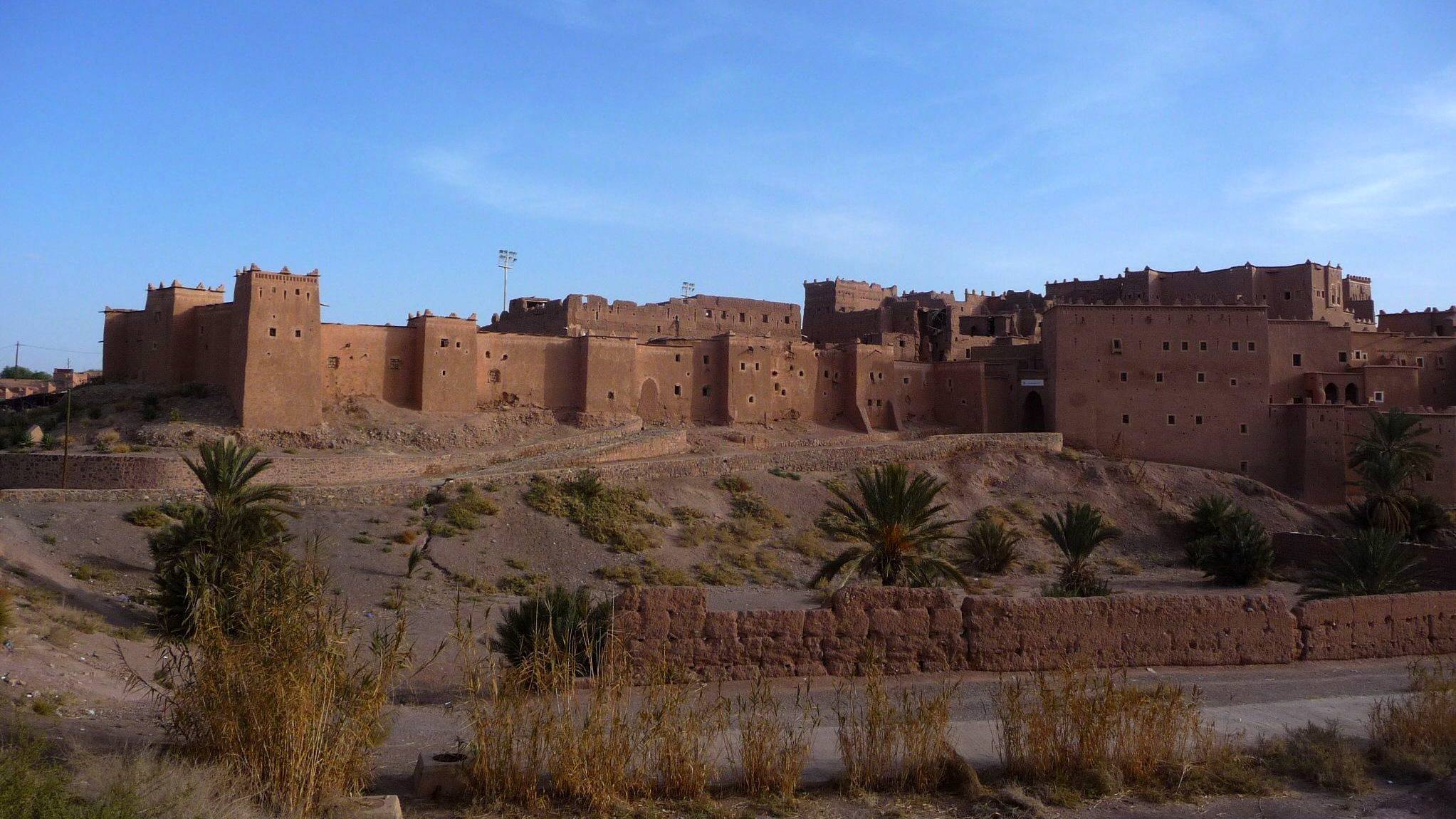
Taourirt Kasbah, Ouarzazate
Duration: About 20 minutes

The former residence of the Glaoui family, the powerful lords of the south in the early 20th century. Its towers and decorated rooms show how the great kasbahs were built and lived in. Ouarzazate itself is known as the 'door of the desert' and is home to large film studios. Practical: on this day we usually only see the kasbah from outside to save time; tell your driver if you want to go in (about 45 minutes).
Kelaat M'Gouna, Valley of the Roses
Duration: About 20 minutes
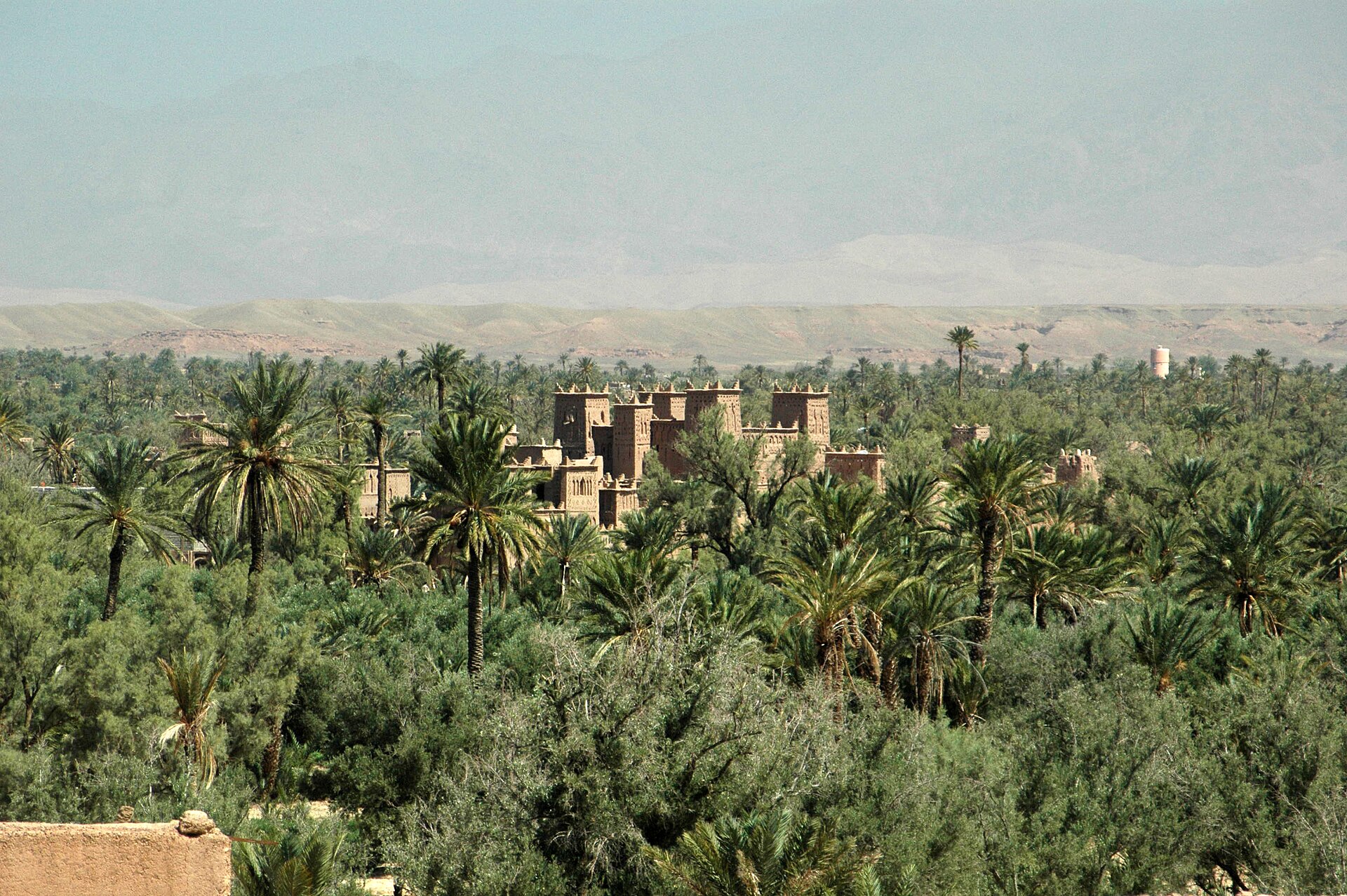
A small town famous for the Damask roses grown in hedges between the fields. In late April and May the harvest fills the valley with scent and the town holds a rose festival. Rose water, oil and soaps are made in local distilleries. Practical: genuine rose water is cheap; rose oil is very expensive, so be careful with bargains.
Dades Valley
Duration: Overnight
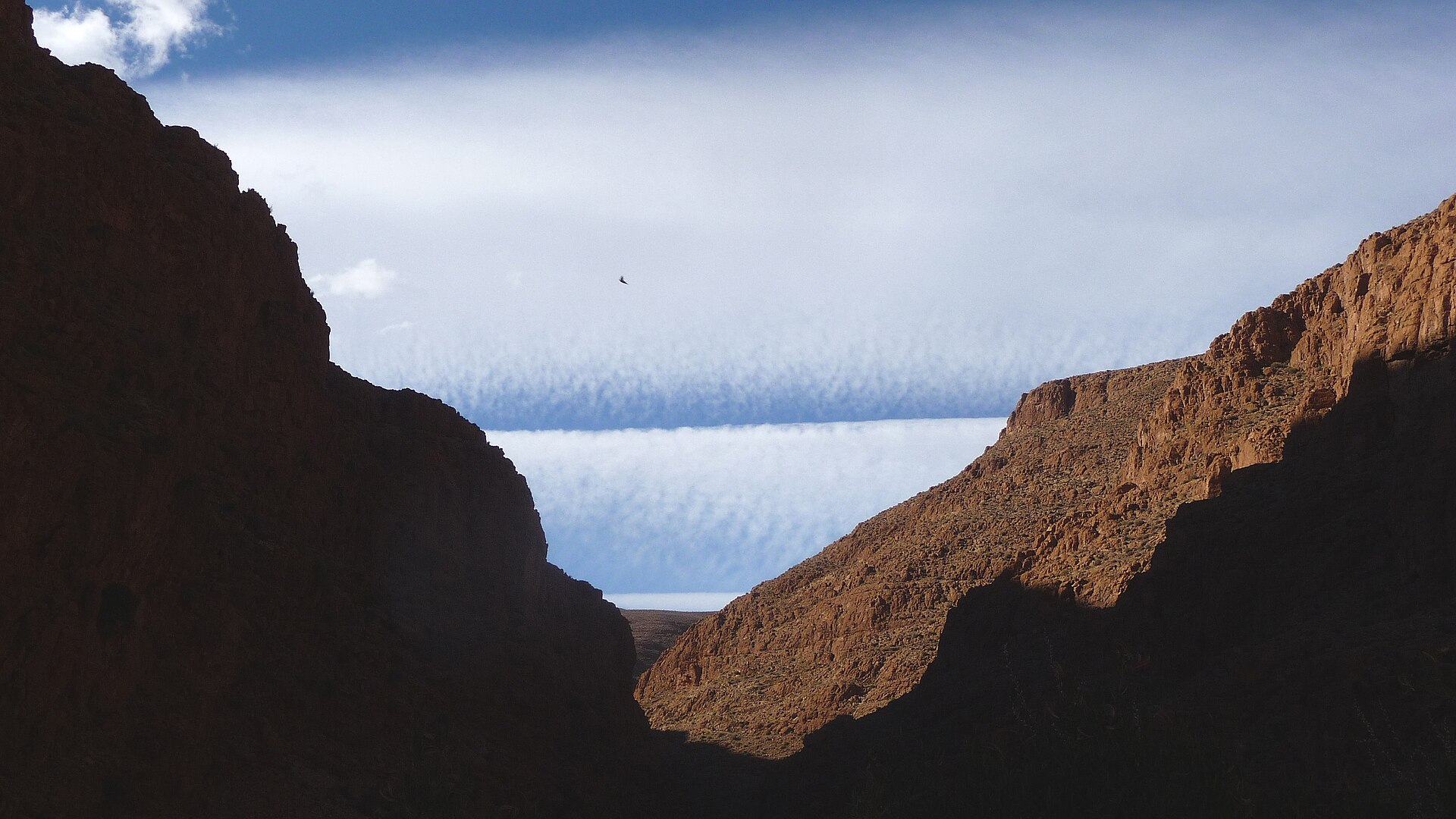
A long valley between the High Atlas and the Jebel Saghro, lined with kasbahs, fig and almond trees, and strange rock formations nicknamed the 'monkey fingers'. Higher up, the road climbs a famous series of hairpin bends through the Dades gorge. Your guesthouse is a quiet place to rest after the long day. Practical: nights are cool, even in summer.
Day 2: Dades Valley – Todra Gorge – Erfoud – Merzouga
About 270 km · 4 h on the road
A shorter driving day ends with the highlight of the trip: a camel trek into the Erg Chebbi dunes at sunset and a night in a desert camp. SCHEDULE (times are estimates) 08:00 – Breakfast at the guesthouse. 09:00 – Drive to Tinghir (about 1 hour), view over the palm grove. 10:15 – Todra Gorge: walk between the cliffs (about 1 hour). 11:30 – Short walk in the Tinghir palm grove or a carpet cooperative (optional, about 30 min). 12:30 – Lunch in Tinejdad or on the way (about 1 hour, not included). 14:30 – Erfoud: fossil workshop (about 30 min). 15:30 – Rissani or the road past the Merzouga oasis. 16:30 – Arrive at the edge of the Erg Chebbi; leave your main luggage in the vehicle. 17:00 – Camel trek into the dunes for sunset (about 1–1.5 hours). 18:30 – Arrive at the camp; mint tea. 20:00 – Dinner, drumming around the fire, stars. GOOD TO KNOW • The camel trek time follows the sunset, so it moves from about 16:00 in winter to about 18:30 in summer. • Pack a small overnight bag: toothbrush, warm layer, head torch, any medicine. • Camel rides are gentle but can be uncomfortable for people with back problems; a 4x4 transfer to camp is possible. INCLUDED: private vehicle and driver, camel trek with a camel handler, desert camp night with dinner and breakfast. NOT INCLUDED: lunch, drinks, tips. IF THE WEATHER TURNS: sandstorms happen, mostly in spring. If wind makes the camel trek unsafe, you go to camp by 4x4 and ride the camels when it calms down. WHAT YOU'LL TASTE At camp: soup, salads, tagine and fruit, sometimes madfouna – the 'Berber pizza' of the region, a flatbread stuffed with spiced meat and onions and baked in the sand or an oven. PHOTO SPOTS • The narrowest part of the Todra Gorge with its 300-metre walls. • The Tinghir palm grove from the viewpoint above the town. • Camel shadows on the dunes at sunset. • The Milky Way above the camp on a moonless night. ACCESSIBILITY The Todra walk is flat along the riverbed. Dunes are soft and tiring to climb; the camp itself is on fairly flat sand. Tell us in advance if you need the 4x4 option. WHAT YOU TAKE AWAY: silence, sand, stars – the moment everyone remembers.
Todra Gorge
Duration: About 1 hour
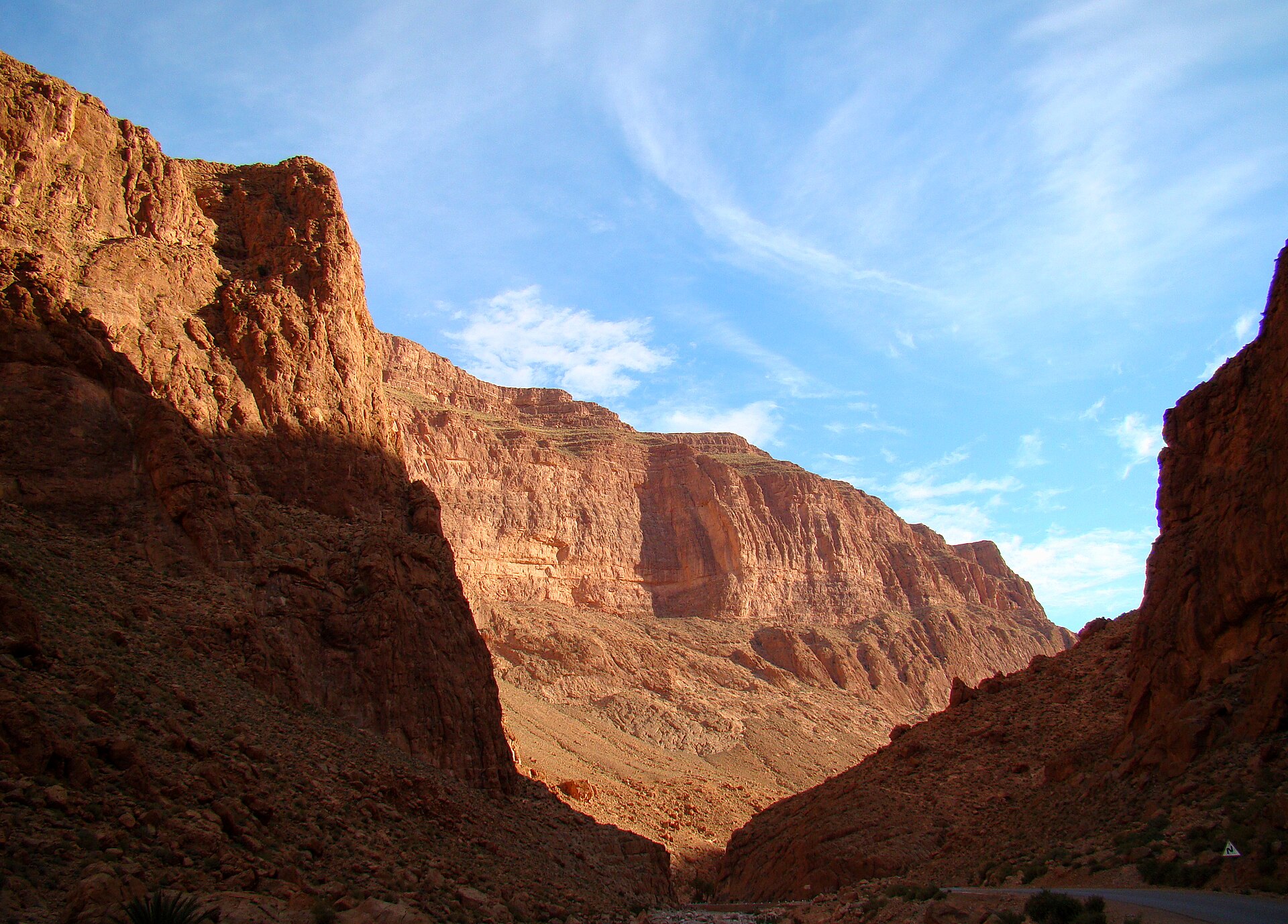
A narrow canyon cut by the Todra river through the limestone of the High Atlas. At its narrowest point the walls rise about 300 metres and are only a few metres apart. Climbers come from all over the world for its routes, and Berber nomads still bring their flocks through it. You walk along the river between the walls and can continue further in for quieter views. Practical: it is shady and cool in the morning; the water is shallow if you want to paddle.
Erfoud fossil workshop
Duration: About 30 minutes
The rocks around Erfoud are full of marine fossils more than 350 million years old – ammonites, orthoceras and trilobites from a time when this was a sea. In the workshops, slabs of black fossil marble are cut and polished into tables, sinks and small objects. You see the process and can ask how to tell real fossils from fakes. Practical: shopping is optional; large pieces can be shipped.
Erg Chebbi camel trek
Duration: About 1–1.5 hours
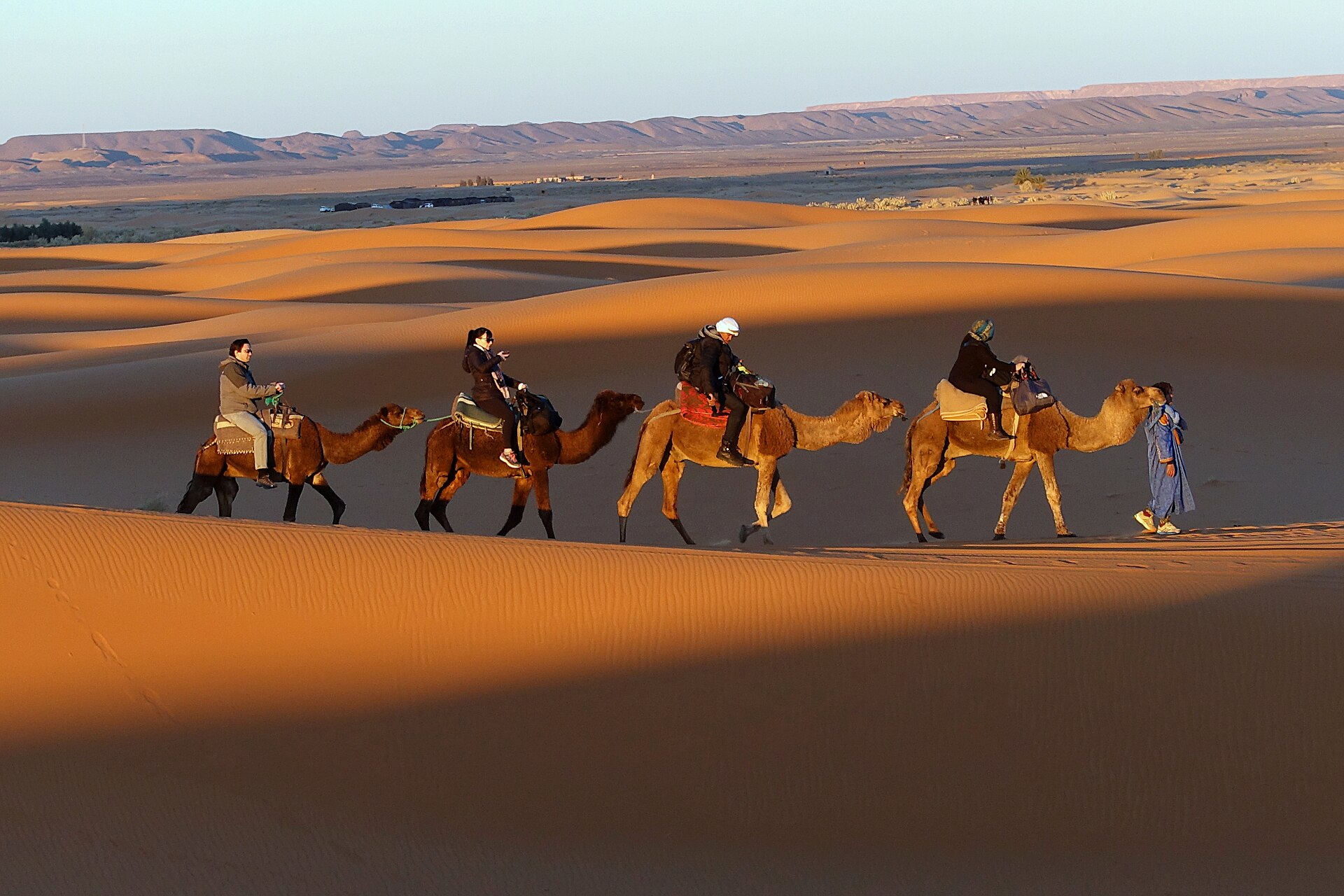
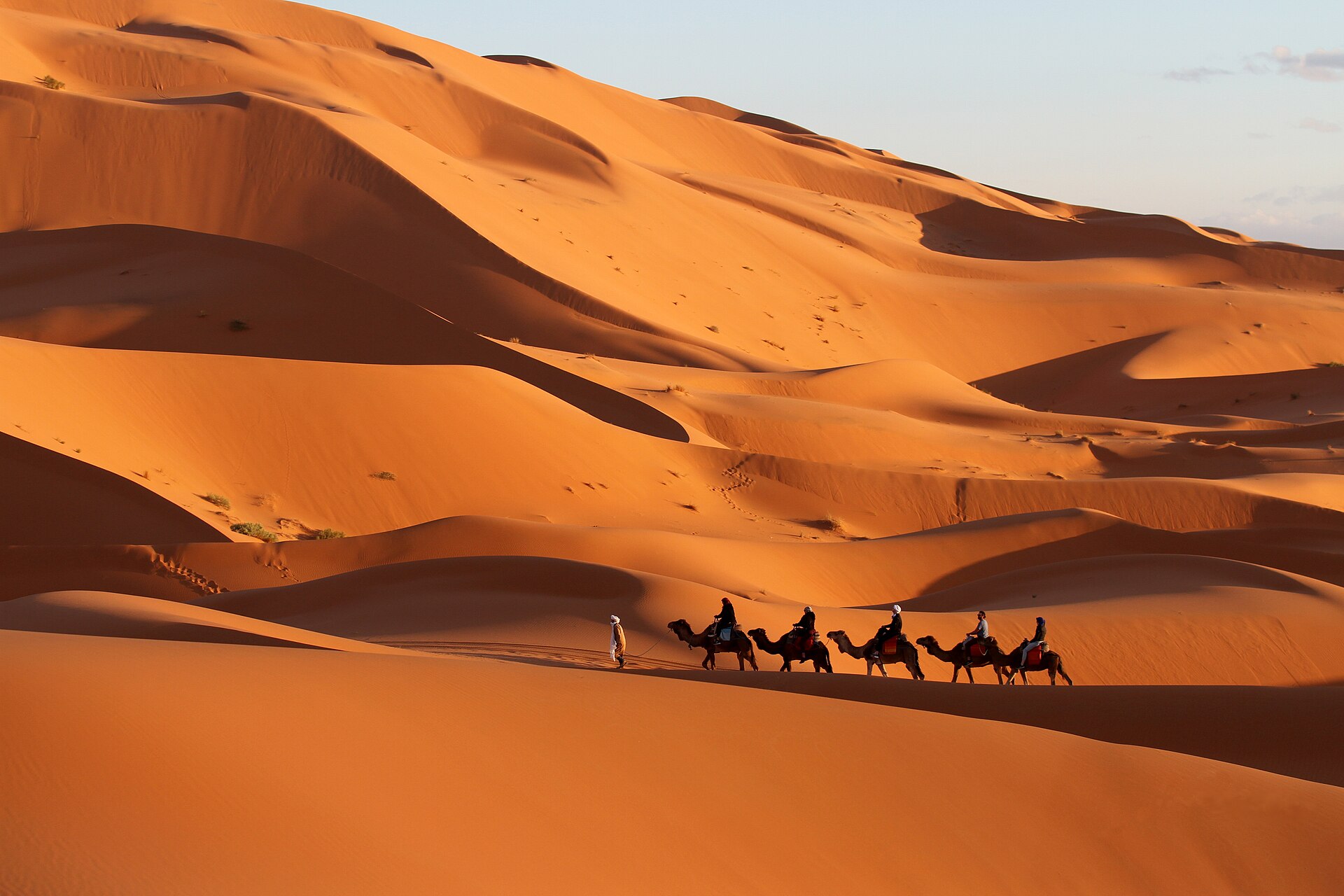
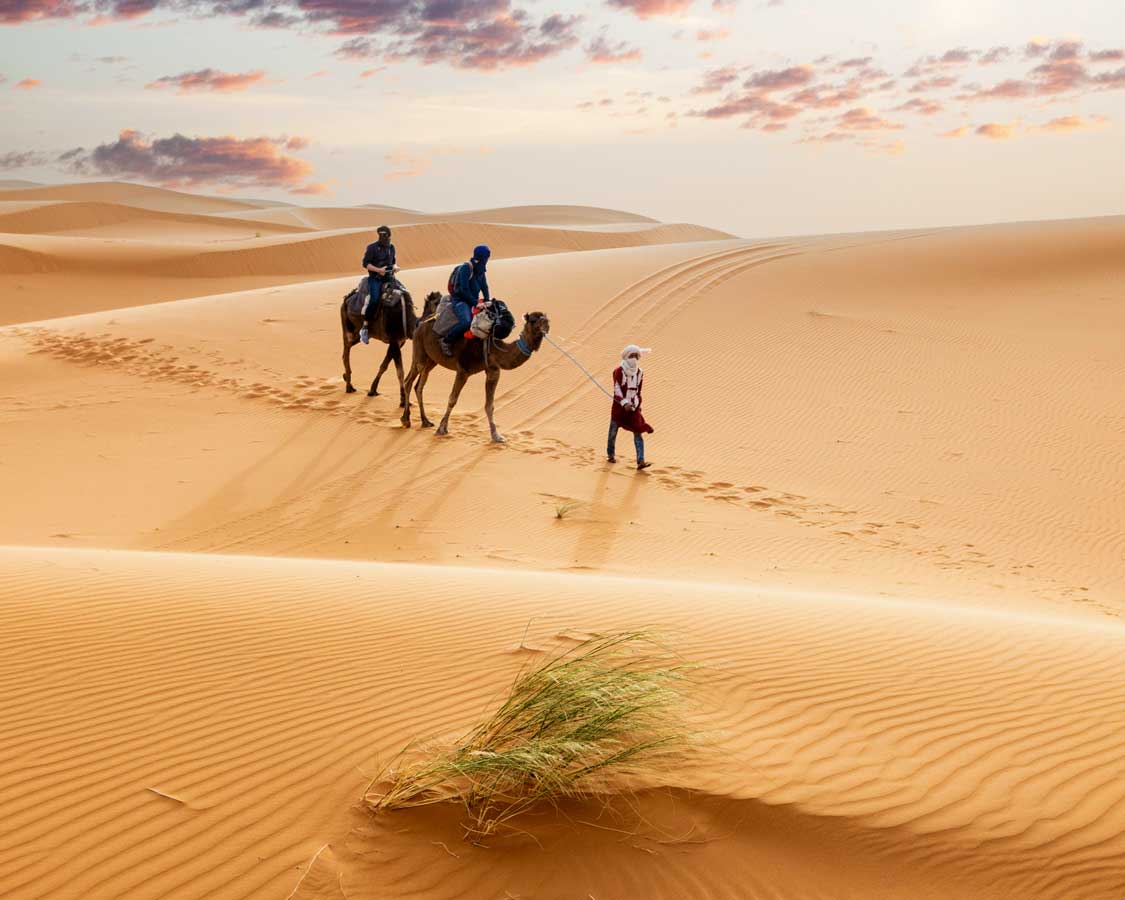
The Erg Chebbi is a sea of sand dunes about 22 km long, with crests that rise up to around 150 metres. Your camel handler leads the caravan on foot into the dunes and stops on a high crest so you can climb and watch the sunset. Dromedaries are calm animals; you mount while the camel is lying down, then lean back as it stands up. Practical: wear long trousers and a scarf against sand; leave valuables in the car.
Sahara desert camp
Duration: Overnight
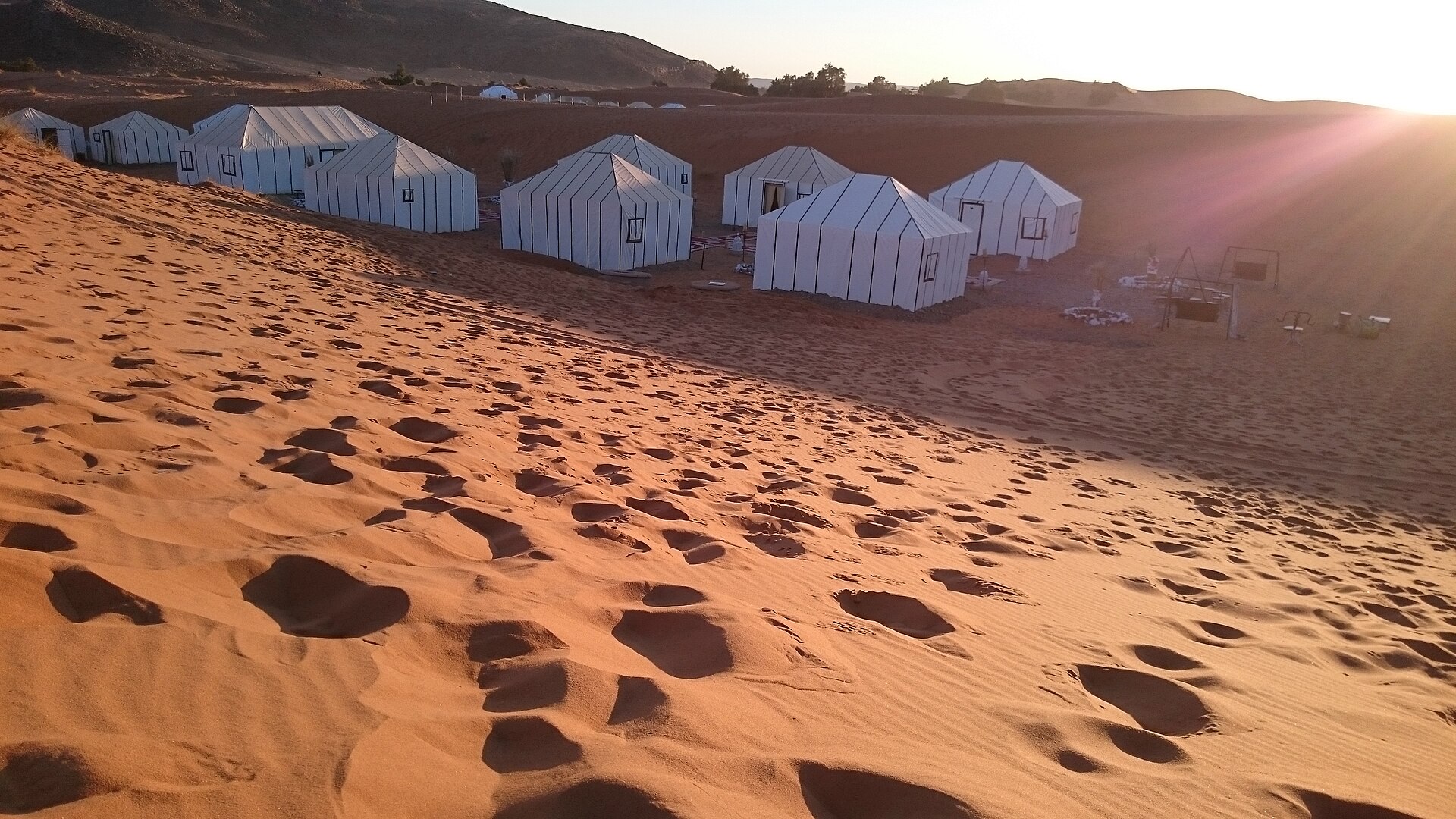
Your camp is set in a hollow between the dunes, with tents made of wool or canvas, carpets and proper beds. Depending on the category you book, tents have shared or private bathrooms. After dinner the camp staff play drums and sing around the fire. Practical: nights are cold from November to March; extra blankets are provided. Electricity may be limited, so charge devices before.
Day 3: Merzouga – Khamlia – Erg Chebbi (Full Day in the Desert)
Wake before dawn to watch the sun rise over the dunes, then spend the whole day discovering the Merzouga region at an easy pace. In the evening you choose between a second night in the camp or a hotel at the foot of the dunes. SCHEDULE (times are estimates and follow sunrise) 06:00 – Climb a dune near camp for sunrise (about 45 min). 07:00 – Camel ride back to the edge of the dunes. 08:00 – Breakfast and shower at a hotel or the camp. 10:00 – 4x4 tour around the Erg Chebbi (optional, about 4 hours): nomad family, Khamlia, old mines. 10:30 – Visit a nomad family and share tea in their tent (about 45 min). 11:45 – Khamlia: Gnawa music and the story of the village (about 45 min). 13:00 – Lunch in Merzouga (about 1 hour, not included). 14:00 – Rest by the pool or in the shade during the hottest hours. 16:30 – Sandboarding or a walk on the dunes (optional). 18:00 – Sunset from a high dune. 20:00 – Dinner and overnight at the camp or the hotel. GOOD TO KNOW • This day is flexible: tell your driver whether you want to be active or rest. • The 4x4 tour, sandboarding and quad biking are extras, paid locally or on booking. • In summer the middle of the day is very hot; activities happen in the morning and late afternoon. INCLUDED: private driver for the day, accommodation (camp or hotel) with dinner and breakfast. NOT INCLUDED: lunch, optional 4x4 tour, quad biking, sandboarding, tips. IF THE WEATHER TURNS: on windy days, the music in Khamlia and the nomad visit go ahead, and the dunes wait for the evening. WHAT YOU'LL TASTE Mint tea with a nomad family, poured from high to create foam. In Merzouga, try a fresh madfouna or a kalia, a spiced stew of minced meat, tomatoes and eggs. PHOTO SPOTS • Sunrise on the eastern crests of the Erg Chebbi. • The colourful costumes and drums of the Gnawa musicians in Khamlia. • The dark stony plain (hamada) against the orange dunes. ACCESSIBILITY Most of the day can be done by vehicle with short walks. Climbing dunes is hard work; your driver will pick easy viewpoints if needed. WHAT YOU TAKE AWAY: real time in the desert, not just one night – and the people who live there.
Erg Chebbi sunrise
Duration: About 45 minutes
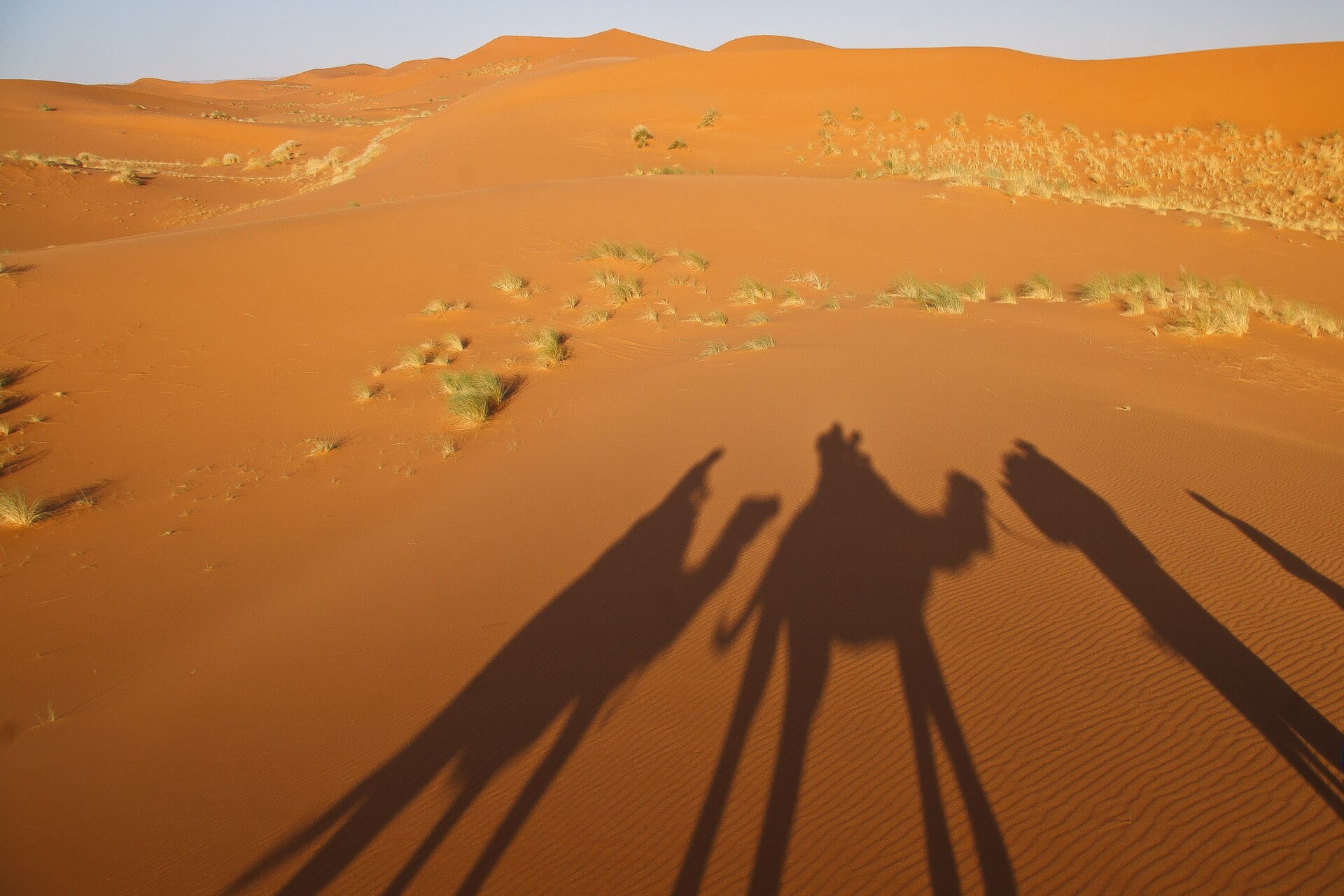
At first light, the dunes change from grey to pink to bright orange in a few minutes, and the shadows of the crests stretch across the sand. Walk up the dune nearest the camp; your camel handler will show you the best spot. Practical: it is cold before dawn; take your warm layer and a torch.
Nomad family visit
Duration: About 45 minutes
Some families of the region still live a semi-nomadic life, moving with their goats and camels between grazing areas. Visiting their tent, you share tea and bread and learn how they manage water, food and life in the desert. Please be respectful and ask before taking photos; a small gift of food or tea is appreciated.
Khamlia Gnawa village
Duration: About 45 minutes
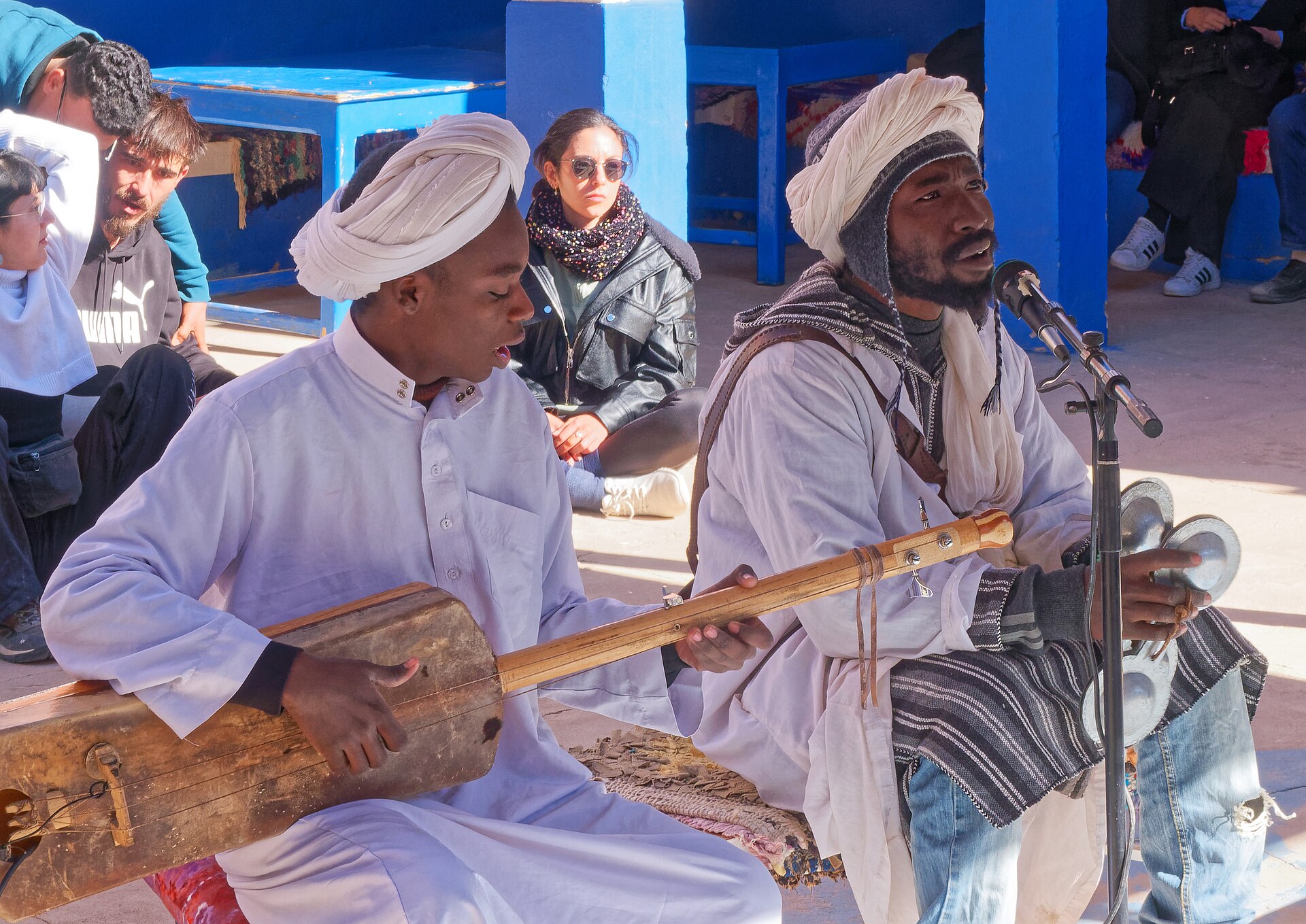
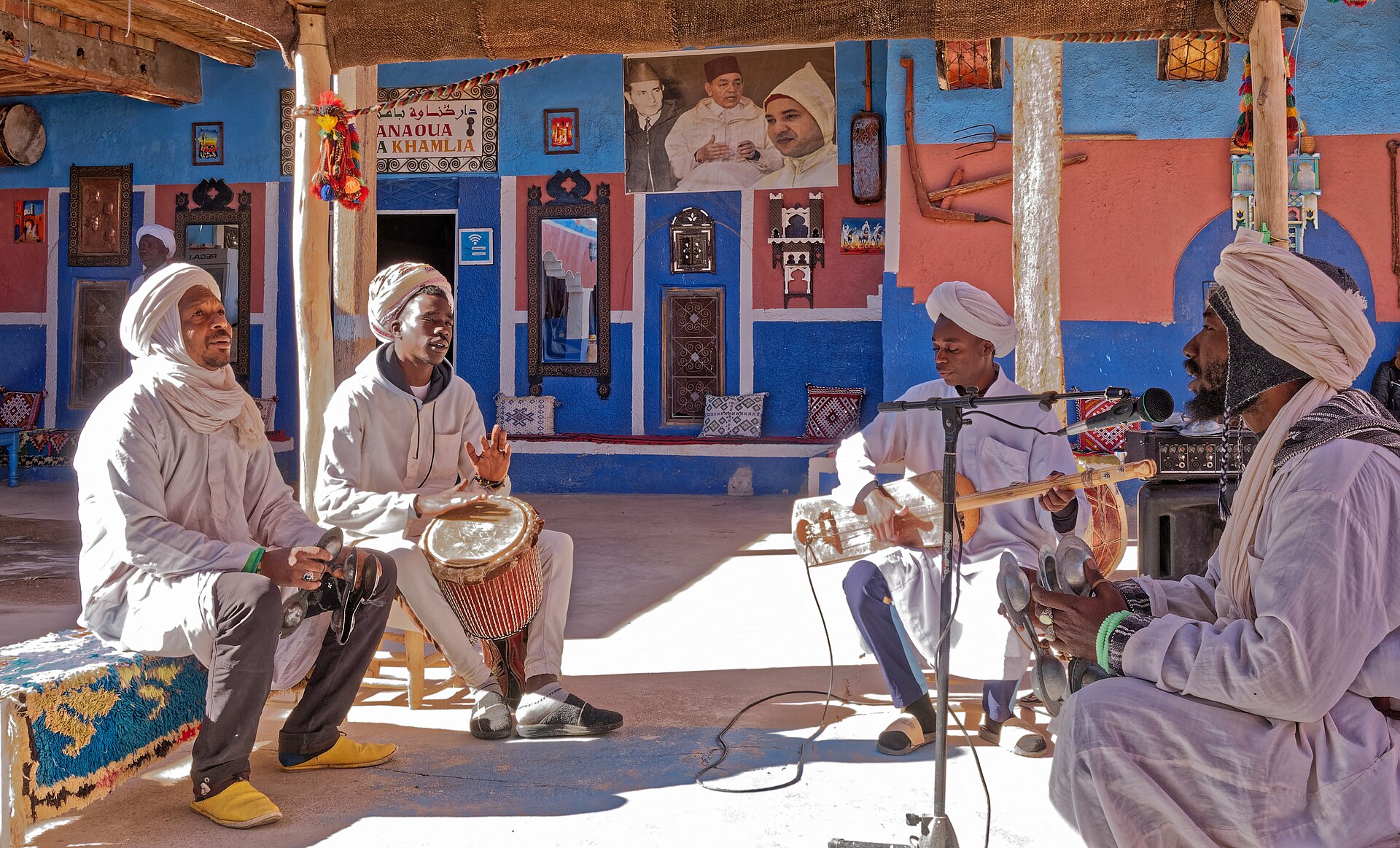
Khamlia is home to descendants of people brought from sub-Saharan Africa centuries ago. They keep alive Gnawa music, a spiritual tradition of iron castanets (qraqeb), drums and song. Musicians play for visitors in their house and tell the story of the village. Practical: the visit is free, but a contribution or buying a CD is the custom.
Merzouga
Duration: Free time
A small village on the western edge of the Erg Chebbi, with hotels, cafés and shops, and a seasonal lake (Dayet Srji) that sometimes attracts flamingos after rain. It is the base for all desert activities. Practical: there are ATMs in Rissani and sometimes in Merzouga, but bring cash to be safe.
Day 4: Merzouga – Ziz Valley – Midelt – Ifrane – Fes
About 450 km · 6.5 h on the road
The longest drive of the trip, but a beautiful one: from the dunes through the date palms of the Ziz valley, over the Middle Atlas and through the cedar forests, to arrive in Fes in the evening. SCHEDULE (times are estimates) 07:30 – Breakfast; depart Merzouga. 08:15 – Rissani and Erfoud from the road. 09:30 – Ziz Valley viewpoint over the palm grove (about 15 min). 10:30 – Errachidia; coffee stop. 11:30 – Ziz Gorges and the Hassan Addakhil dam lake. 13:00 – Lunch in Midelt (about 1 hour, not included). 15:00 – Cedar forest near Azrou: Barbary macaques (about 20 min). 15:45 – Ifrane: short walk (about 30 min). 17:30–18:00 – Arrive in Fes; drop-off at your riad or hotel. GOOD TO KNOW • The drive is about 470 km. It is long, but the scenery changes all day. • Please do not feed the monkeys; it harms them. • If you are flying out of Fes, book flights for the next day. INCLUDED: private vehicle and driver, drop-off in Fes. NOT INCLUDED: lunch, drinks, tips. IF THE WEATHER TURNS: in winter the Middle Atlas can have snow and fog. Your driver adapts the route and timing. WHAT YOU'LL TASTE Midelt is known for its apples and its grilled meat restaurants. In Ifrane, try a coffee and a pastry in one of the cafés around the central square. PHOTO SPOTS • The endless palm groves of the Ziz valley from the roadside viewpoint. • The blue lake of the Hassan Addakhil dam. • Cedar trees and macaques near Azrou. • The stone lion of Ifrane. ACCESSIBILITY Stops are short and close to the vehicle. Ifrane's town centre is flat with good pavements. WHAT YOU TAKE AWAY: the full width of Morocco in one day, from the Sahara to the cedar forests and the oldest imperial city.
Ziz Valley
Duration: About 15 minutes
The Ziz river runs from the High Atlas to the Sahara, and its valley is lined with one of the largest palm groves in Morocco, with mud-built ksour along the edges. From the viewpoint you see a ribbon of green in a red canyon. Practical: stalls here sell dates; the autumn harvest is the best time to buy.
Midelt
Duration: About 1 hour
A town at the foot of the Jebel Ayachi, more than 3,700 m high, known for its apple orchards and mineral stalls. It is the usual lunch stop on this road. Practical: restaurants on the main road serve grilled meat, tagines and salads.
Cedar forest near Azrou
Duration: About 20 minutes
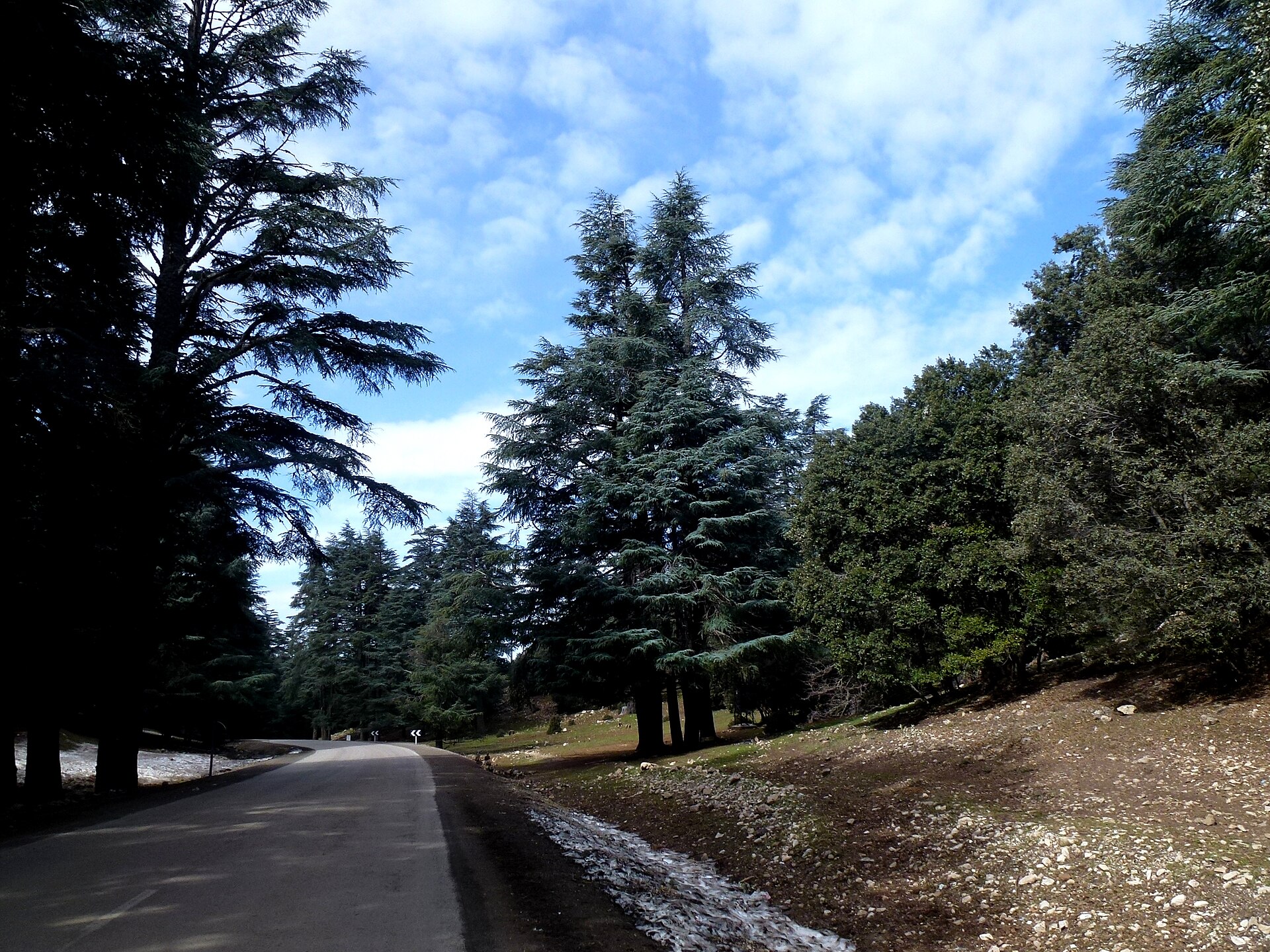
The Middle Atlas has some of the largest cedar forests in North Africa. Here you can see Barbary macaques, an endangered monkey found only in Morocco, Algeria and Gibraltar. Practical: look but do not feed or touch them.
Ifrane
Duration: About 30 minutes
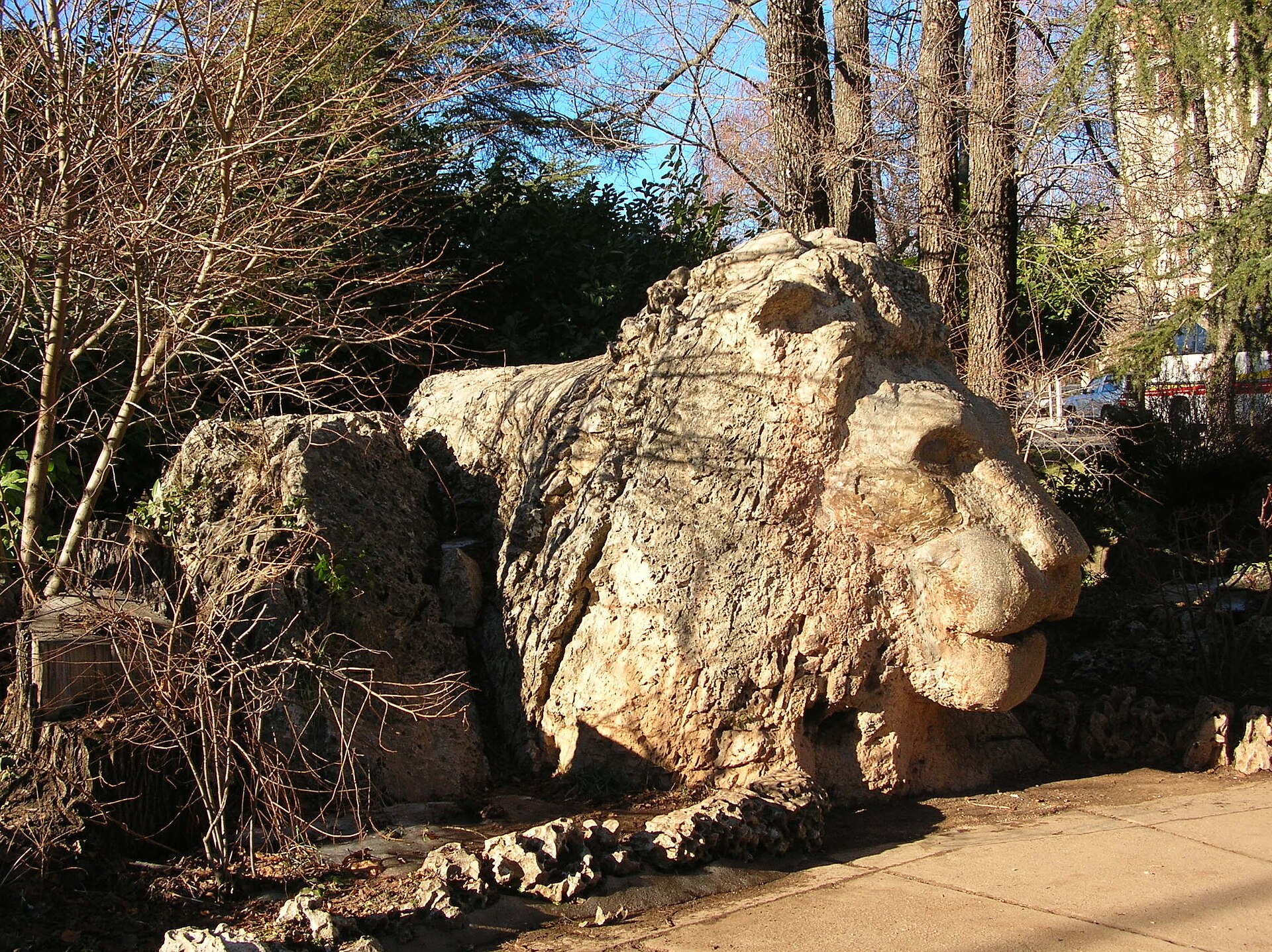
Built by the French in the 1930s as a mountain resort, Ifrane has chalets with sloping roofs, parks and clean streets, and is home to the Al Akhawayn University. It often has snow in winter. Practical: the stone lion statue is the town's classic photo.
Fes
Duration: Arrival
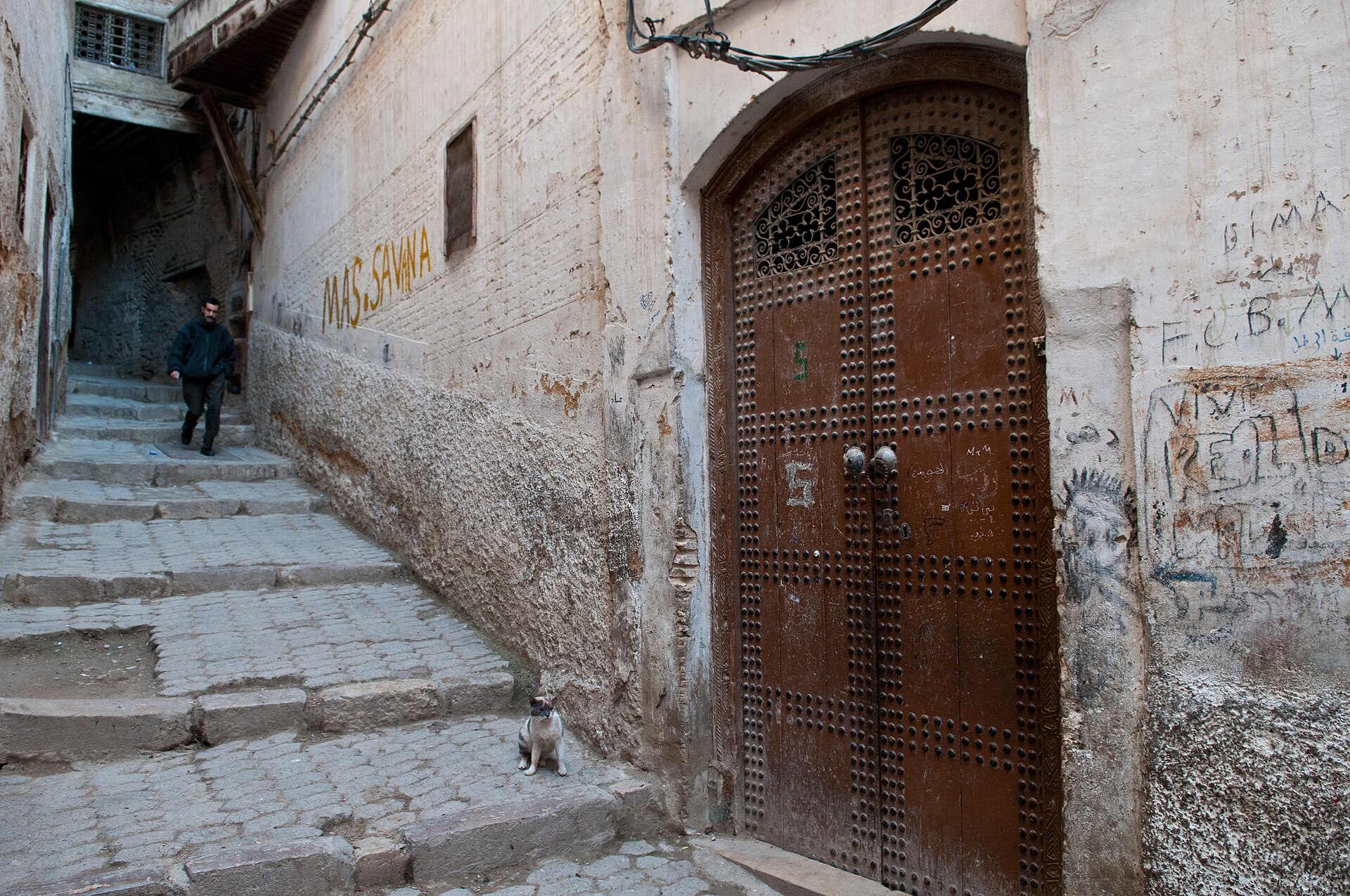
Your tour ends at your riad or hotel in Fes, Morocco's oldest imperial city, founded in the 8th–9th century. Its medina, Fes el-Bali, is one of the largest car-free urban areas in the world. Practical: cars cannot enter the medina; a porter will help with your luggage from the nearest gate.
Plan your trip
Best time to go
- March to May: the best season, warm days and green valleys.
- September to November: pleasant days and clear, starry desert nights.
- December to February: sunny days, but desert and mountain nights are cold (bring warm layers).
- June to August: very hot in the Sahara (often above 40 °C); early starts help.
Getting there
Make it yours
This is a private tour: we can add a night, change hotels or adjust the route to suit you.
Practical info
- Money: the Moroccan dirham (MAD). Cards work in cities and hotels; bring cash for villages, tips and souks.
- Plugs: type C and E (European), 220 V.
- Phone: a local SIM (Maroc Telecom, Orange or inwi) is cheap at the airport and works along the whole route.
- Visa: many nationalities (EU, UK, US, Canada, Australia) need none for up to 90 days. Check the rules for your passport before you go.
What to bring
- Comfortable shoes for the medinas and the dunes
- Warm layers for desert nights
- A scarf or hat, sunglasses and sunscreen
- Some cash in dirhams for tips and small purchases
- Clothes covering shoulders and knees for villages and religious sites
- Your passport (hotels ask for it at check-in)
Good to know
Cancellation policy
Full refund if you cancel at least 24 hours before the start. Cancellations less than 24 hours before are not refunded. If bad weather stops the tour, you get a new date or a full refund.
Accessibility
Not wheelchair accessible. Child seats or chairs available.
Frequently Asked Questions
Does this tour return to Marrakech?
No. It starts in Marrakech and finishes in Fes. If you need to return to Marrakech, choose our 4-day Marrakech to Merzouga round trip.
How many nights are in the desert?
One night in a Sahara camp is guaranteed. On the third night you choose: a second night in the camp or a hotel at the foot of the dunes with a pool.
How long are the drives?
Day 1 about 7–8 hours with stops, day 2 about 5 hours, day 3 very little, and day 4 about 8–9 hours. We stop every 1.5–2 hours.
What kind of vehicle is used?
A private air-conditioned 4x4 for small groups, or a minivan for larger groups. You never share with strangers.
Do I have to ride a camel?
No. If you prefer, a 4x4 can take you to the camp. Camel rides are gentle and suitable for most people, including children.
Are the desert camps comfortable?
Yes. Tents have real beds and blankets. Depending on the option you book, tents have private bathrooms with showers and toilets, or shared facilities.
Which meals are included?
Dinner and breakfast every night. Lunches are not included so you can choose where and what to eat; your driver will suggest good places.
What is the best time of year for this tour?
Spring (March–May) and autumn (September–November) are ideal. Summer is very hot in the desert; winter is sunny but nights are cold.
Is this tour suitable for children?
Yes, for children who can manage some long drives. Families love the camel trek and the camp. Child seats are available on request.
Can I customise the itinerary?
Yes. Because the tour is private, you can add a night, change hotels or add activities like the 4x4 tour. Ask us when booking.
Can we do the tour in the other direction, from Fes to Marrakech?
Yes. The same route works in reverse: Fes, Ifrane and the Middle Atlas on Day 1, two desert days around Merzouga, then the Todra and Dades gorges and Ait Ben Haddou on the way to Marrakech. Tell us your direction when booking.
Where exactly does the tour end in Fes?
At your riad or hotel in Fes, usually between 17:30 and 18:00. If your riad is inside the medina, the driver stops at the nearest gate and a porter carries your bags. We can also drop you at Fes airport or the train station, or continue to Chefchaouen the next day as a transfer.
Is there electricity and Wi-Fi at the desert camp?
Most camps have electricity, often solar, for lights and phone charging. Wi-Fi is limited or absent, and mobile data can be weak among the dunes, so download maps and music before you arrive. The hotels in Merzouga and the Dades have Wi-Fi.
How do I pay for this tour?
You can reserve with €20 now and pay the rest on the first day of the tour, or pay everything online when you book.
What is the cancellation policy?
Cancel at least 24 hours before the start for a full refund. If bad weather stops the tour, you get a new date or a full refund.
How far in advance should I book?
Spring (March to May) and autumn (September to November) are the busiest seasons, so book early for those months. You can reserve with €20 and still cancel for free up to 24 hours before.
Similar experiences
 PopularMarrakech
3-Day Marrakech to Merzouga Desert Tour with Sahara Camp
5.0(5)
from €276 per person
 PopularMarrakech
Morocco Itinerary 10 Days: The Grand Loop from Marrakech
from €908 per person
 PopularMarrakech
5 Days Tour from Marrakech to Fes: Ait Ben Haddou, Dades and Two Nights in Merzouga
from €424 per person
 Marrakech
4 Days Morocco Tour: Marrakech, the High Atlas and Essaouira
from €327 per person