

Photos: Arnaud 25, CC BY-SA 3.0 · mwanasimba from La Réunion, CC BY-SA 2.0 · User:AlexandrDmitri, CC BY-SA 3.0 · Daniel*D, CC BY-SA 3.0 · Foodista, CC BY 2.0
About
Essaouira looks simple: white walls, blue shutters, seagulls and the Atlantic wind. But behind that calm is one of the most unusual stories in Morocco. In the 1760s Sultan Mohammed ben Abdallah decided to build a new royal port here, open to European trade, and asked a French engineer, Théodore Cornut, to design it: straight streets, monumental gates and sea bastions bristling with cannons. For a century Mogador, as it was then called, was Morocco's main window on Europe, home to Muslim, Jewish and European merchants. Its medina has been a UNESCO World Heritage Site since 2001. On this private half-day walk, a guide who grew up in Essaouira brings that story to life. You start at the port, where shipwrights still build wooden trawlers by hand and the blue boats unload their catch. You walk the Skala du Port and the Skala de la Ville, the 18th-century sea bastions lined with bronze cannons, and visit the thuya-wood workshops built into the ramparts. Then you enter the medina: the grid laid out by Cornut, the souks of spices, jewellery and silver, and the Mellah, the old Jewish quarter, with its restored synagogue and Bayt Dakira, the house of memory that tells the story of Essaouira's Jewish and Muslim communities. You finish with mint tea on a rooftop above the town. AT A GLANCE • Duration: about 3 hours (09:30 to 12:30; an afternoon start is possible) • Meeting point: Bab Sbaa gate or your riad in the medina • Type: private walking tour with a local guide • Walking: about 3 km on flat ground • Activity level: easy; suitable for children and families with pushchairs WHAT YOU SEE • The fishing port: boatyard, fish market and the auction when the boats come in. • The Skala du Port and its sea gate, with views over the harbour and the island of Mogador. • The Skala de la Ville, its cannons and the thuya workshops under the walls. • The medina's main axes, gates and souks. • The Mellah, the restored Slat Lkahal synagogue and Bayt Dakira. • A rooftop for mint tea and the view over the white town. WHY THIS TOUR WORKS Essaouira is easy to walk on your own, which is exactly why many visitors miss what they are looking at: the planned city behind the alleys, the double ramparts, the merchant houses, the Jewish heritage, the craft traditions. A local guide shows you the details and the people, then leaves you with the best addresses for lunch, music and shopping for the rest of your stay. WHO WILL ENJOY IT History lovers, first-time visitors, families, photographers and anyone staying two nights or more in Essaouira who wants to start with the big picture. WHO MIGHT PREFER ANOTHER TOUR For the countryside around the town, take the Essaouira argan, Berber village and Sidi Kaouki day. If you are staying in Marrakech, the Essaouira day trip from Marrakech with a local guide includes a shorter version of this walk. PRACTICAL INFORMATION Bring a windproof layer, sunglasses and comfortable shoes. The morning is the best time to see the port busy; the synagogue and Bayt Dakira keep limited hours and close on the Sabbath and Jewish holidays, so your guide may change the order. Entrance fees are small and paid on the spot.
from €46 per person
Select date and travelers
Duration
1 day
Starts in
Essaouira
Ends in
Essaouira
Private tourOnly your group, with your own driver and vehicle. Your booking is confirmed straight away.
Free cancellationFull refund if canceled up to 24 hours before the start of the experience (local time)
Reserve now and pay laterReserve your spot while maintaining flexibility.
Lowest price guaranteedFound a lower price online? We'll refund the difference.
Included
Everything included in your package
Standard
Private tour
- Pick-up and drop-off at your hotel or riad
- Private air-conditioned vehicle
- Professional English or French-speaking driver
- Bottled water during the trip
LuxuryUpgrade
Private tour
- Pick-up and drop-off at your hotel or riad
- Private premium vehicle
- Professional English or French-speaking driver
- Bottled water and snacks during the trip
- Flexible start time
Itinerary: 1 day
Highlights
- Essaouira port
- Skala de la Ville
- Mellah and synagogue
- Essaouira
| Day | Route | Overnight | On the road |
|---|---|---|---|
| 1 | Essaouira Walking Tour | — | — |
Day 1: Essaouira Walking Tour
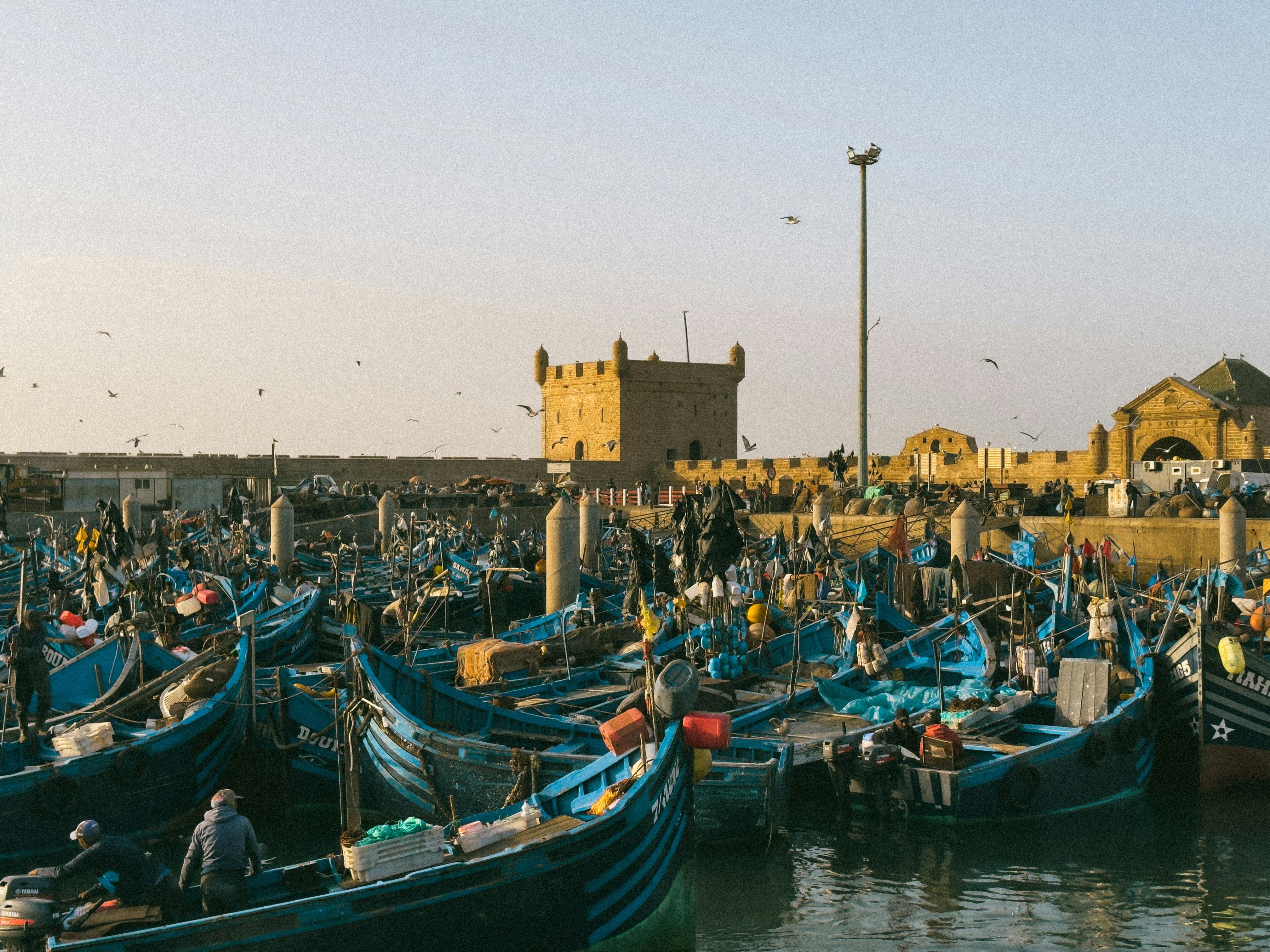
What to expect: a private three-hour walk with a local guide – from the fishing port and the sea bastions to the craftsmen, the souks and the Mellah of Essaouira, ending with mint tea on a rooftop. Your guide meets you at Bab Sbaa, one of the gates of the medina, or at your riad. You walk first to the port, the heart of the town since its foundation. In the boatyard, shipwrights shape the ribs of wooden trawlers with adzes, much as they have for generations. Along the quay the blue boats come in from the morning's fishing and the catch is sold straight from the crates – sardines, sea bream, conger eel, spider crabs – while the seagulls wheel overhead. Your guide explains how the fishing works, who buys what and why Essaouira's sardines are famous. From the port you climb onto the Skala du Port, the bastion that guards the harbour entrance, with views over the boats and out to the island of Mogador, where the Phoenicians and later King Juba II's workshops produced a famous purple dye. Then you walk along the Skala de la Ville, the long sea wall lined with bronze cannons, several of them cast in Europe and given to the sultan. In the arches beneath it are the thuya workshops, where craftsmen carve and inlay the fragrant root wood of the thuya tree with lemon wood and mother-of-pearl. Your guide shows you how to tell genuine thuya from imitations. The second half of the walk is inside the medina. Your guide shows you how Théodore Cornut's plan still shapes the town – the straight main streets, the gates, the double ramparts – and leads you through the souks of spices, jewellery and silver, where Jewish silversmiths once made the region's jewellery. In the Mellah, the old Jewish quarter, you see the merchant houses with their carved doors, visit the restored Slat Lkahal synagogue and, when it is open, Bayt Dakira, the house of memory that tells how Jewish and Muslim families lived side by side in Mogador. The tour ends on a rooftop with mint tea and a view over the white town and the ocean, and your guide's tips for lunch, music and shopping. SCHEDULE (times are estimates) 09:30 – Meet your guide at Bab Sbaa or your riad. 09:45 – Port, fish market and boatyard (about 45 minutes). 10:30 – Skala du Port (about 20 minutes). 10:50 – Skala de la Ville and the thuya workshops (about 30 minutes). 11:20 – The Mellah, the synagogue and Bayt Dakira (about 30 minutes). 11:50 – The souks (about 30 minutes). 12:20 – Mint tea on a rooftop. 12:30 – End of the tour. GOOD TO KNOW • The port is busiest in the morning and early afternoon, when the boats return and the catch is sold. • Thuya smells of cedar and resin; genuine pieces are heavy and have a natural grain. Your guide explains how to recognise quality. • The synagogue and Bayt Dakira keep limited hours and close on Saturdays and Jewish holidays; your guide adapts the order. • Your guide may show you workshops; there is never any obligation to buy. INCLUDED: private local guide, mint tea. NOT INCLUDED: entrance fees (small, paid on the spot), tips. WHAT YOU'LL TASTE Mint tea on a rooftop at the end. Along the way your guide points you to the port fish grills, a bakery for msemen and almond pastries, and a stall for fresh orange juice. IF THE WEATHER TURNS On very windy days more time is spent in the medina's sheltered lanes, the synagogue and the workshops, and less on the ramparts. THE STORY IN BRIEF Founded as a royal port in the 1760s, Mogador was for a century Morocco's main window on Europe. Jewish merchant families, the tujjar al-sultan or merchants of the sultan, handled much of the royal trade, and at its peak a large part of the town's population was Jewish. Later came musicians and painters: in the 1960s Essaouira drew artists and travellers, and today its Gnawa music festival in June is famous worldwide. PHOTO SPOTS • Blue boats from the Skala du Port. • The cannons on the Skala de la Ville against the waves. • Carved doors and blue shutters in the Mellah. • The view over the rooftops from the tea terrace. ACCESSIBILITY The medina is flat with wide main streets; the ramparts have a few steps and cobbles. Suitable for most visitors, including families with pushchairs. WHAT YOU TAKE AWAY: the story of a planned port city – and the eyes to read Essaouira for the rest of your stay.
Essaouira port
Duration: About 45 minutes
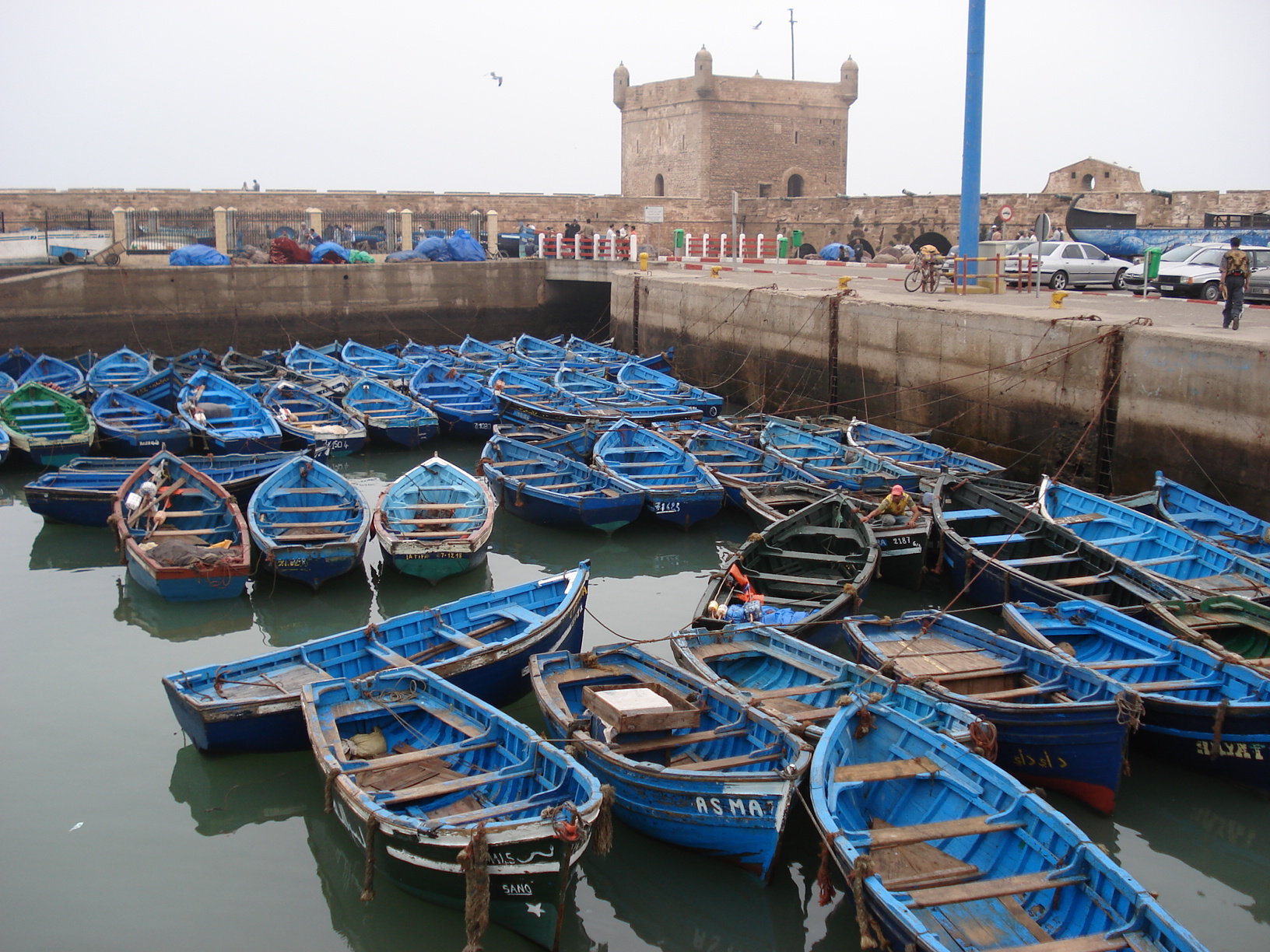
A working port with a boatyard where wooden boats are built by hand. Practical: wet ground. Fishermen mend nets on the quay and the auction takes place in the covered market. Seagulls circle overhead – keep food out of sight.
Skala de la Ville
Duration: About 30 minutes
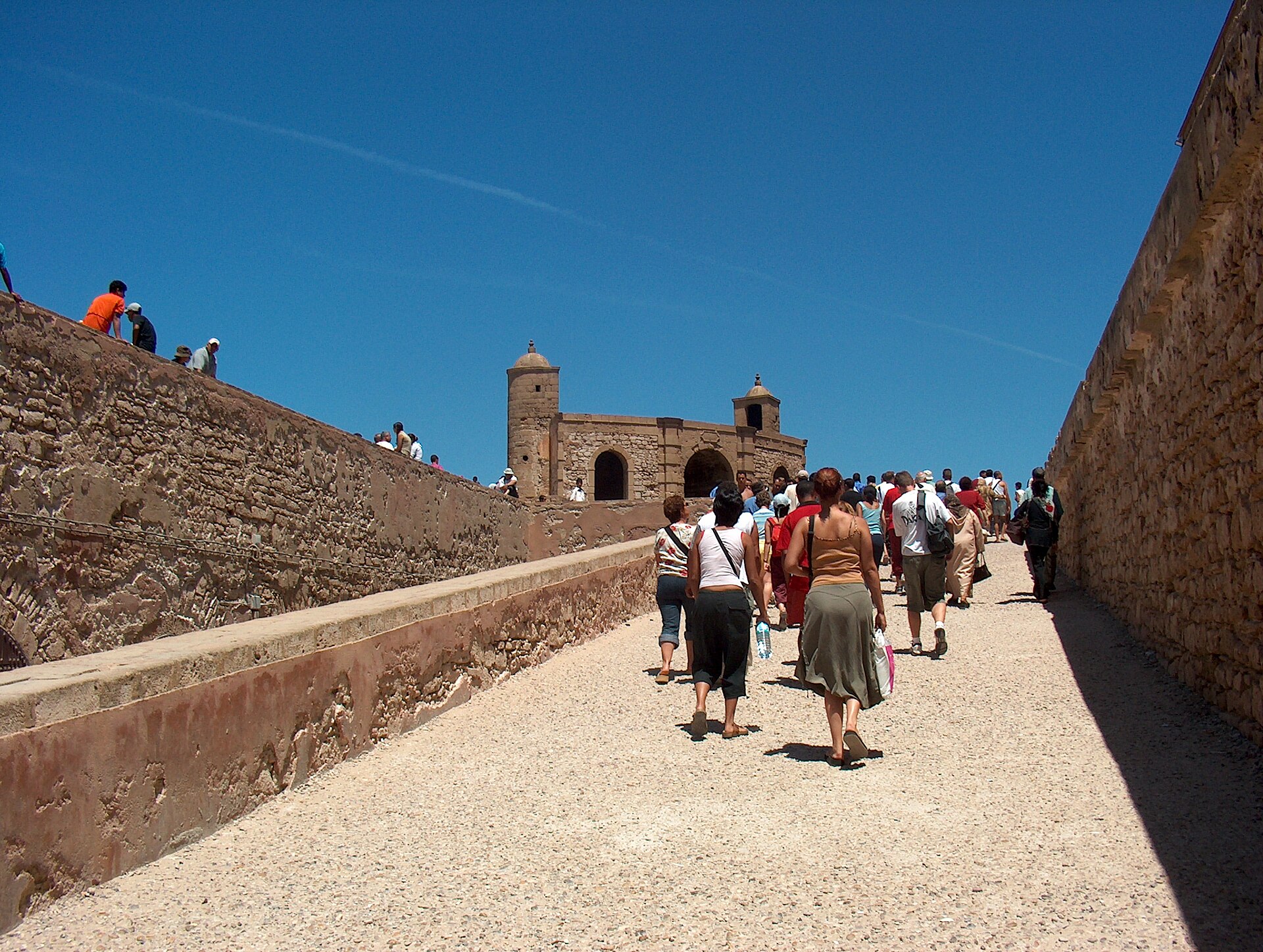
A sea bastion with cannons; thuya workshops below. Practical: windy. The thuya workshops in the vaults below sell boxes, chessboards and inlaid tables; you can watch the craftsmen at work.
Mellah and synagogue
Duration: About 30 minutes
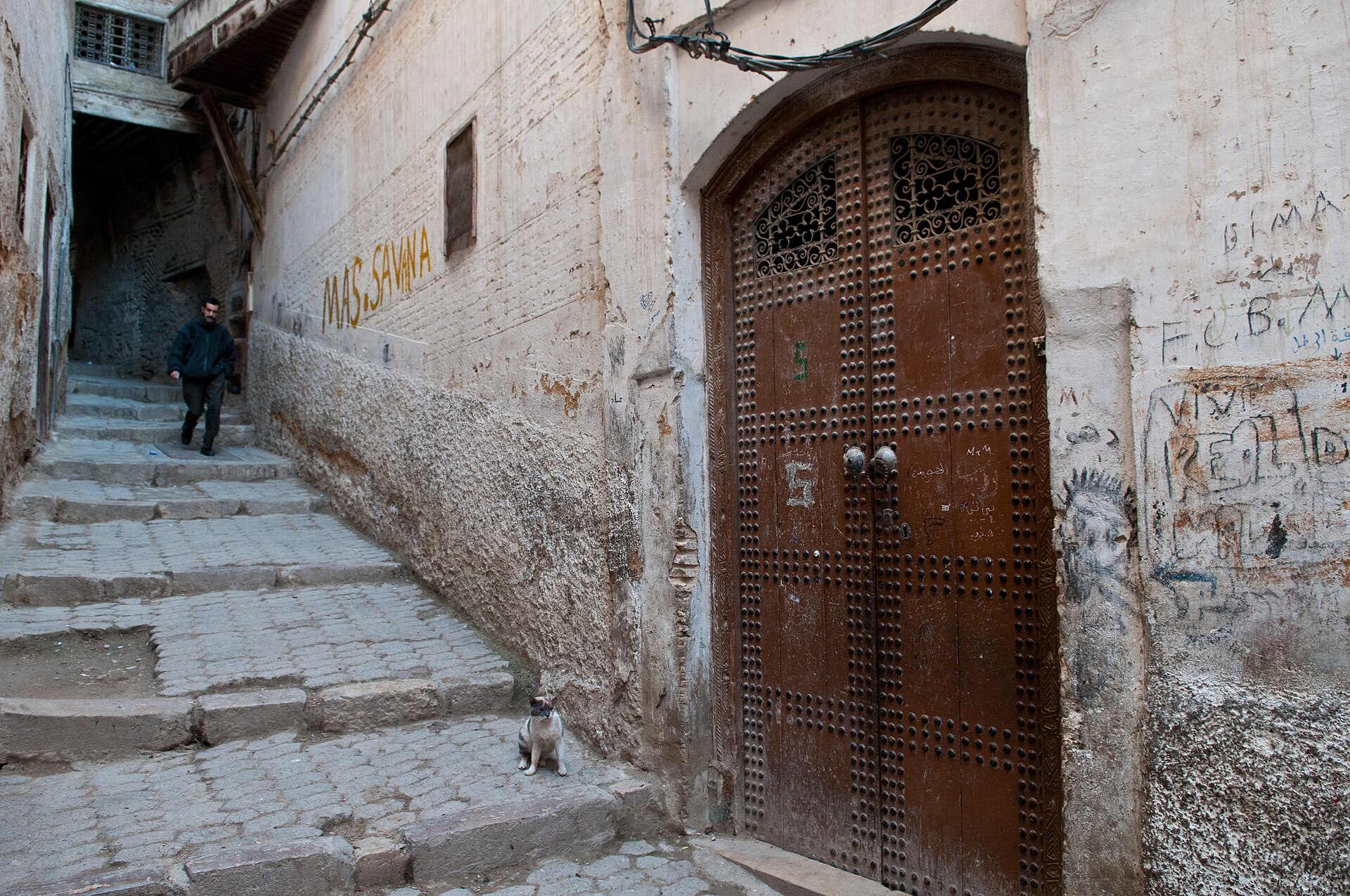
The old Jewish quarter; the Slat Lkahal synagogue has been restored as a place of memory. Practical: check opening times. The Mellah once had dozens of synagogues. Today the Bayt Dakira, a 'house of memory' opened in 2020, tells the story of the Jewish community of Essaouira.
Plan your trip
Best time to go
- March to May: warm days and green valleys, a great time for this trip.
- September to November: pleasant days and clear skies.
- December to February: mild, sunny days; cold nights in the mountains.
- June to August: hot inland; cooler on the coast and in the mountains.
Getting there
Make it yours
This is a private tour: we can add a night, change hotels or adjust the route to suit you.
Practical info
- Money: the Moroccan dirham (MAD). Cards work in cities and hotels; bring cash for villages, tips and souks.
- Plugs: type C and E (European), 220 V.
- Phone: a local SIM (Maroc Telecom, Orange or inwi) is cheap at the airport and works along the whole route.
- Visa: many nationalities (EU, UK, US, Canada, Australia) need none for up to 90 days. Check the rules for your passport before you go.
What to bring
- Comfortable shoes for the medinas and the dunes
- A scarf or hat, sunglasses and sunscreen
- Some cash in dirhams for tips and small purchases
- Clothes covering shoulders and knees for villages and religious sites
- Your passport (hotels ask for it at check-in)
Good to know
Cancellation policy
Full refund if you cancel at least 24 hours before the start. Cancellations less than 24 hours before are not refunded. If bad weather stops the tour, you get a new date or a full refund.
Accessibility
Not wheelchair accessible. Child seats or chairs available.
Frequently Asked Questions
How long is the tour?
About three hours, usually from 09:30 to 12:30. An afternoon start is possible, but the port is liveliest in the morning.
Where do we meet?
At Bab Sbaa, one of the medina gates, or directly at your riad inside the medina. Tell us where you are staying when you book.
Is the tour private?
Yes. The guide is only for you and your group, so you can ask questions, change the pace and spend longer where you like.
Is it suitable for children?
Yes. The route is flat and short, and children usually love the boats, the fish market, the seagulls and the cannons. Pushchairs are fine on the main streets.
What is the history of Essaouira?
It was built in the 1760s by Sultan Mohammed ben Abdallah as a royal port open to European trade, designed by the French engineer Théodore Cornut. Under its old name, Mogador, it was Morocco's main port for a century. Its medina was listed by UNESCO in 2001.
Do we visit the synagogue?
Yes, when it is open. The restored Slat Lkahal synagogue and Bayt Dakira, the house of memory, keep limited hours and close on Saturdays and Jewish holidays; your guide plans the route around them.
Will I be taken to shops?
Your guide may show you thuya workshops and the souks so you can see the crafts, but there is never any obligation to buy and no commission-driven shopping stops.
Will we see the fish auction?
Often. The catch is sold when the boats come in, usually in the morning and early afternoon. On stormy days the boats may stay in port.
What is thuya wood?
A fragrant, reddish wood from the roots of the thuya tree that grows around Essaouira. It is carved and inlaid with lemon wood and mother-of-pearl in workshops under the ramparts, and it is the town's signature craft.
Are entrance fees included?
No. They are small and paid on the spot: a few dirhams for the ramparts and a modest fee or donation for the synagogue or museum if you visit them.
Is the tour accessible?
Mostly. The medina is flat with wide main streets; the ramparts have a few steps and cobbles, which the guide can help you avoid.
What should I bring?
Comfortable shoes, a windproof layer, sunglasses and a little cash for entrance fees, a snack or tips. Essaouira is often windy, especially from April to September.
Can the tour be combined with something else?
Yes. Many guests add a Gnawa music evening, a cooking class or our countryside day with the argan cooperative and Sidi Kaouki beach. Ask us when you book.
How do I pay for this tour?
You can reserve with €20 now and pay the rest on the first day of the tour, or pay everything online when you book.
What is the cancellation policy?
Cancel at least 24 hours before the start for a full refund. If bad weather stops the tour, you get a new date or a full refund.
How far in advance should I book?
Spring (March to May) and autumn (September to November) are the busiest seasons, so book early for those months. You can reserve with €20 and still cancel for free up to 24 hours before.
Similar experiences
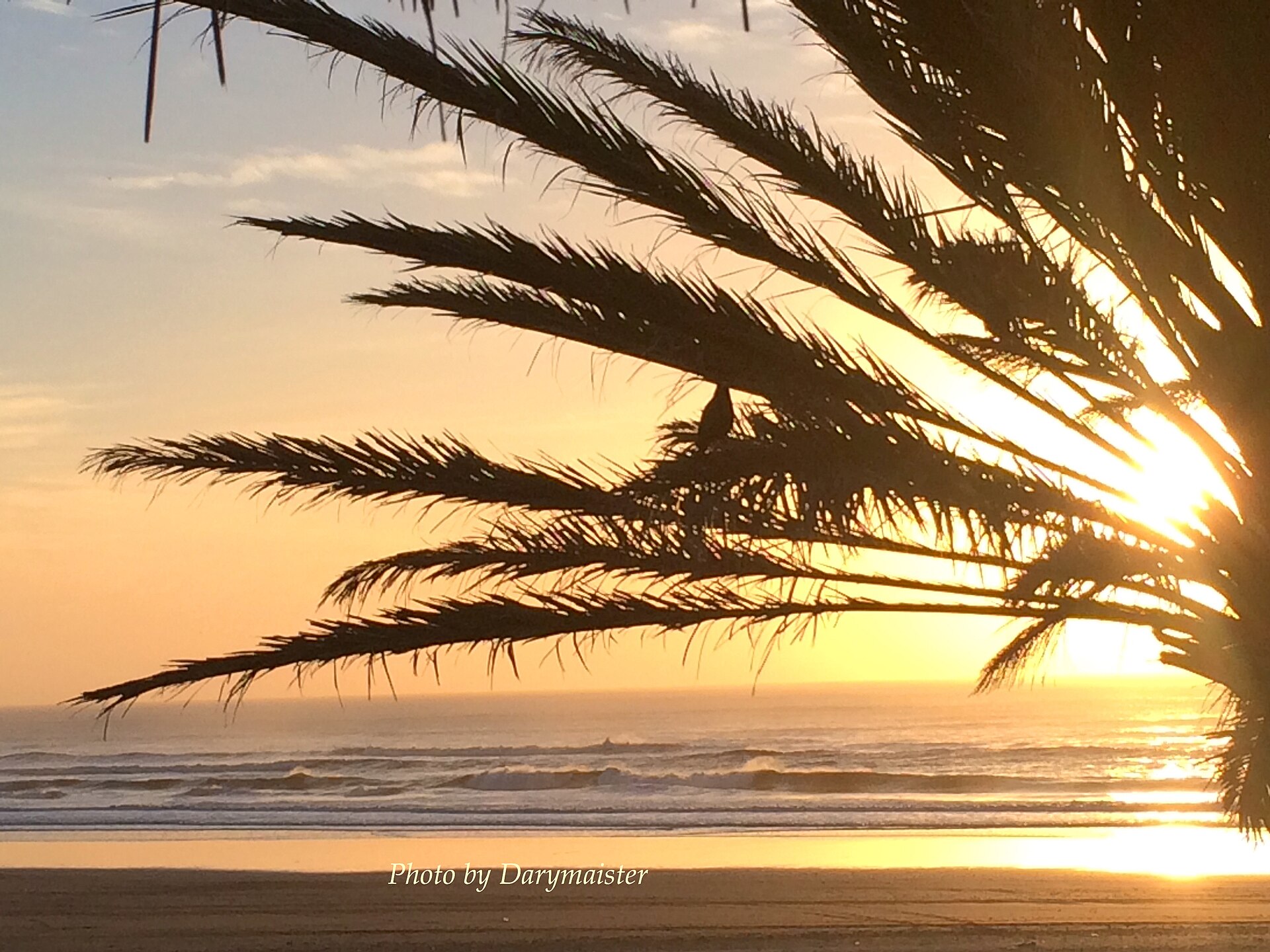 Essaouira
 Countryside: Argan Cooperative, Sidi Kaouki Beach & a Berber Village Lunch
from €46 per person
 Essaouira
 Day Trip from Marrakech: Medina, Ramparts & Fishing Port
from €46 per person
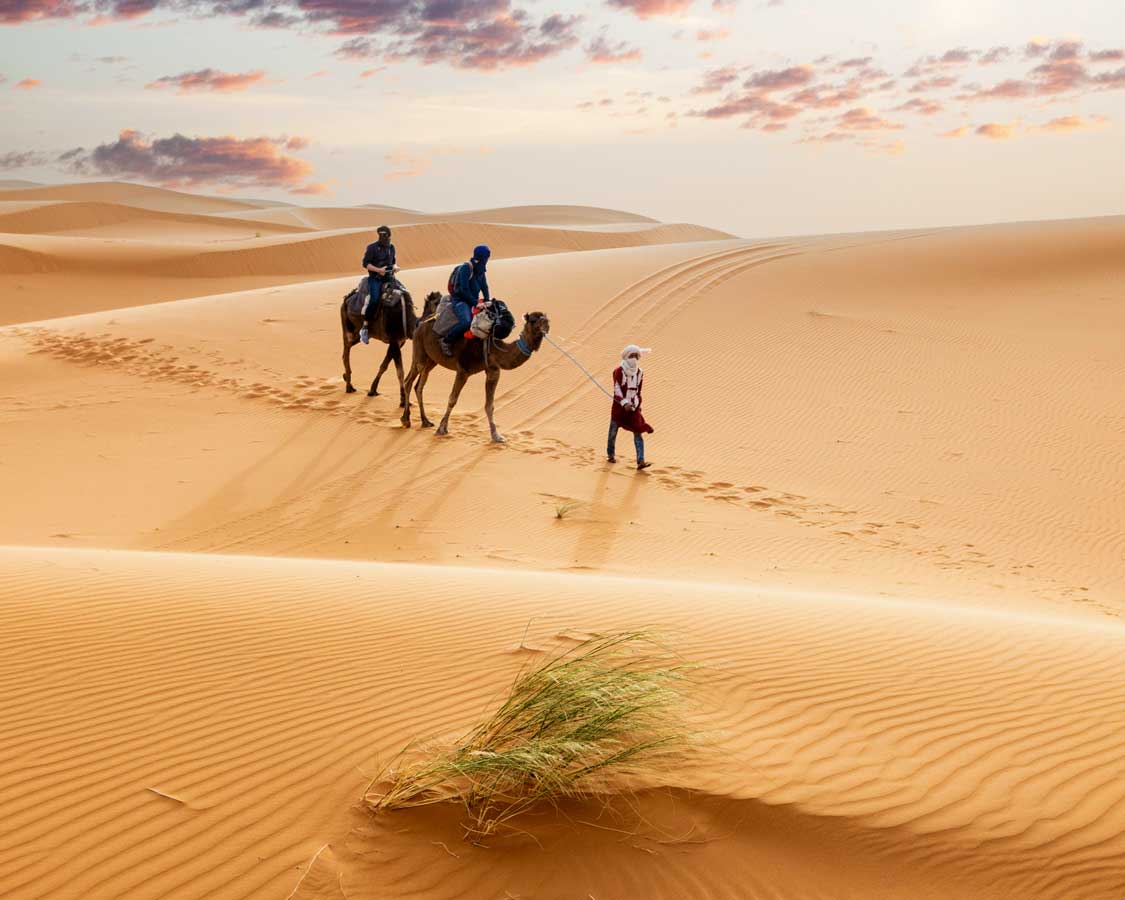 PopularMarrakech
3-Day Marrakech to Merzouga Desert Tour with Sahara Camp
5.0(5)
from €276 per person
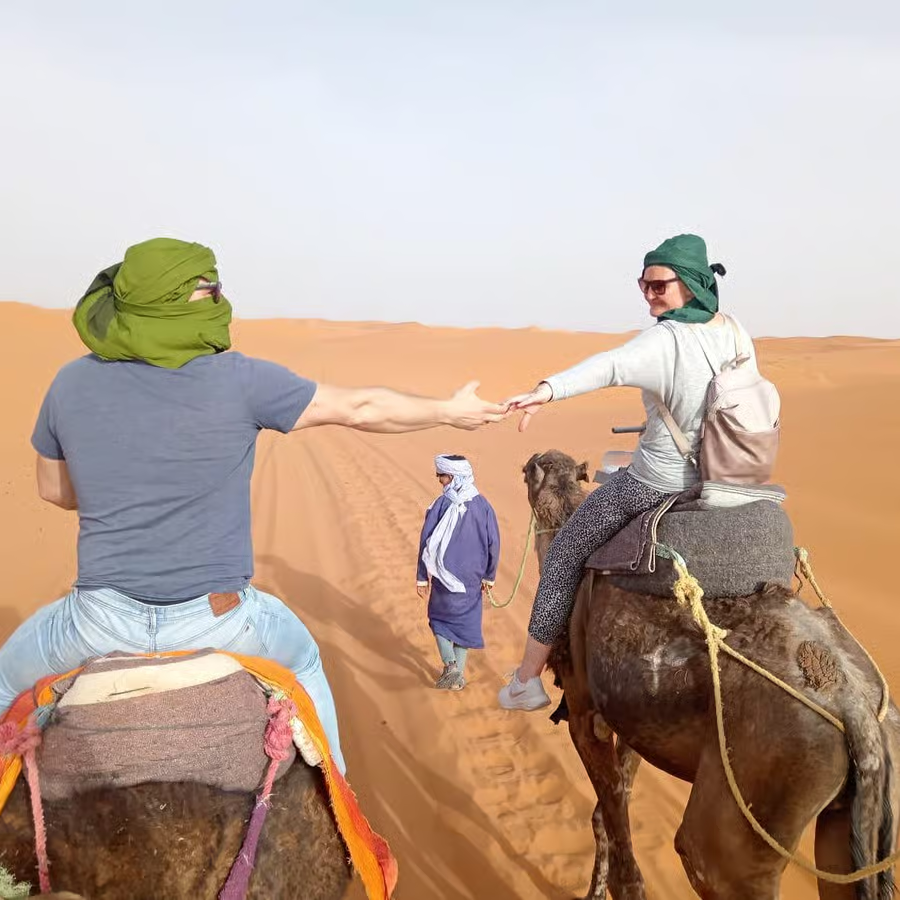 PopularFes
3-Day Desert Tour from Fes to Merzouga and Back via Todra Gorge
5.0(1)
from €276 per person